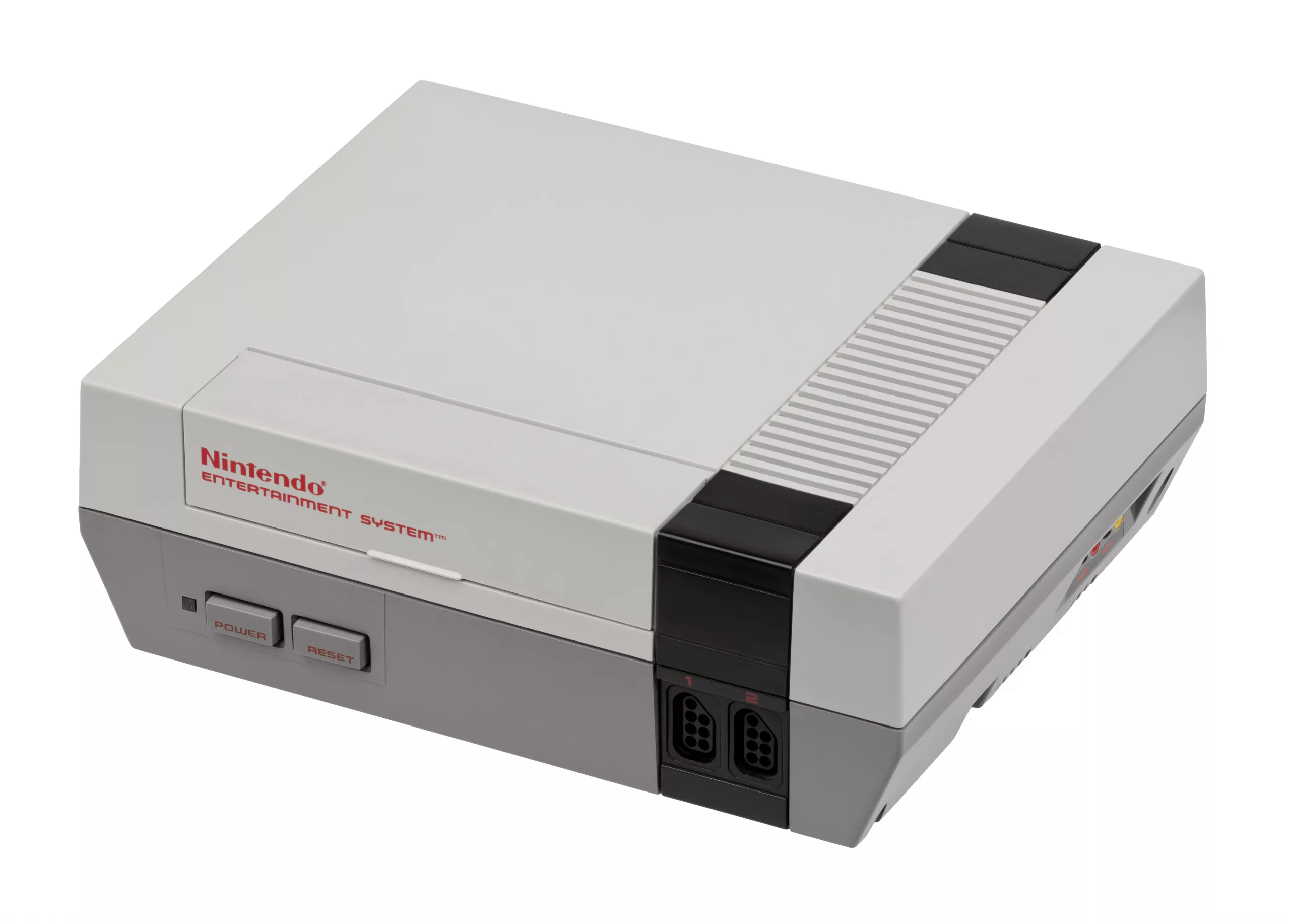
Nintendo Entertainment System — launched in North America dressed up with a robot toy and a plastic light gun, specifically to avoid the word “video game console” after the market that word described had collapsed in 1983.
Why it matters
Nintendo’s insistence on licensing control — the 10NES lock-out chip, the Seal of Quality, strict limits on how many NES titles a publisher could release per year — was a direct response to the flood of shovelware that had helped sink Atari’s market a few years earlier. It worked almost too well: the NES didn’t just revive home consoles in America, it created the licensed third-party publishing model that every console maker since has copied in one form or another.
What to check before you buy
- A console that appears to power-cycle itself repeatedly is very likely the 10NES chip, not a dead motherboard — this is a known, fixable fault rather than a reason to walk away
- Inspect the cartridge connector pins for corrosion; a clean or reseated connector solves most “flashing screen” complaints
- Decide whether RF or composite output matters to you — composite (NES only, not Famicom) gives a noticeably cleaner picture
- Front-loading original units and later top-loading NES-101 models handle cartridges very differently — check which you’re actually being offered