MACHINE REFERENCE

BBC Micro Model B

BBC Micro Model B — the machine that turned a national broadcaster into a computer retailer, built by Acorn specifically to headline the BBC’s own Computer Literacy Project.

Why it matters

The BBC’s decision to put its name behind one specific machine, rather than simply covering computing in the abstract, gave Acorn’s design an institutional reach no rival could match — reportedly present in around 80% of British schools by the mid-1980s, shaping how an entire generation first encountered programming, in BBC BASIC, in the classroom and on television. That educational dominance, more than any single technical feature, is why the Model B still gets treated as a foundational British machine rather than just another 6502-based micro of its era.

What to check before you buy

  • Have the PSU checked before first power-on if it hasn’t been serviced — the original RIFA-branded mains filter capacitors are a genuine, well-documented fire-risk item on machines of this age
  • Incorrect or missing keyboard input often traces back to the 74LS251/74LS30 keyboard controller chips rather than the keys themselves
  • Screen corruption or a garbled display can point to the video ULA overheating — a known issue on the early VC2023 chip revision
  • Ask which ROMs are fitted (DFS, BASIC version), since a Model B’s software capability depends heavily on what’s socketed inside
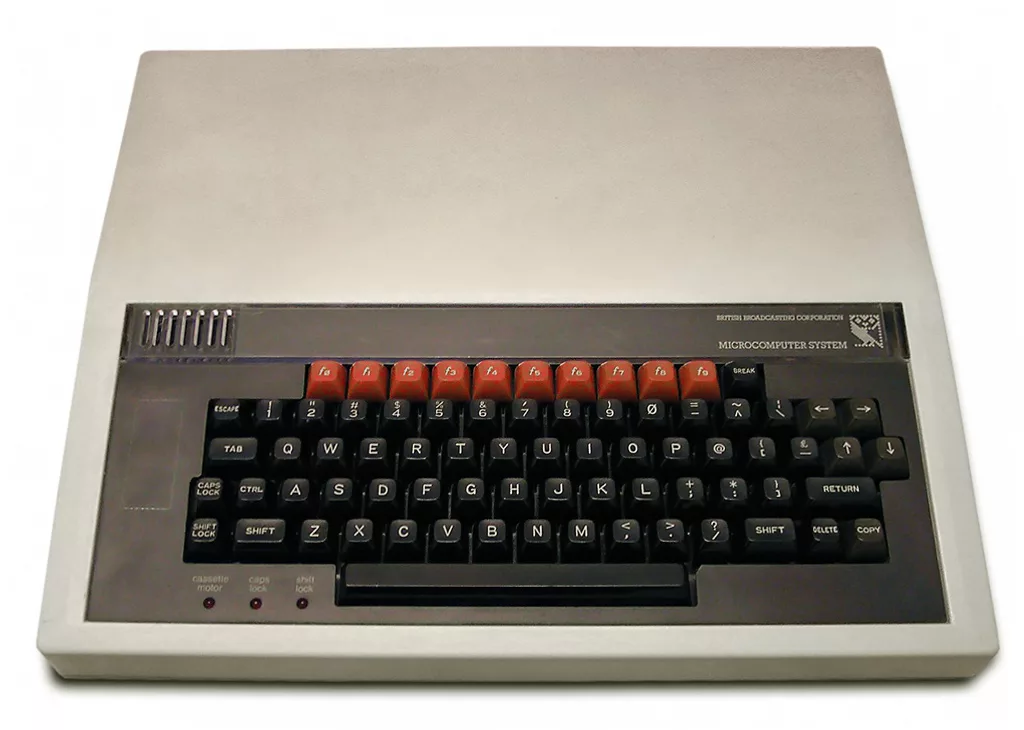
BBC Micro Model B in a cream case with a row of red function keys above the keyboard

Photo: Stuart Brady (derivative: Ubcule), Wikimedia Commons (Public domain)

Released

1981

RAM

32 KB

CPU

MOS Technology 6502A @ 2 MHz

Launch price

£399

Manufacturer

Acorn Computers (for the BBC’s Computer Literacy Project)

Form factor

Desktop keyboard unit in a beige case, with a separate monitor and cassette or disk drive

CPU

MOS Technology 6502A @ 2 MHz

Chipset

Motorola 6845 CRT controller, dedicated Video ULA, Mullard SAA5050 Teletext chip

RAM

32 KB

ROM

up to 48 KB (16 KB MOS/OS plus BASIC and other language/filing-system ROMs in sockets)

Graphics

Seven modes (0–7), 160×256 to 640×256 depending on mode, 2–8 colours; Mode 7 Teletext display using just 1 KB of video RAM

Audio

Texas Instruments SN76489, 3 tone channels plus noise; optional TMS5220 speech synthesiser

Storage

Cassette interface (CUTS standard) as standard; 5.25″ floppy via an Intel 8271 controller as an add-on

Ports

UHF/composite/RGB video, RS-423 serial, Centronics parallel, user port, 4-channel analogue input, 1 MHz expansion bus, Tube (second processor) interface, optional Econet networking

OS

Acorn MOS with BBC BASIC, in ROM

PSU

Internal linear supply (early units), later switched-mode; the original RIFA-branded mains filter capacitors are a well-known failure point

Units sold

over 1.5 million across the BBC Micro range (Model A and B combined)

Successors

BBC Master (1986); Acorn Archimedes (1987)

  • RIFA mains filter capacitor failure
    The PSU's original RIFA-branded X-class capacitors crack and can emit smoke or fail outright with age — a known issue on machines of this era, worth checking before first power-on.
  • Keyboard controller chip faults (74LS251/74LS30)
    Faulty row/column scanning ICs on the keyboard interface cause incorrect or entirely absent keyboard input, rather than the switches themselves being at fault.
  • Video ULA (VC2023) overheating/failure
    The video processor chip runs hot and can cause screen corruption or a garbled/blank display; the early VC2023 chip revision has a documented bug with a jumper-wire workaround.
  • 1981 BBC Micro announced as part of the BBC's Computer Literacy Project; first deliveries begin in December
  • 1982 Bulk of the initial order backlog fulfilled amid production delays; The Computer Programme airs on BBC television
  • 1985 Around 80% of British schools reported to have adopted BBC Micros; Model B+ introduced with more RAM
  • 1986 BBC Master launched with 128 KB RAM as the Model B's direct successor
  • 2011 30th anniversary marked with a "Beeb@30" event