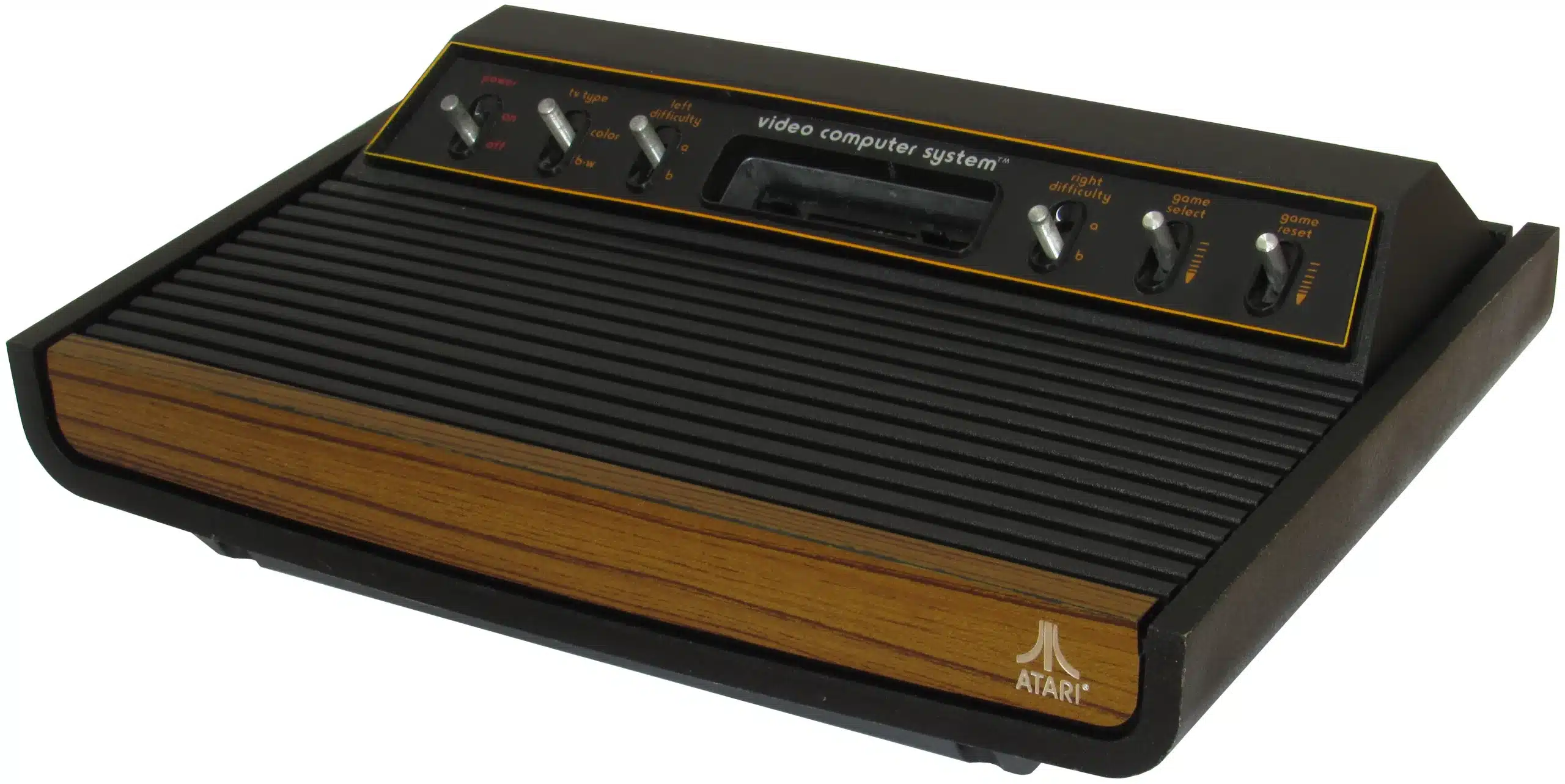
The Atari 2600 arrived in September 1977 wearing a woodgrain shell that had nothing to do with computing and everything to do with living-room furniture, and it went on to sell around 30 million units before Atari finally stopped making it in January 1992.
Why it matters
Cartridge-based gaming wasn’t new when the 2600 launched, but it was the machine that made the idea stick in millions of ordinary front rooms, built on a chip design so lean it had to redraw the picture from scratch, scanline by scanline, in step with the television’s own electron beam, because there was no memory to spare for a frame buffer. That trick let a machine with 128 bytes of RAM outlast three console generations. The same commercial success that built Atari’s dominance also set up its fall: when the 2600’s library filled with rushed licensed cash-ins, E.T. and a badly compromised Pac-Man port chief among them, the flood of poor games alongside a glut of third-party shovelware curdled consumer trust fast enough to help trigger the 1983 North American video game crash. None of that is a mark against the engineering. A team squeezing usable graphics and two-channel sound out of a stripped-down 6502 and a bespoke video chip, with no operating system to lean on, earned every ounce of the console’s decade-and-a-half shelf life; the damage came later, from a boardroom chasing a holiday deadline, not from the silicon.
What to check before you buy
- Woodgrain "Heavy Sixer" units (1977 only) carry real collector premium and genuinely heavier aluminium shielding, but budget for a capacitor and voltage-regulator check regardless of what a listing claims.
- A stock RF connection to a modern television is genuinely poor by today's standards; factor in a composite or S-Video mod if you actually want to play on it.
- Test both controller ports before buying if at all possible — unresponsive directions or fire buttons on a known-good joystick usually means the internal RIOT chip is on its way out.
- "Untested" or "for parts" listings are common for a reason: a dead 7805 regulator or a leaking capacitor can look identical to a healthy console right up until you power it on.
- Later variants (2600 Jr., Vader) are cheaper and more reliable entry points if originality matters less to you than a machine that actually boots.