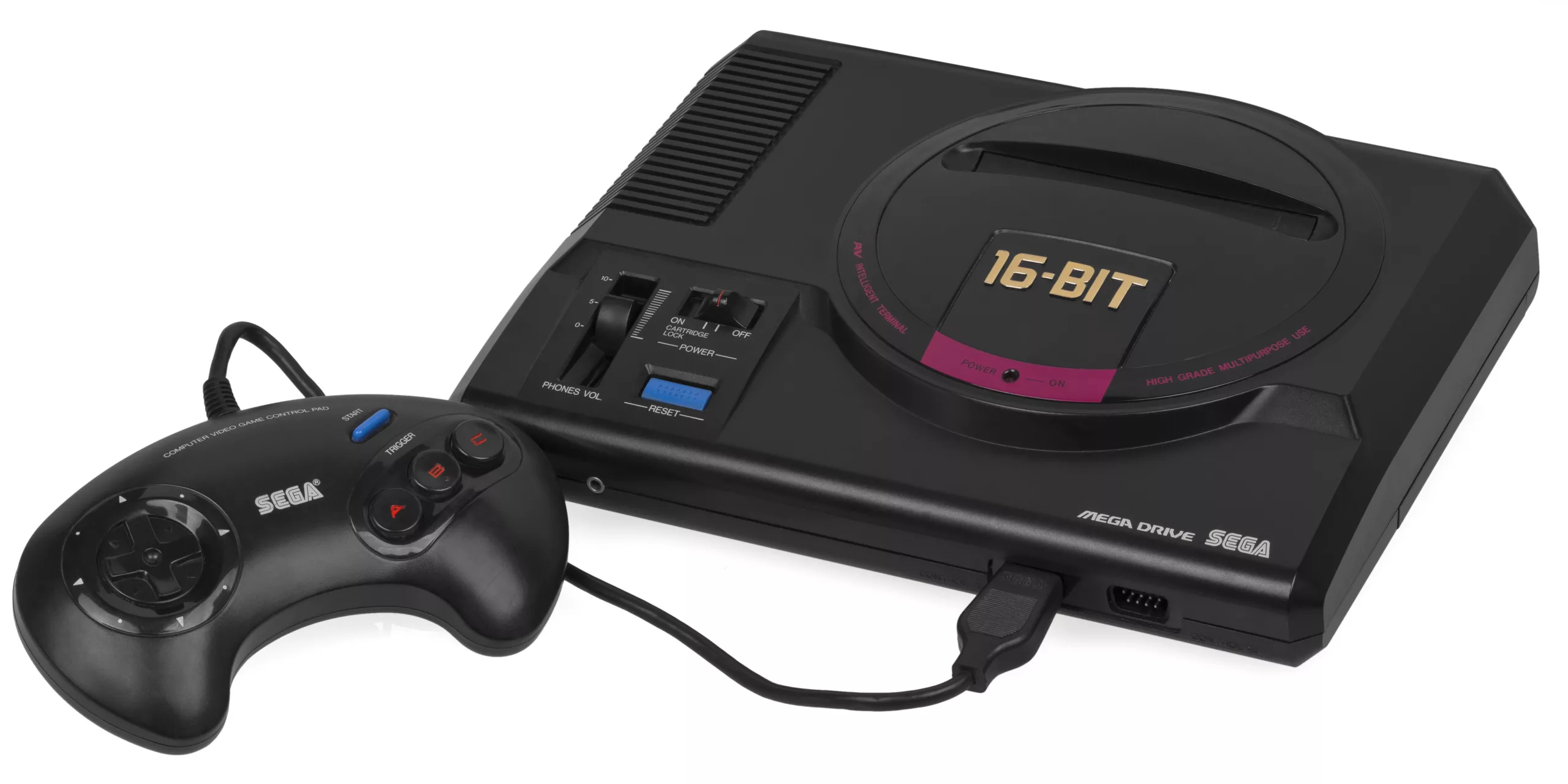
Sega Mega Drive — sold in North America as the Genesis, and marketed there with a slogan aimed squarely at the market leader: “Genesis does what Nintendon’t.”
Why it matters
Sega got to the 16-bit generation over a year before Nintendo’s SNES, and used that head start to sell the Mega Drive on raw arcade-accurate speed rather than the more considered, colourful approach Nintendo would eventually answer with. It was enough to hand Sega a genuine, if brief, lead in the North American market during the early 1990s, and Sonic the Hedgehog — deliberately built to show off that speed — became the console’s calling card in a way few pack-in games ever manage.
What to check before you buy
- Smell and inspect the power brick before plugging it in — leaking capacitors are corrosive and a known issue on original units
- Ask about the sound if buying a Model 1; muffled or distorted audio usually points to ageing audio-path capacitors rather than a dead sound chip
- Check whether it’s a Genesis III or later board with TMSS fitted, which requires a genuine or TMSS-compatible cartridge to boot at all
- Confirm the region and output type (RF, composite or RGB via Model 2’s mini-DIN) match what your display can actually use