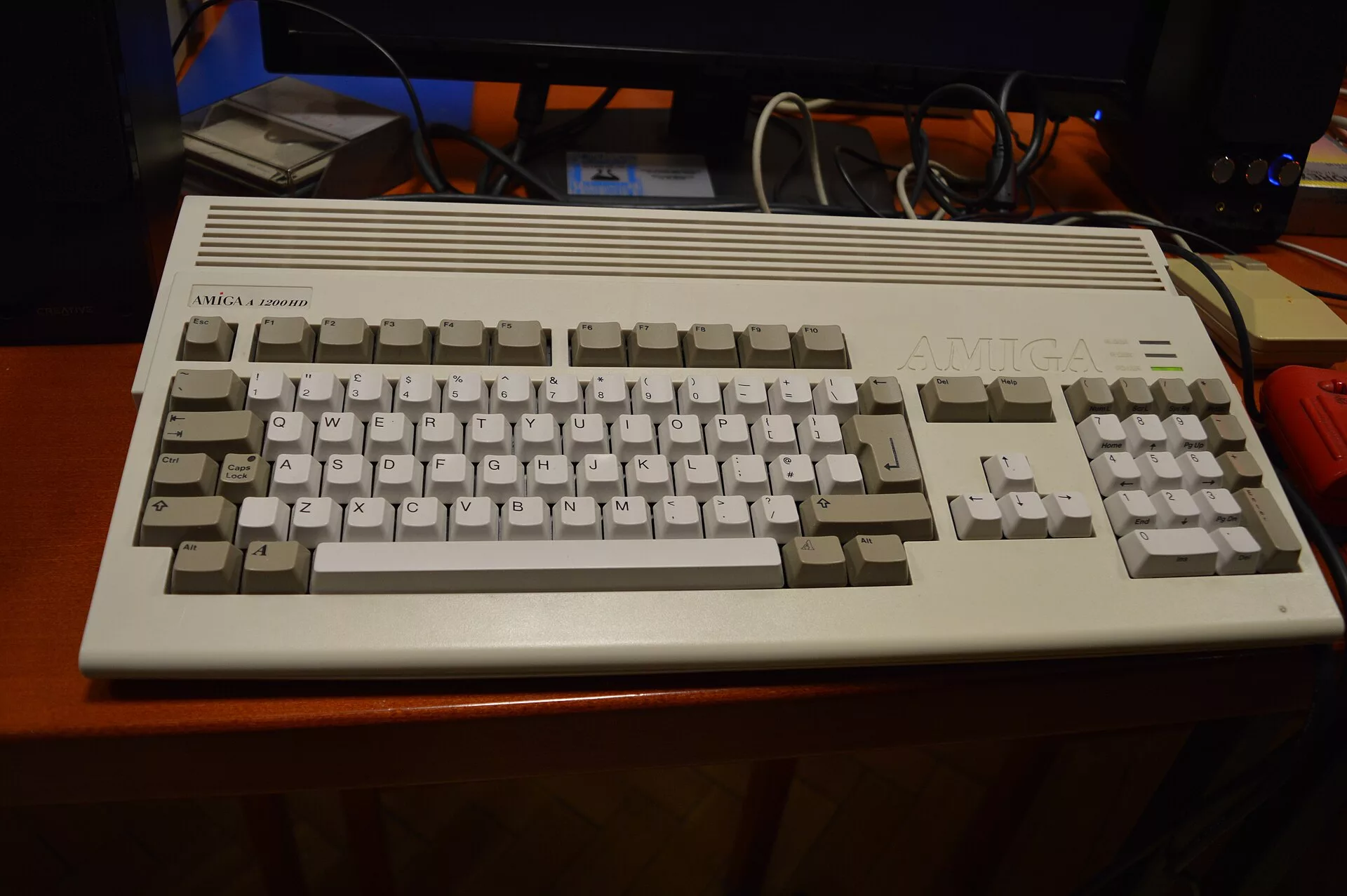
Developer Grzegorz Korycki has released v0.0.2 of AmiGTA1, a from-scratch engine reimplementation of 1997’s Grand Theft Auto, built natively for 68020-class Amiga hardware with no PiStorm and no emulation layer doing the heavy lifting. Liberty City renders in 2.5D using fixed-point maths and sine and cosine lookup tables, the kind of arithmetic trick Amiga coders have leaned on since the platform’s earliest days because the hardware never had a floating-point unit to waste. On the developer’s own test machine, it holds close to 60 frames per second.
- Status: v0.0.2 alpha, source available on GitHub
- Developer: Grzegorz Korycki
- Approach: from-scratch 68020-native engine, fixed-point maths, sin/cos lookup tables, c2p
- Working: Liberty City in 2.5D, vehicle physics and mass, AI routing, carjacking, traffic
- Not yet working: missions, weapons, audio, police, wanted level
- Performance: 59.8fps on the developer’s test hardware
- Requirements: 68020 or better, AGA or RTG graphics
- Legal basis: players supply their own original PC game files; no copyrighted code or assets redistributed
What is actually running, and what is not
The alpha already reproduces a fair amount of what made the original recognisable: vehicles behave with something resembling correct mass and physics, the AI routes around the city rather than wandering blindly, carjacking works and traffic reacts the way traffic in a GTA game is supposed to. What is missing is most of the game people actually remember playing: no missions, no weapons, no police response, no wanted level and no audio at all yet. This is a driving simulation wearing a skeleton of a city, not a playable Grand Theft Auto. Korycki has not pretended otherwise.
Getting this far without any of that is still the harder half of the job. A city you can drive around convincingly, at a steady frame rate, on hardware from three decades before the game it is rebuilding, is the part that either works or the whole project is dead in the water. Everything AmiGTA1 is still missing is content and rules built on top of an engine that has already proven it can carry the weight.
The legal tightrope that makes this different from a ROM dump
AmiGTA1 does not ship any of Rockstar’s original code or assets. What Korycki has built is an engine that reads and converts a copy of the original PC game’s files, which the player has to already own, and renders them through entirely new, native Amiga code. That is a meaningfully different thing to an emulator running someone else’s binary, or a ripped ISO doing the rounds on a forum, and it is the reason a project like this can exist in the open on GitHub rather than getting a takedown notice within a week.
It also means the project lives or dies on Korycki’s own engine work rather than on borrowed code, which is a harder path and a more defensible one.
Form matters here
Korycki is not new to this. He previously ported OpenTTD to AmigaOS 68k, which is its own exercise in getting a modern, actively developed codebase running on hardware nobody expected it to touch again. AmiGTA1 is a considerably bigger undertaking, a full engine written from nothing rather than a port of existing code, but it comes from someone who has already shown he can get ambitious software running natively rather than through a compatibility layer.
Whether missions, audio and a wanted level actually arrive is the honest open question, and homebrew projects at this stage have a well-earned reputation for stalling. But an engine that already drives a convincingly physical Liberty City at 60fps on real Amiga silicon has cleared the bar that kills most projects before they start. What happens next is worth watching rather than betting on.
Sources
IndieRetroNews, ‘AmiGTA1: Native AmigaOS 68k port of…’: https://www.indieretronews.com/2026/08/amigta1-native-amigaos-68k-port-of.html
GitHub, angree/AmiGTA1: https://github.com/angree/AmiGTA1