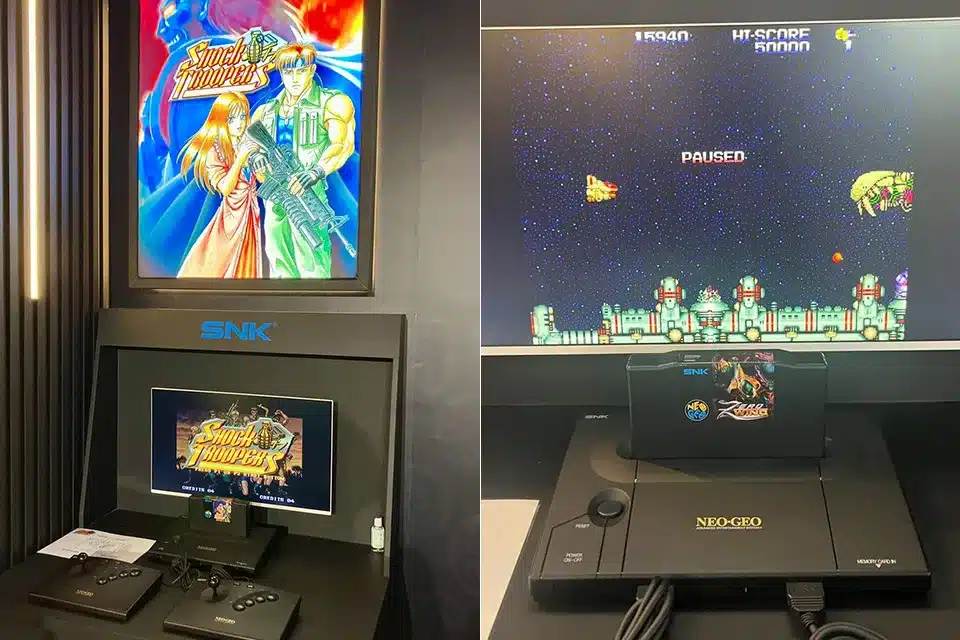
Plaion let Tokyo Game Show attendees loose on working Neo Geo AES+ units this month, and by most accounts the hardware held up. Same footprint as the 1990 original, the same matte black finish on both the console and the arcade stick, low-latency HDMI at 720p or 1080p with cropping options, and a manual switch between the AES’s native 59.6Hz refresh and a 60Hz mode for televisions that can’t cope with the original number.
Then came the actual news. Plaion is pushing the worldwide launch back a full year, from November 2026 to 16 September 2027. Commercial director Ben Jones put it down to a global memory chip squeeze driven by AI infrastructure demand, on top of a cartridge chip redesign the company needed to make anyway. The alternative, in his telling, was a small November batch that sold out instantly and turned the launch into a scalper’s playground rather than a real release.
It’s hard to fault the logic while also finding it a little funny. A company reviving 1990s cartridge hardware has been delayed by a 2026 AI datacentre boom eating the world’s memory chip supply, which is not a sentence anyone would have written a decade ago and somehow makes complete sense now.
Whether a year’s wait is a responsible call or just corporate caution dressed up as one depends entirely on what actually ships in September 2027. Working hardware at a trade show is not the same as working hardware in ten thousand living rooms at once, and Plaion knows that better than anyone watching from the show floor.