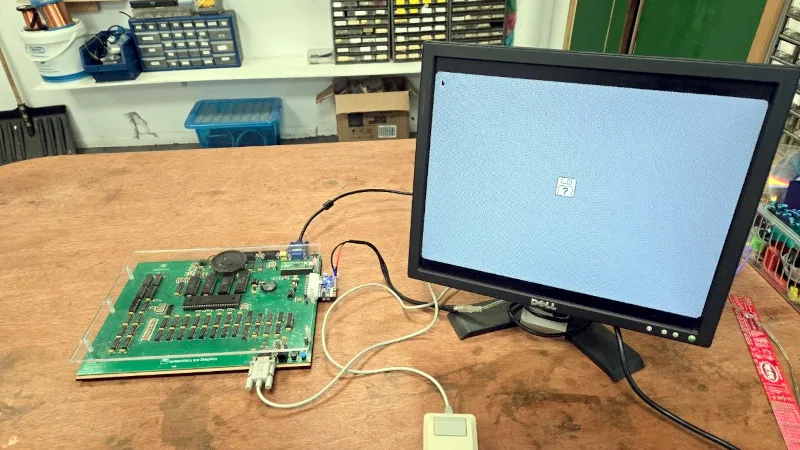
A Mac 512k with no floppy drive and no SCSI bus sounds like a contradiction, given that the original machine’s entire personality was built around the grinding hum of its single internal drive. DosFox1’s OSHintosh is exactly that contradiction, an open-source, from-scratch PCB recreation of the 512k’s 68000-based logic board that boots classic Mac OS straight out of ROM instead.
The trick is an old one, repurposed
The disk-in-ROM approach isn’t new. It’s lifted from the ROMinator project, which figured out years ago that you can concatenate a raw system ROM with a full 885K disk image, split the result across two EEPROM banks and let the Mac boot straight from that combined image with no physical disk anywhere in the loop. OSHintosh takes the same trick and builds an entire board around it: a real 68000, sixteen 41256 DRAM chips totalling the full 512K of period-correct memory, a pair of SST39SF040 EEPROMs standing in for high and low ROM, a Zilog Z8530 serial controller and 6522 VIA doing the I/O work the original chipset did and an ATTINY85 quietly handling the real-time clock a 1984 Mac never had.
None of that is exotic silicon. That’s rather the point: every chip on the board is something you could plausibly hand-solder or reflow at home, and the whole layout fits on a two-layer PCB, the cheapest board JLCPCB will fabricate. Five boards, DosFox1 reckons, cost about £30. Call it £6 a board. That’s a working Mac 512k logic board clone for the price of a couple of pub pints, a genuinely striking bit of design discipline, not a fluke.
What it can’t do yet
It isn’t a finished replacement. There’s no way to swap disk images without reprogramming the EEPROMs, which makes it more of a fixed appliance than a general-purpose Mac for now, and DosFox1’s own notes flag the second-revision board as designed but not yet tested. What does already work is the boring, useful stuff: the original serial ports are preserved, so a real AppleTalk or PhoneNet network will still talk to it, and Hackaday’s own testing had it happily running AppleShare.
The whole thing is released under the CERN Open Hardware Licence, which means anyone with a JLCPCB account and a Ti866 programmer can build their own rather than just admire someone else’s. That’s rare. Most retro-replica projects ship as a one-off show-and-tell on a forum thread and quietly disappear. Whether OSHintosh ends up as a genuine alternative to hunting down an actual 512k with a dying capacitor, or stays a clever curiosity for people who already have a real one on the bench, comes down to whether that disk-swapping limitation gets solved.