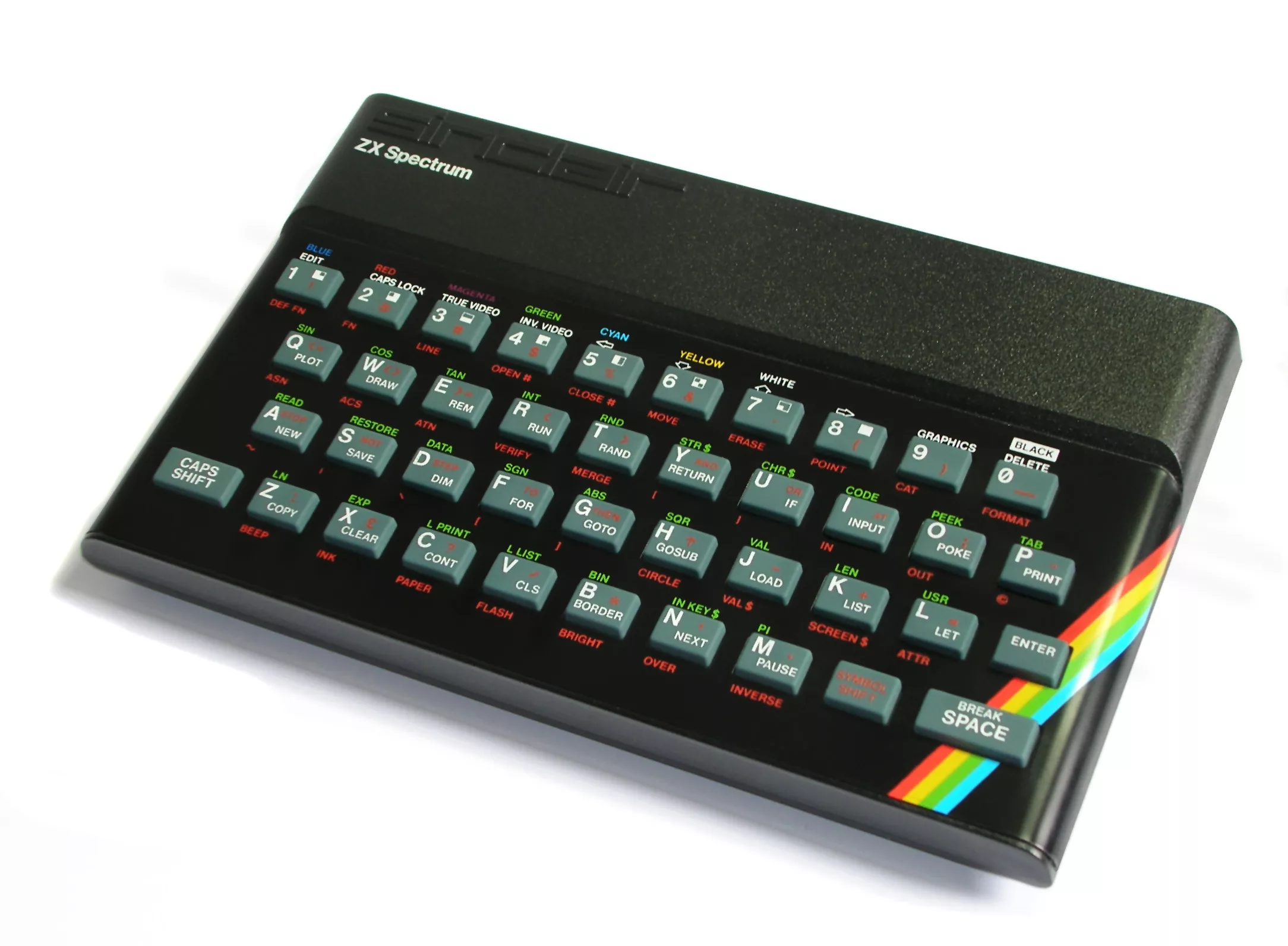
Sinclair ZX Spectrum 48K — the machine that took Britain’s home computer market by the throat in 1982, with a keyboard so notoriously unpleasant to type on it earned the nickname “dead flesh.”
Why it matters
Clive Sinclair’s relentless focus on price over comfort — a rubber keyboard instead of proper keys, a single ULA doing double duty instead of a full custom chipset — got the 48K Spectrum to market at £175 when rivals were charging two or three times as much, and it worked: by the mid-1980s the Spectrum reportedly held around 40% of the British home computer market. That price-first philosophy also shaped an entire generation of bedroom-coded British games, since a machine cheap enough for a teenager’s Christmas present is a machine teenagers went on to spend years learning to push to its limits.
What to check before you buy
- Assume the keyboard membrane needs replacing unless a seller specifically says otherwise — it’s the single most common fault on an unrestored unit
- Check the power connector polarity before plugging in any non-original PSU; the Spectrum’s barrel connector is reversed from the usual convention, and a wrong-polarity supply kills the onboard regulator
- Garbled or “static” screen output on power-up usually points to RAM or the video ULA, not a write-off
- Confirm which board issue you’re being offered, since repair approach and part availability vary between revisions