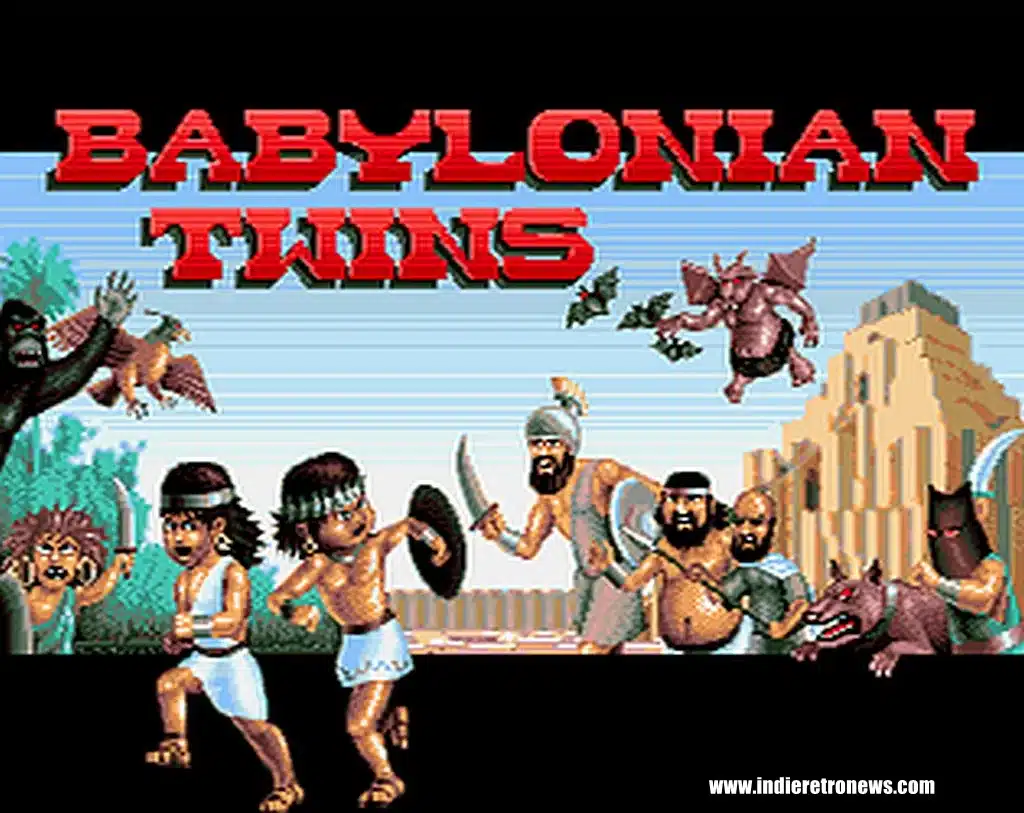
Rabah Shihab, Murtadha Salman and Mahir AlSalman built Babylonian Twins in Baghdad in 1993, on a single Amiga 500 with 512K of RAM and no hard drive. Iraq was under international sanctions at the time. Summers hit 50 degrees and cooked the hardware. Power cuts were routine. Shihab wrote the entire engine in raw 68000 assembly; Salman hand-drew every frame of the Assyrian palaces; AlSalman sampled Iraqi instruments for the soundtrack. When it was finished, there was nowhere for it to go.
A backpack, a border and fifteen years of silence
Commodore was collapsing as the game was finished, and the sanctions that had made development so hard scared off every publisher who might otherwise have taken it on. The masters went onto floppy disks, into a backpack and across a border. Then, nothing. Nobody outside that backpack saw the game again for fifteen years.
That changed in 2008, when gameplay footage surfaced on YouTube and the English Amiga Board opened a thread asking the obvious question: Babylonian Twins, an Amiga game? Twenty-four pages later, the community had tracked the original team down. They rebuilt it. The game relaunched for iPhone and iPad in 2010, sold over two million copies and picked up coverage from Wired and Ars Technica along the way, a genuinely unlikely afterlife for something that had spent a decade and a half forgotten in a drawer.
Two releases, thirty-three years apart
This month brought the part of the story that actually belongs on a retro computing site. Alongside a paid Steam “Definitive Edition”, rebuilt in Godot with achievements, cloud saves and eleven languages, the original 1993 Amiga build has been released for free as an authentic ADF disk image, playable exactly as it was on the day the team gave up trying to sell it. No emulator tricks, no reconstruction from memory. The actual game, on the actual hardware it was written for.
It’s worth sitting with what that free release actually represents: the first commercial video game made in Iraq, finished under conditions that would have been reason enough to give up long before the sanctions or the heat or Commodore’s collapse did the job for them, now available to anyone with an Amiga emulator and five minutes. Most lost games stay lost. This one had three people willing to keep a floppy disk in a backpack for long enough, and a community willing to spend twenty-four forum pages finding out why a YouTube clip existed at all.