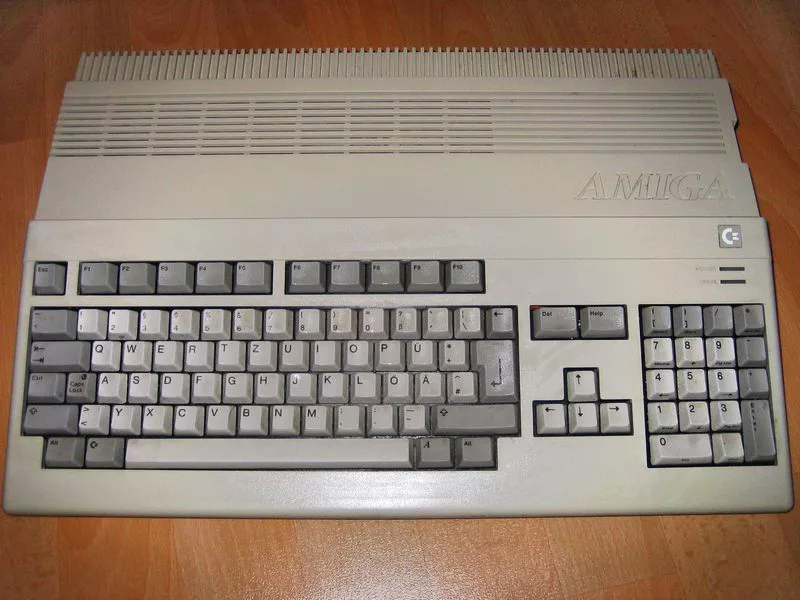
Commodore Amiga 500 — the machine that brought genuine multitasking to a home computer for the first time, sold in a case barely bigger than its own keyboard.
Why it matters
The A500 took the technically remarkable but expensive Amiga 1000 and repackaged it as something an ordinary household could actually justify buying, and the gamble paid off spectacularly: it became by far the best-selling Amiga model and, for a few years either side of 1990, one of the defining games and creative computers in Europe. Its custom Agnus/Denise/Paula chipset gave it colour and sound years ahead of contemporary PCs, which is exactly why so much of the era’s demoscene output and early digital video and audio experimentation happened on Amiga hardware rather than anywhere else.
What to check before you buy
- If a trapdoor RAM expansion (commonly an A501) is fitted, check it specifically for battery leakage — it’s a genuinely destructive fault distinct from the base motherboard
- Smell and inspect the external PSU brick before plugging it in; ageing capacitors inside are a known long-term reliability weak point
- The Gary custom chip is prone to corrosion-related failure, but Commodore socketed all the custom chips, so diagnosis and replacement are usually straightforward once identified
- Confirm the Kickstart/Workbench version fitted, since software compatibility varies meaningfully between 1.2, 1.3 and later revisions