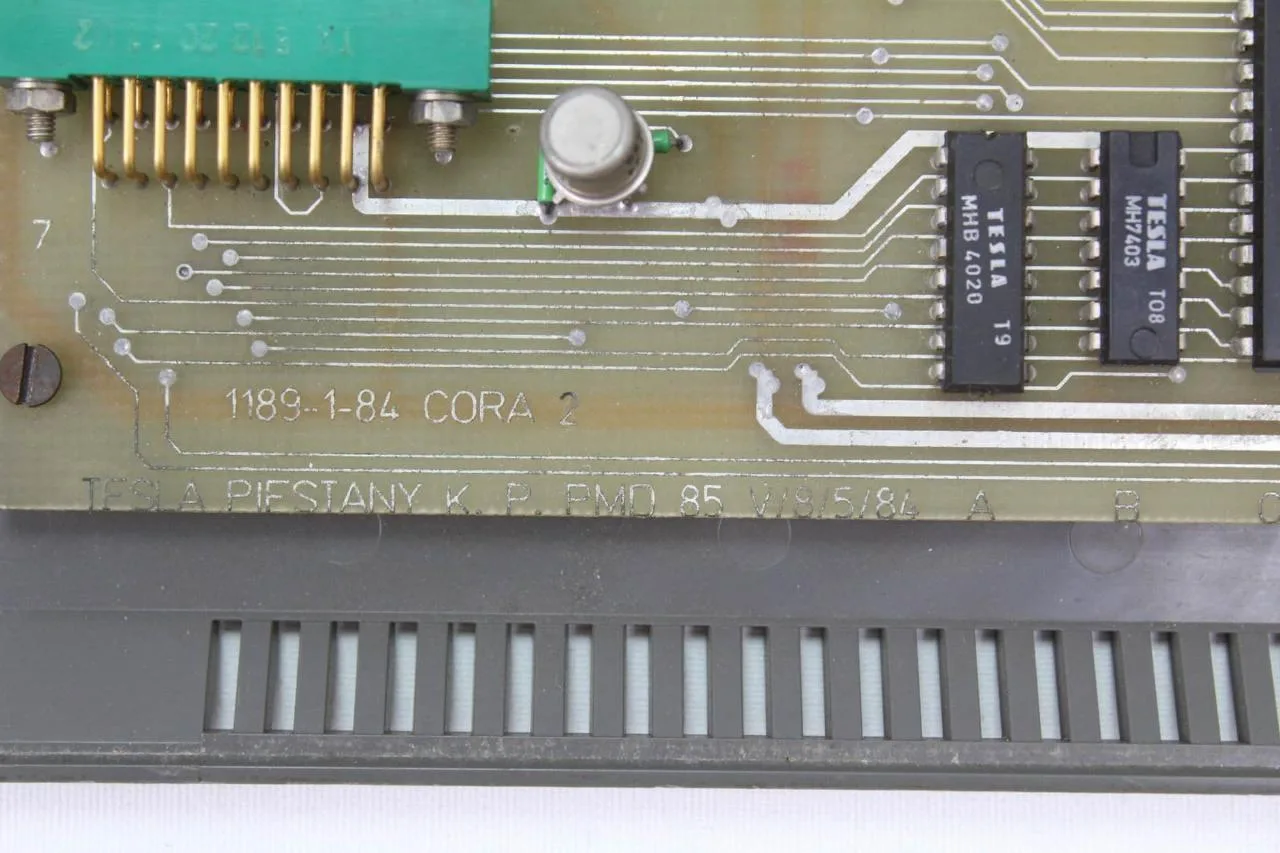
The board is dated by hand: 9 May ’84. That puts it right on the boundary between Tesla Piešťany’s PMD 85-0 prototype and the first full production run of the PMD 85-1 proper. It sat inside a case moulded from the same grey plastic as half the government offices in Czechoslovakia, under a keyboard built from parts salvaged from a telephone exchange, feeding a ROM cartridge slot the size of a paperback book. The plastic-and-copper object in front of you carries the fingerprints of a machine built right at that transition. It is also, in its own quiet way, a bribe the state never quite worked out it had paid.
A garage inside a state factory
Roman Kišš was not the engineer Czechoslovakia’s planners expected to produce a national computer. He struggled with formal study, bored by rote learning, and it was during his military service that he first properly got his hands on integrated circuits, reading up on them from a library textbook during Christmas leave. He was, by his own account, once confined to barracks for the crime of eating dinner at the wrong restaurant. None of that reads like the résumé of a state-approved inventor, and that was rather the point.
In 1975 Kišš built a one-bit computer of his own design, called ProLog, mostly to get out of doing tedious technical drawing at work. What actually changed his career was luck: a chance conversation on an aeroplane with the director of Tesla Piešťany, who liked what he heard enough to hire him and hand him what amounted to his own private workshop inside the factory. Kišš used it well. He built the PMI-80, a single-board trainer computer, in about a week, out of ten components and a display cannibalised from a broken calculator. It is hard to overstate how far that is from the design process at Commodore or Sinclair. It is, in its scrappy way, exactly the same instinct.
“Now it’s a political matter”
By the early 1980s Kišš had turned that same instinct toward a proper personal computer, and the technical trick that got people’s attention was an efficient scheme for managing dynamic memory, the kind of unglamorous engineering that rarely gets a headline but decides whether a cheap machine actually works. It impressed enough people at professional conferences that state officials eventually sat him down and, as Kišš has told the story in the years since, delivered their verdict in the clipped language of a command economy: “Comrade Kišš, your work is finished. Now it’s a political matter.”
Most engineers in that position would have asked for money. Kišš asked for a passport. He got one, though it was only valid for travel within the Soviet Union, which tells you rather a lot about how far a state’s gratitude was allowed to stretch. The machine itself carried a small private joke in its name: PMD stood formally for Piešťanský Mikropočítač Displejový (“Piešťany Display Microcomputer”), but Kišš has said the “85” was his own nod to the Hewlett-Packard HP-85 he’d had access to in his lab, a sliver of Western influence smuggled into an otherwise entirely domestic design. It is a good story. The duller, better-supported explanation is that the ’85’ simply marked 1985, the year the machine went into production.
Chips the factory could actually get
Serial production of the PMD 85-1 began in 1985, following the white PMD 85-0 prototype Kišš’s team had shown off the year before. What ended up inside that grey case was a lesson in building around whatever the supply chain would actually provide.
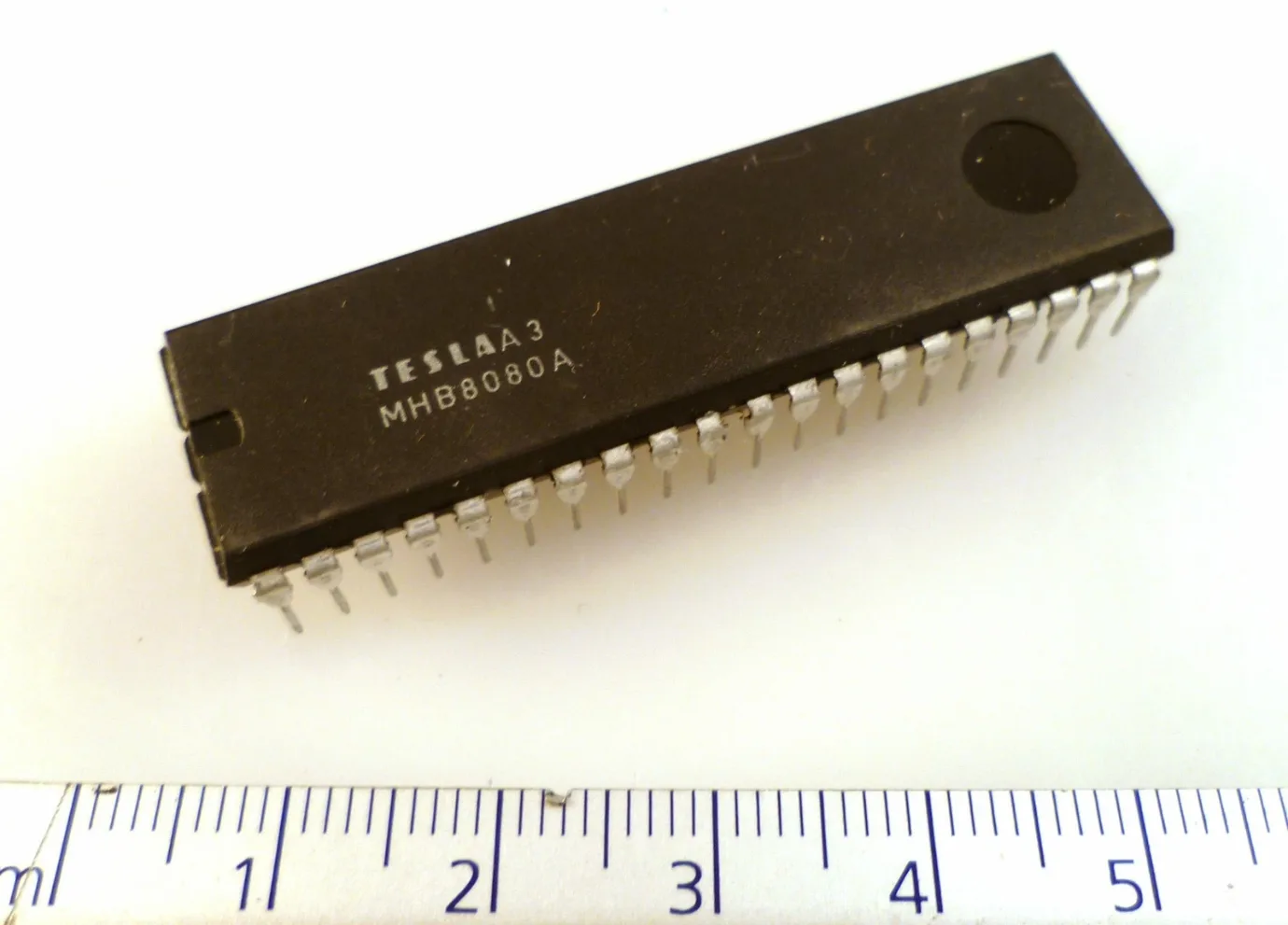
The processor was an MHB 8080A, a Czechoslovak clone of the Intel 8080 running at 2.048 MHz, sitting on a motherboard populated with domestically made Tesla logic chips rather than anything sourced from further west. Forty-eight kilobytes of RAM were split cleanly: 32 KB for the user’s own programs, and 16 KB dedicated to video memory driving a 288-by-256 display over composite video, TV aerial, or an RGB monitor. Four kilobytes of ROM held the system monitor, the low-level environment a user saw the moment the machine switched on.
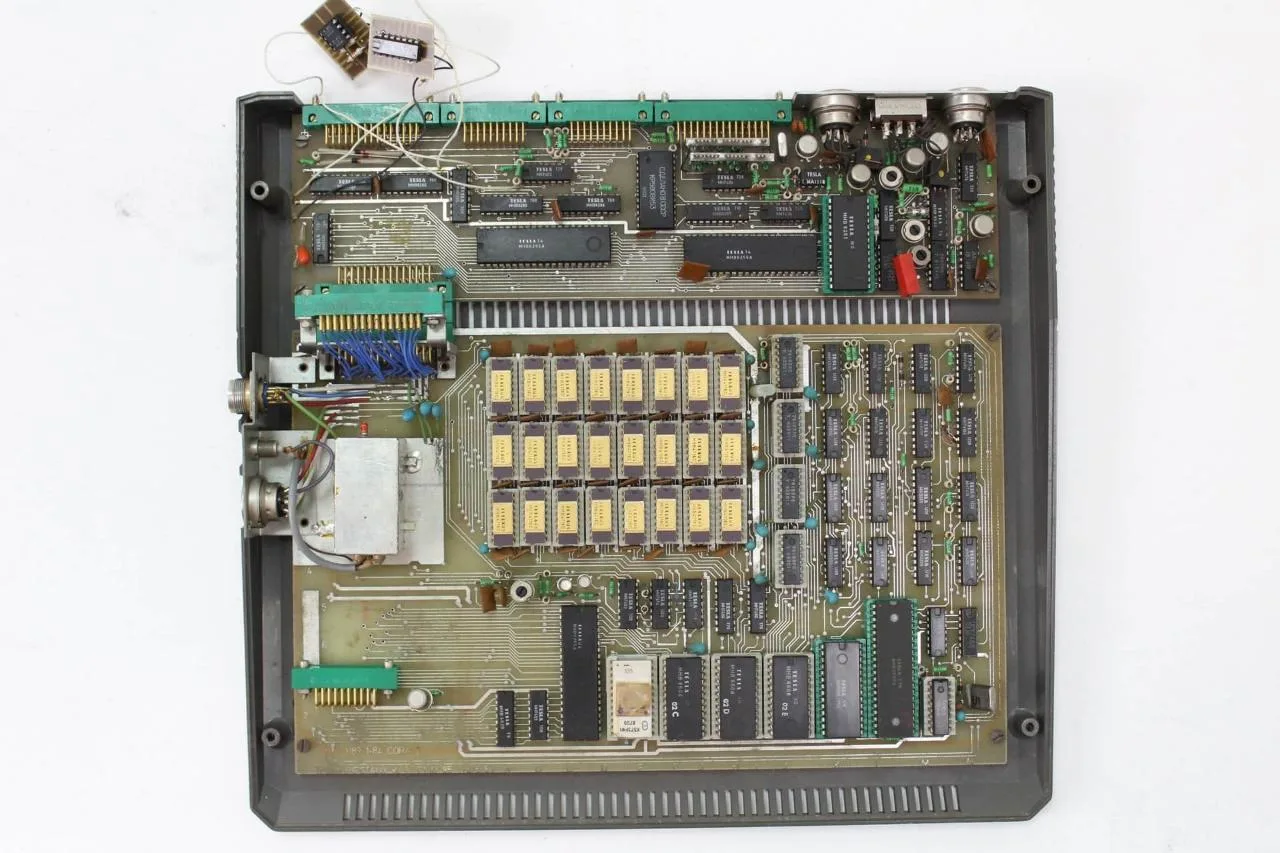
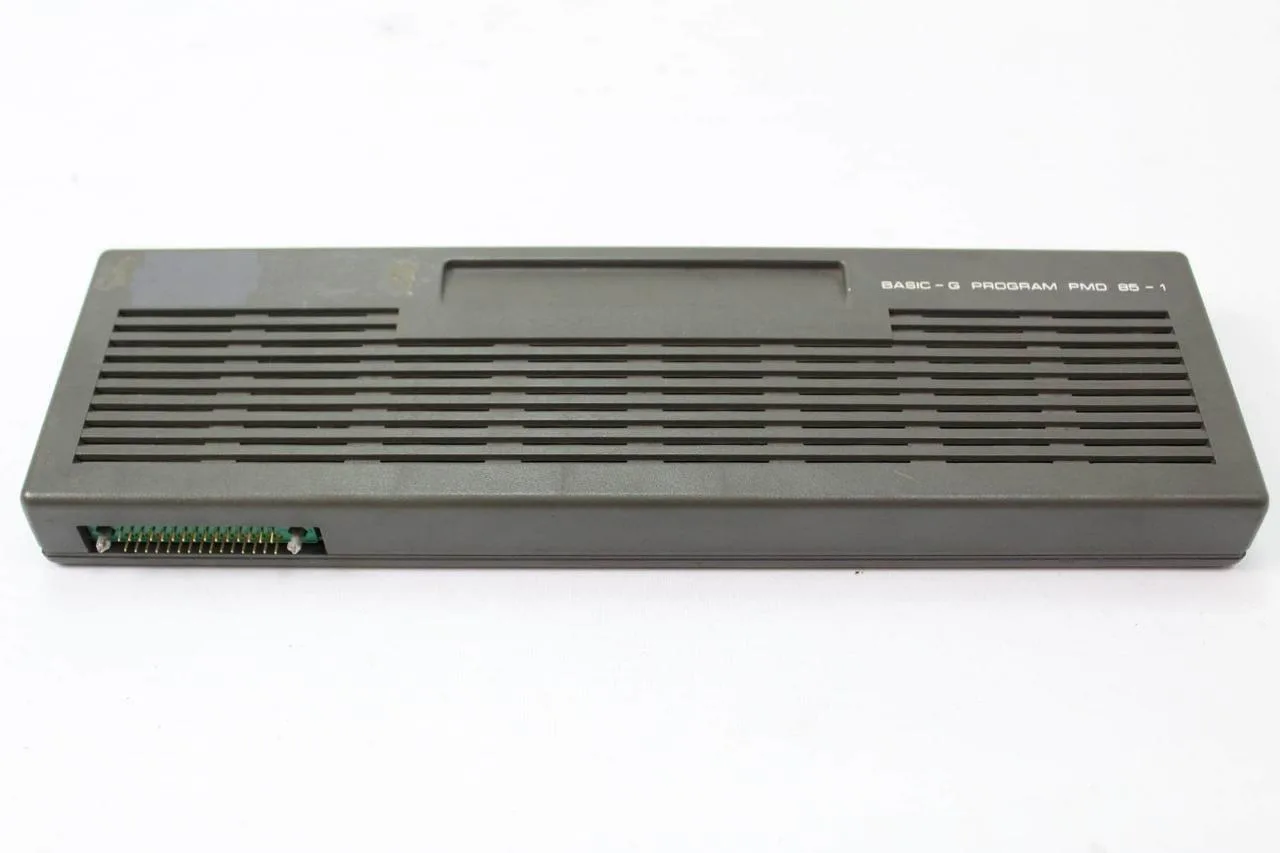
Software didn’t live on tape by default. It came on swappable ROM cartridges roughly the size of a hardback book’s spine, plugged into a slot on top of the case and switched in over the bus through one of the board’s two Intel-style 8255 peripheral interface chips. A standard machine shipped with one marked simply BASIC-G. Slotting in something else, an assembler or a Pascal environment, was as close as a Czechoslovak schoolchild in 1985 got to installing new software. Hold a piece of plastic that old and it’s a strange thing to realise: it did the job a floppy disk would do a few years later, just heavier, and a great deal less forgiving if you dropped it.
The keyboard that fought back, and the box that ran hot
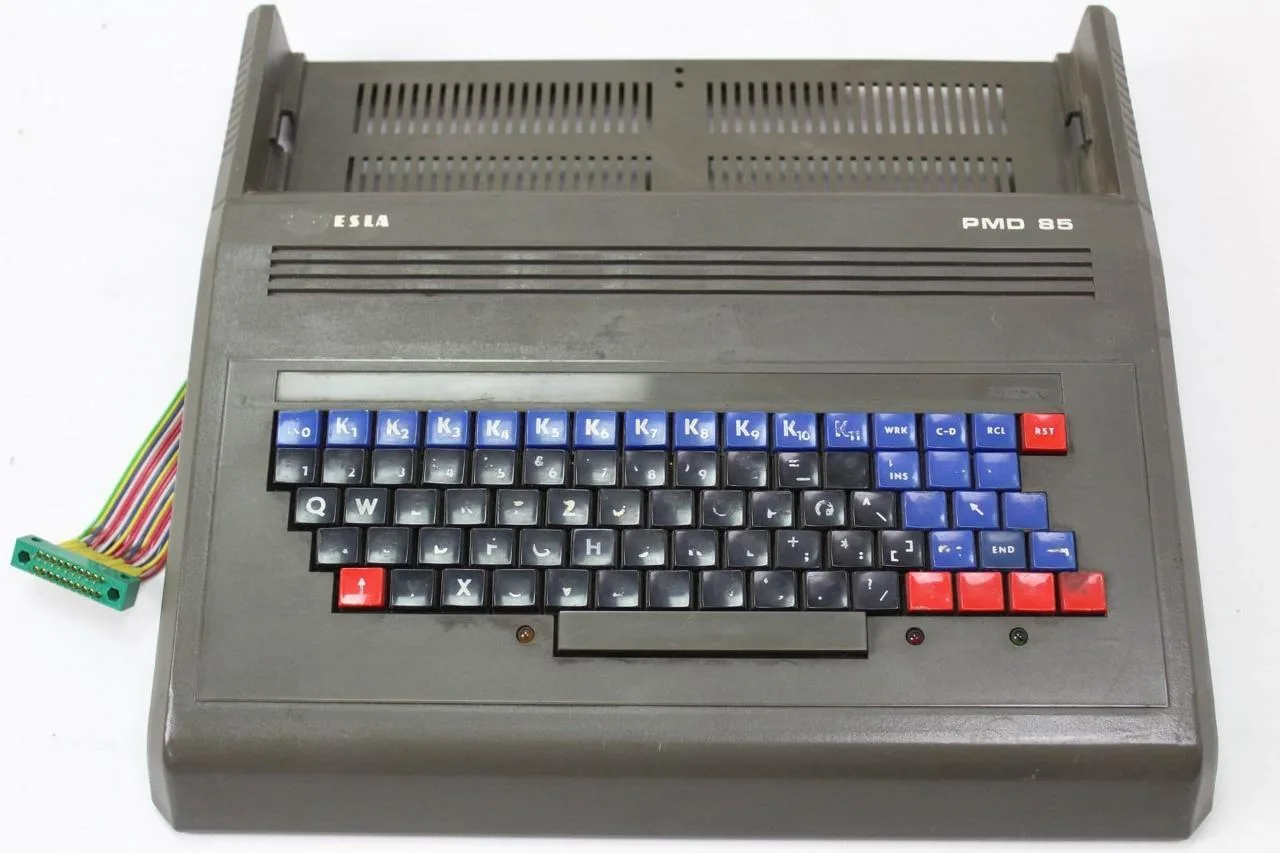
The keyboard is where the PMD 85‘s frugality stopped being clever and started being a genuine inconvenience. Kišš’s team built it from mechanical push-buttons originally intended for telephone switchboards: rigid, loud and evaluated only on key release rather than the moment of contact. Typing on it for a full school lesson was, by every account that survives, a small ordeal.
Worse, that keyboard drew a surprising amount of current, and inside a sealed plastic case running off a linear power supply with nowhere for the heat to go, the combination turned the first-series machines into something Slovak schoolchildren nicknamed, with real affection for the joke, “coffee machines.” A classroom of PMD 85s left running through a double lesson wasn’t just noisy. It was warm. Nobody at Tesla set out to build a space heater with a keyboard attached. Component scarcity and a sealed case just have a way of producing exactly that kind of accidental side effect — and it’s hard to blame engineers who were working with whatever the supply lines actually delivered, not what a proper budget would have bought them.
Beloved in Slovakia, loathed one republic over
None of that stopped the PMD 85 from becoming, in its own back half of the federation, the computer people were fond of. It was deployed en masse across Slovak primary and secondary schools and through the state’s Pioneer youth organisations. Its input/output subsystem found a second life well beyond the classroom too, driving factory automation and even controlling CNC milling machines in industrial settings that needed cheap, programmable control and couldn’t get a Western PLC for love or hard currency.
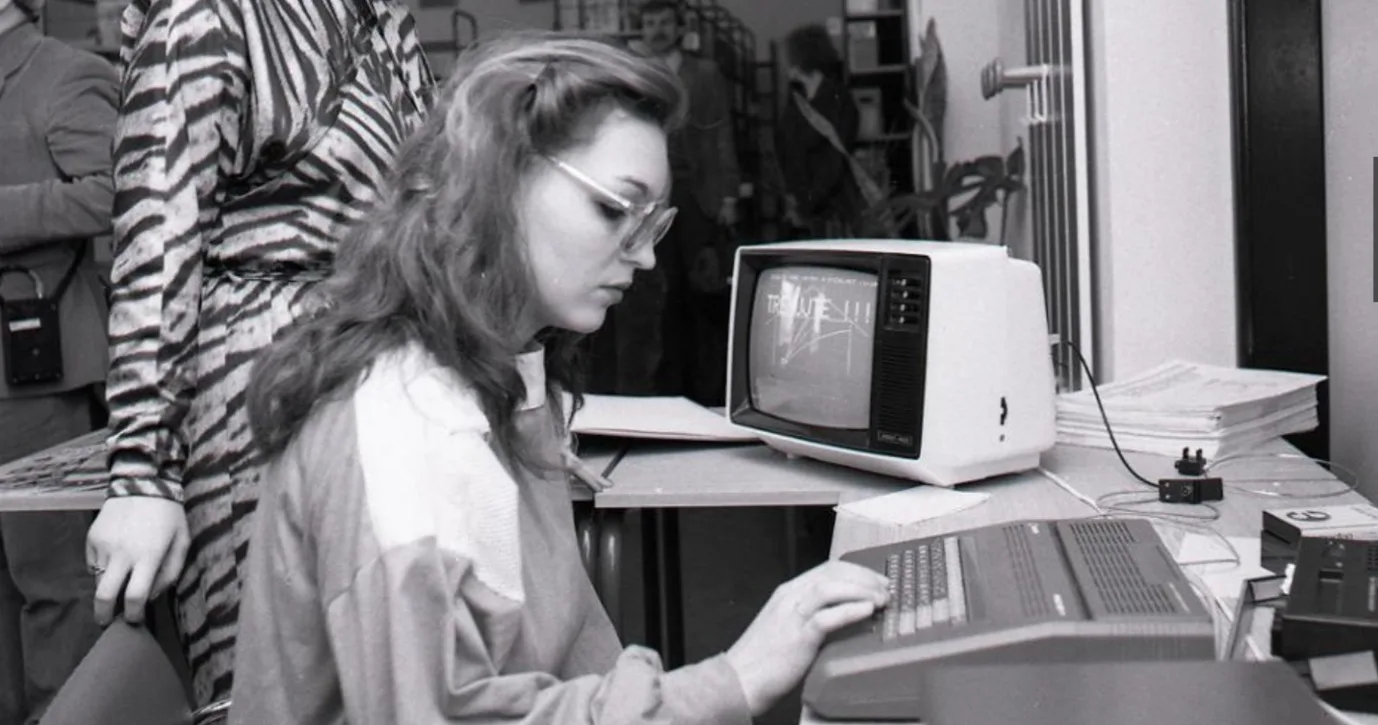
Over in the Czech half of Czechoslovakia, the equivalent role fell to the IQ 151, and here the comparison flatters the PMD 85. The IQ 151 ran hotter. Its membrane keyboard was worse to use than a wall of telephone buttons, and it earned a reputation for unreliability the PMD 85, for all its faults, never quite matched. Which machine you grew up resenting, as a Czechoslovak schoolchild in the mid-1980s, came down to which side of the old internal border you happened to live on.
Better machines, and a market that stopped listening
Tesla kept improving the design faster than anyone outside Czechoslovakia ever noticed. The PMD 85-2 arrived in 1986 with a properly ergonomic keyboard and software-based tape handling that finally made loading a program reliable rather than a small act of hope. The 85-2A followed in 1987, squeezing 64 KB of RAM into address space the original design had left unused, and production itself shifted from Tesla Piešťany to Tesla Bratislava to keep pace with demand. The PMD 85-3, in 1988, was arguably the machine the PMD 85-1 should have been from the start. It added a proper switching power supply with a linear regulation stage on the final leg, colour output over PAL and a native Czech-Slovak character set — and, at last, a keyboard that didn’t need a nickname involving hot beverages.
The platform even spawned its own small ecosystem of clones and relatives. Didaktik Skalica built the Didaktik Alfa and Beta, folding BASIC directly onto the mainboard so schools no longer needed a separate cartridge. Zbrojovka Brno, an arms manufacturer with no obvious business being in the home computer trade, built the Consul 2717, nicknamed “Zbrojováček,” which packed the whole machine into a monitor housing with its own floppy drive. A hobbyist named Ivan Urda designed the MAŤO, a self-assembly kit sold to anyone willing to build their own.
Then, in 1989, the Velvet Revolution opened Czechoslovakia’s borders, and the calculation that had kept the PMD 85 relevant simply stopped applying. Schools and shops that had been unable to buy a Western machine at any price could suddenly buy an Amiga or an Atari ST at a fair one, and an 8-bit computer with a telephone-button keyboard, however lovingly refined by then, had nothing left to compete on. Production wound down within the year.
What was left over
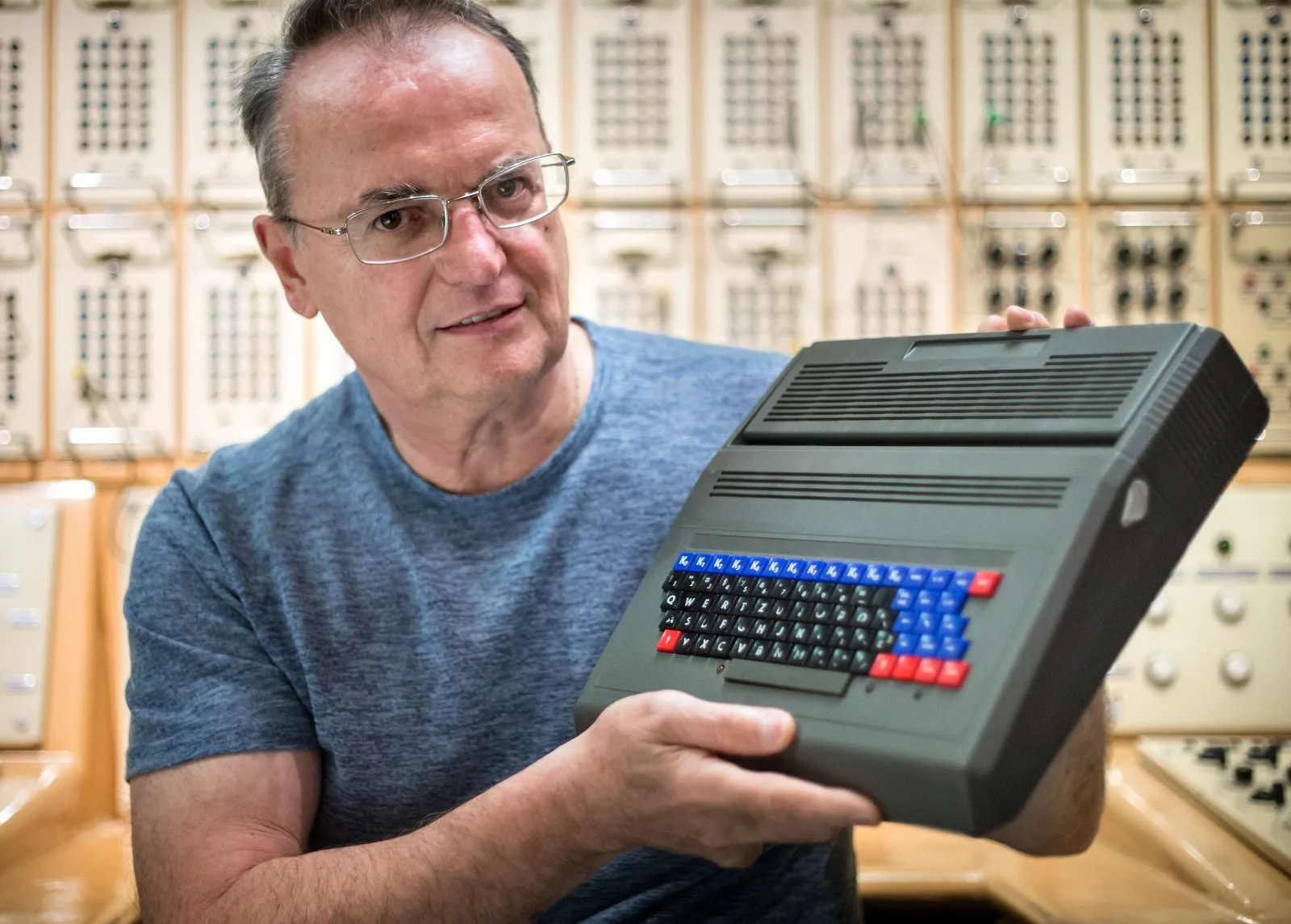
Kišš didn’t stay to watch it happen. Convinced there was no future in Slovak engineering after 1989, he emigrated to Canada in his forties and later moved on to California, swapping hardware design for software consultancy so thoroughly that he went on to earn Microsoft’s Most Valuable Professional award ten times over. The man who once traded a state-changing invention for a passport that only worked in one direction ended up, a few years later, free to go wherever he liked.
The machines he left behind didn’t vanish so much as go quiet. What keeps the PMD 85 documented and emulator-accurate today is largely the work of two brothers, Roman and Martin Bórik, who grew up with the platform and now run the PMD 85 Infoserver in their spare time, alongside earlier emulator work from Petr Tůma, Peter Chrenko and others going back to the early 1990s. It is, in the end, a fittingly modest legacy for a machine that was never meant to be glamorous: not preserved by a museum or a corporation, but kept alive by people who simply liked using it, on a board still stamped, decades on, with a date scratched in by hand.