The prototype was made of wood
In the small hours before the doors opened at the Winter Consumer Electronics Show in Chicago, in January 1977, a handful of Commodore engineers were still trying to make a computer work. The computer lived in a wooden box. Someone had painted the box yellow so that, from a safe distance, it might pass for metal.
Nobody would have called it ideal. The screen was a picture tube lifted from a cheap black-and-white television bought at a local hardware shop, and the first time the team switched it on, the picture came up upside down. Chuck Peddle later joked that they had to dig out Adam Osborne’s do-it-yourself television book to work out how to turn it the right way up. It worked in time. Just.
A calculator company with a problem
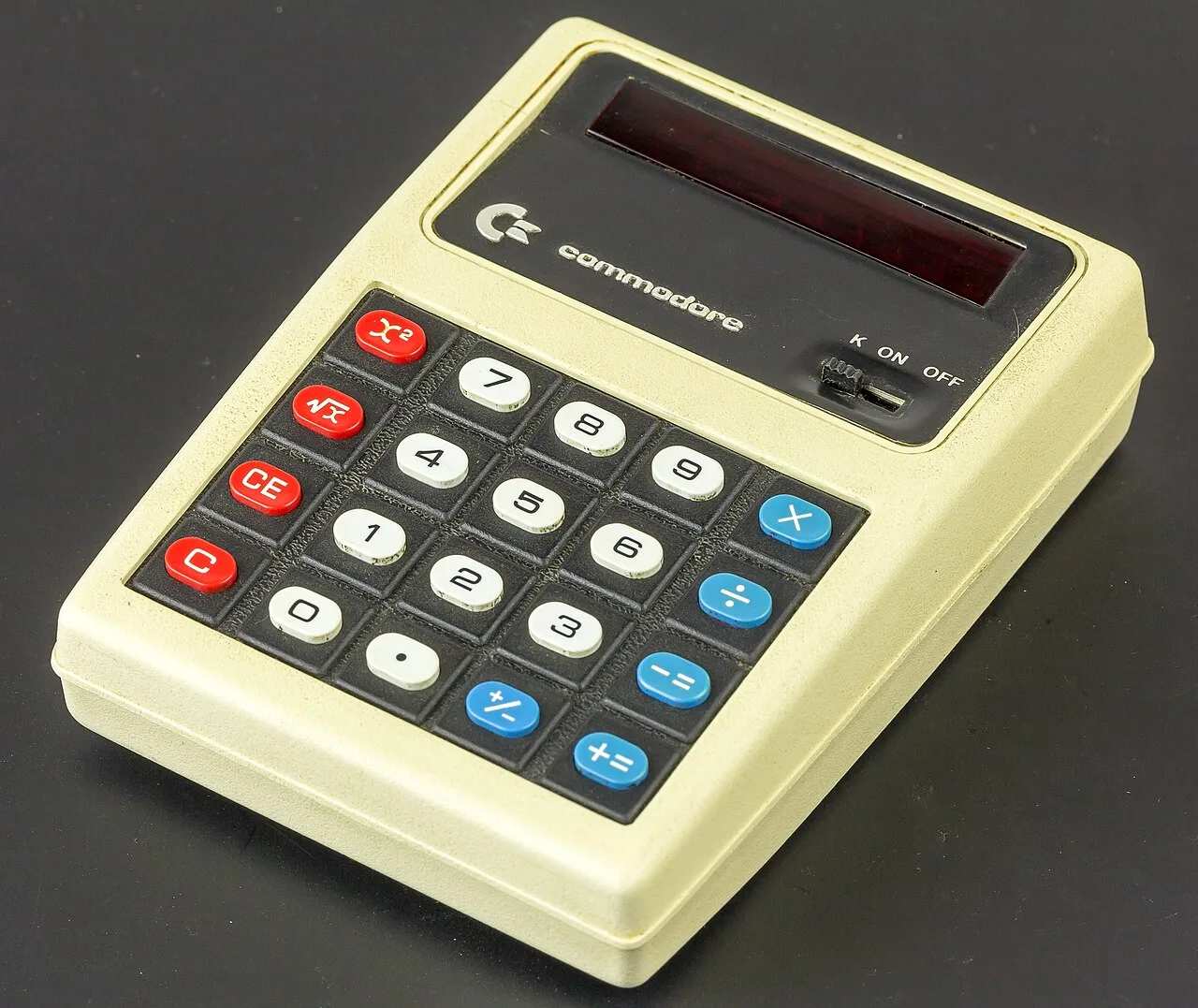
Commodore in the mid-1970s was a business in trouble. Jack Tramiel, its founder, had built it on typewriters and then on pocket calculators, and then Texas Instruments decided to sell calculators at prices that turned Commodore’s margins into a rounding error. Tramiel needed something new. He also needed it cheap.
Enter Peddle. He was one of the engineers behind the MOS Technology 6502, the processor that had upended the chip market in 1975 by costing a fraction of what Motorola and Intel wanted for theirs. Peddle believed a personal computer was the obvious next step, and he had tried, without luck, to interest Radio Shack in selling one. Commodore bought MOS in the autumn of 1976, and with it came the chip, the people and the argument.
Tramiel listened, and then did what Tramiel did: he set a deadline. Peddle had six months to have a working computer ready for the January show. Six months, from a standing start, on a processor barely a year old, with no software. In a modern company that timetable would produce a project plan, a steering committee and an apology. At Commodore it produced a wooden case.
What the yellow box became
The machine that reached the public was a single steel unit with everything inside: a 6502 running at 1 MHz, a 9-inch green-on-black screen showing 40 columns of text, a cassette deck built into the case, and an interface on the back (IEEE-488, the laboratory-instrument bus of its day) that let it talk to printers and disk drives. You plugged it into the wall and that was it. No kit, no soldering iron, no shopping list of separate boxes.
Inside that case, the team had a few clever ideas of its own. John Feagans conceived the kernal, a layer of ROM routines that kept the hardware plumbing separate from BASIC, so the language could change without the machine underneath being rewritten. Leonard Tramiel, Jack’s son, helped design the block-graphics characters engraved across the keys and doubled as the machine’s quality control. Every PET could draw crude pictures with nothing more than a keypress, which in 1977 was the sort of trick that made people stop and stare.
Apple and Radio Shack were pitching machines at the same crowd that year, and the three later got lumped together as the 1977 ‘trinity’ of personal computing. The PET was the only one that arrived as a finished appliance, with screen, storage and software already inside. It is easy to forget, given what followed, how strange and how attractive that felt.
Then there was the keyboard. Small, rectangular, calculator-style keys packed into a tight grid, on a machine people were supposed to write programs on. Touch-typing was out of the question. The usual explanation is that Commodore was clearing out surplus calculator parts, which sounds exactly like a company with that history, though I couldn’t trace it to a named interview or document. Whatever the reason, it became the machine’s most mocked feature. A conventional full-size keyboard arrived with the 2001-N in 1979, and the cassette deck had to move off the chassis to make room.
Twenty-five thousand dollars for a language
The PET needed a programming language, and it needed one fast. Peddle went to a young company in Albuquerque called Microsoft, where Bill Gates had a 6502 version of BASIC, and Tramiel had a very clear idea of what he was willing to pay. The figure that gets quoted is a one-off $25,000 for a perpetual licence, no royalties, covering the PET and any 6502 machine Commodore built afterwards.
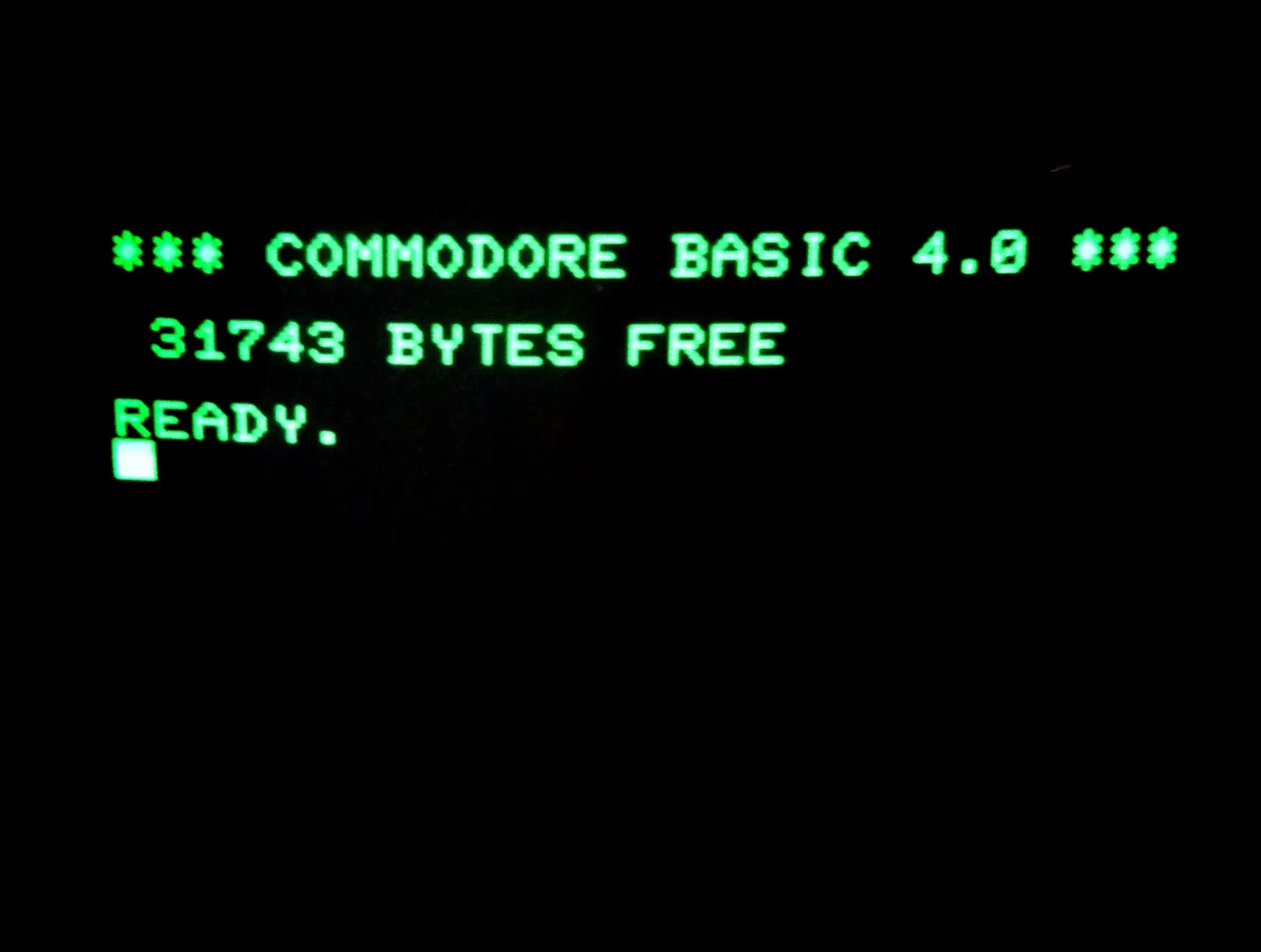
It was a bargain for Commodore and, in hindsight, a magnificent piece of haggling. The same licence went on to sit inside the VIC-20 and the Commodore 64. Commodore also insisted on paying only once the PET was actually shipping, a habit that reportedly left Microsoft short of cash for months.
Gates got his own back in a small way. Hidden in the PET’s BASIC 2.0 was a tiny routine that printed MICROSOFT! on the screen if you typed WAIT 6502,1. The story goes that he coded it personally, and that Commodore’s management had it stripped from later machines once they found out. The trigger number, 6502, is the processor’s own name.
A price that kept moving
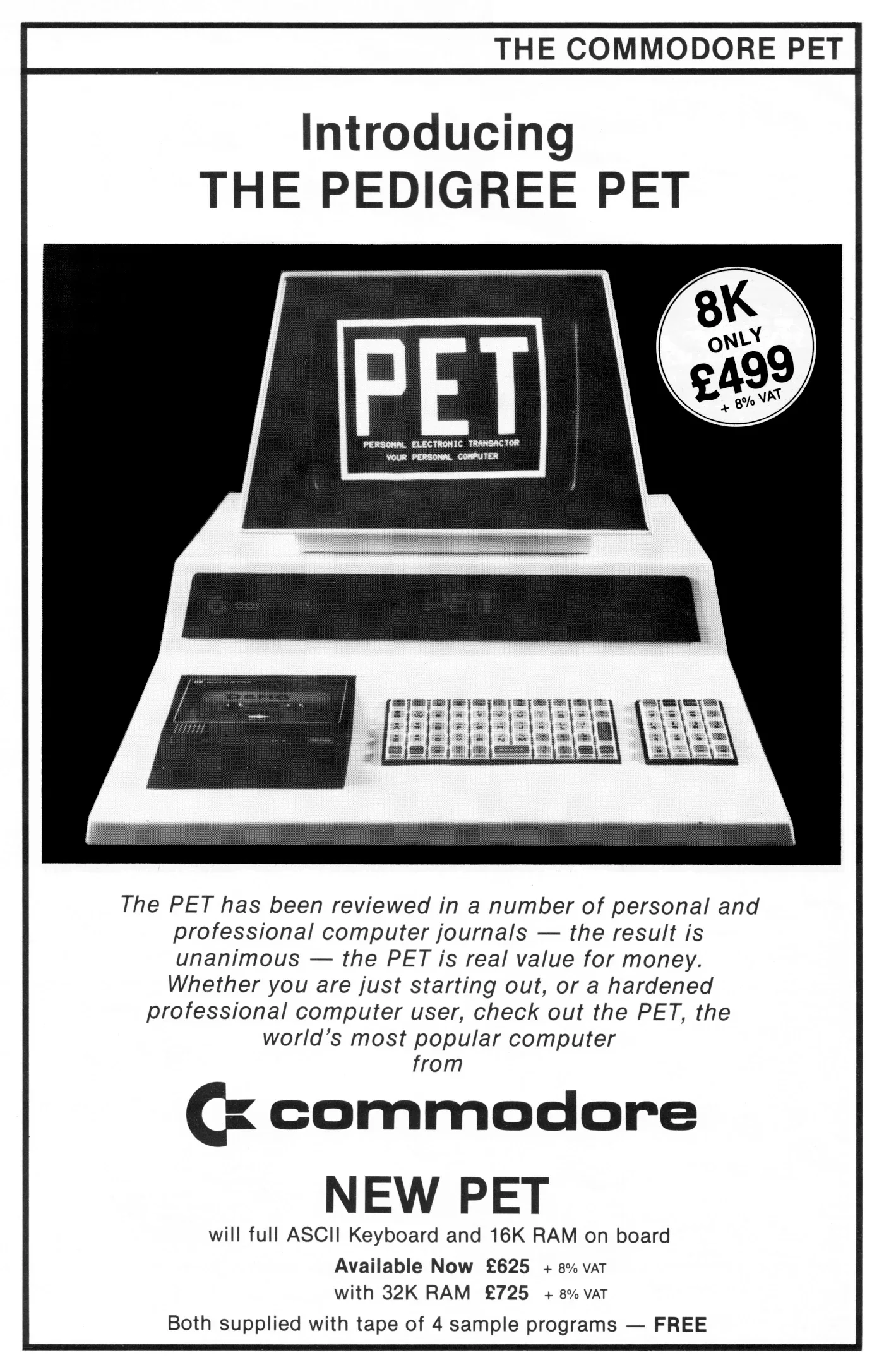
The PET was first advertised, by most accounts, at $495 for the 4 KB model, and orders came in faster than Commodore could build the machines. Tramiel put the price up to $595 and began steering customers towards an 8 KB version at $795, which made more sense anyway, since the 4 KB model left only a sliver of memory for the user.
Both the PET and the Apple II turned up at the West Coast Computer Faire in San Francisco in April 1977, a few months after the wooden prototype had been wheeled out in Chicago. Production machines began reaching customers in the autumn, with the first hundred or so going out in October and wider availability by December.
There’s a famous what-if attached to all this. The first spreadsheet, VisiCalc, landed on the Apple II and made Apple’s business for years; the PET, which was the more business-minded of the two, watched it go by. It came down to whichever machine the publisher had free that day.
Philips, and a new name for Europe
Then came the awkward business of Europe. Philips owned the trademark on the name PET, so Commodore sold its European machines under a different label: CBM, for Commodore Business Machines. The first models were the 3008, 3016 and 3032, named for their memory in kilobytes, and they were dressed for the office rather than the hobbyist’s bench.
The rename said something about how Commodore saw the market. In Britain and on the Continent the PET was pitched at business, education and laboratories. The UK operation sat at 446 Bath Road in Slough, and the machine was announced to British readers in the first issue of Personal Computer World in March 1978, at a price of around £600. Kit Spencer of Commodore explained that the company had kept quiet on purpose. It would rather delay than create demand it couldn’t meet, and wanted service, software and maintenance in place first.
A British retailer’s leaflet from the period offered an 8 KB ‘Pedigree PET’ at £499 plus VAT. A home-grown software industry sprang up almost at once: Supersoft, founded in England in 1978 by Peter Calver and Pearl Wellard to write for the PET, is among the earliest. Schools took to the machine too. The steel case survived a classroom in a way a hobbyist’s tangle of boards did not, and the PET became a familiar sight in British, American and Canadian classrooms alike.
The man who built it did not stay
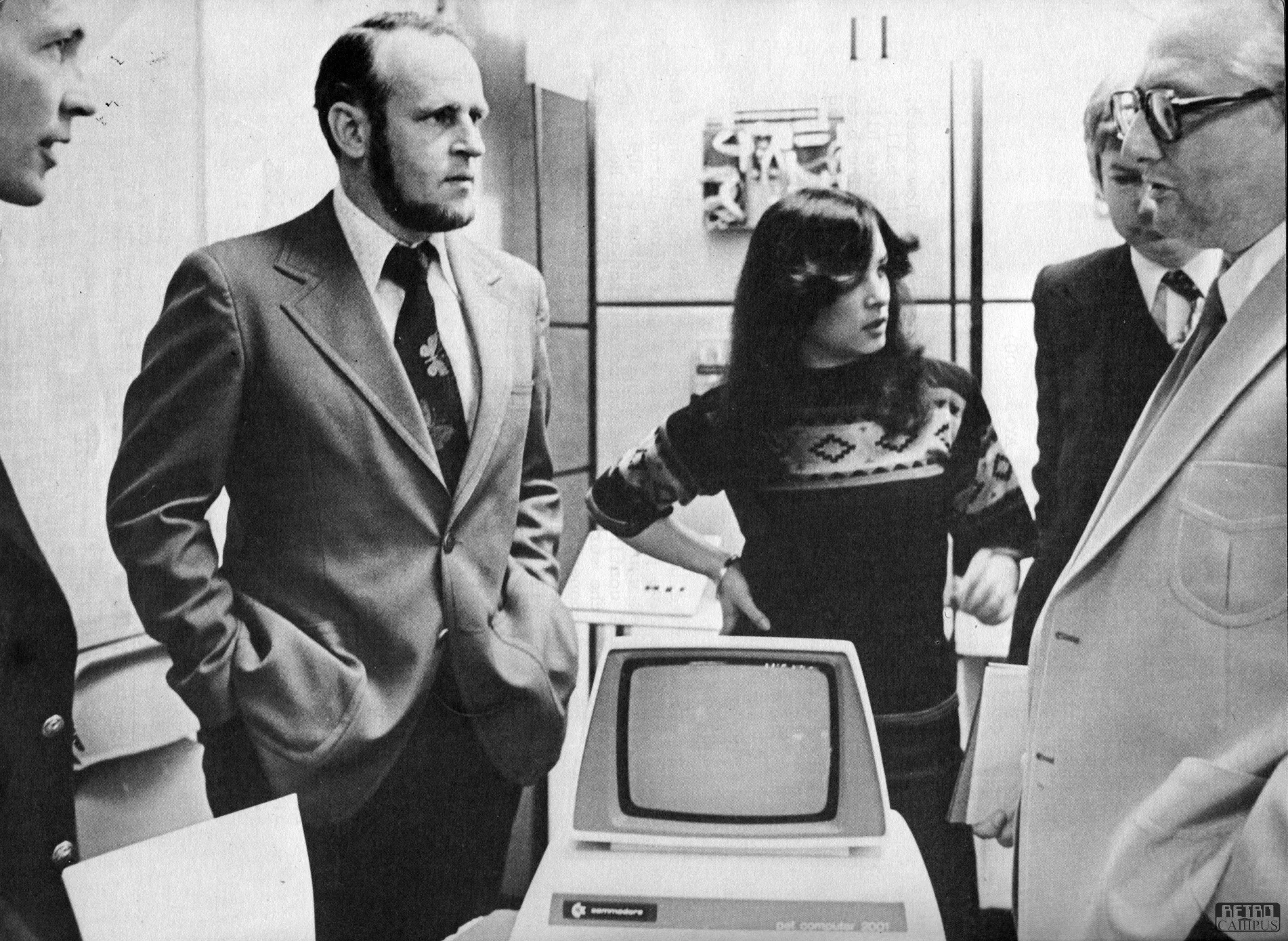
Peddle’s part of the story doesn’t end well. In April 1980, on a trip to London, he and other Commodore managers talked about splitting the company into consumer and business divisions. Tramiel arrived late, found out and took it as mutiny. By this account he closed Peddle’s research facility the next day, and Peddle left for good. The man who had talked Commodore into building computers was gone barely three years after that yellow box first came up the right way round.
The engineering was good. Peddle’s team built a working, complete computer in months, around a chip nobody had yet proved in a product like it, and got a language onto it for $25,000. The failures were upstairs: the pricing that kept lurching, the keyboard that cost-cutting forced onto the customer and the familiar boardroom habit of treating the person who understood the product as a threat.
The PET sold roughly 219,000 units before it was discontinued in 1982. In the US, where Apple and Radio Shack held the hobbyist market, it never quite broke through. The VIC-20 and then the Commodore 64 rested on the same 6502 and the same Microsoft licence, and the second of those became the best-selling home computer of its era.
Chuck Peddle died on 15 December 2019. The wooden prototype survives at the Computer History Museum in Mountain View, in storage rather than on display, still painted to look like something it wasn’t.