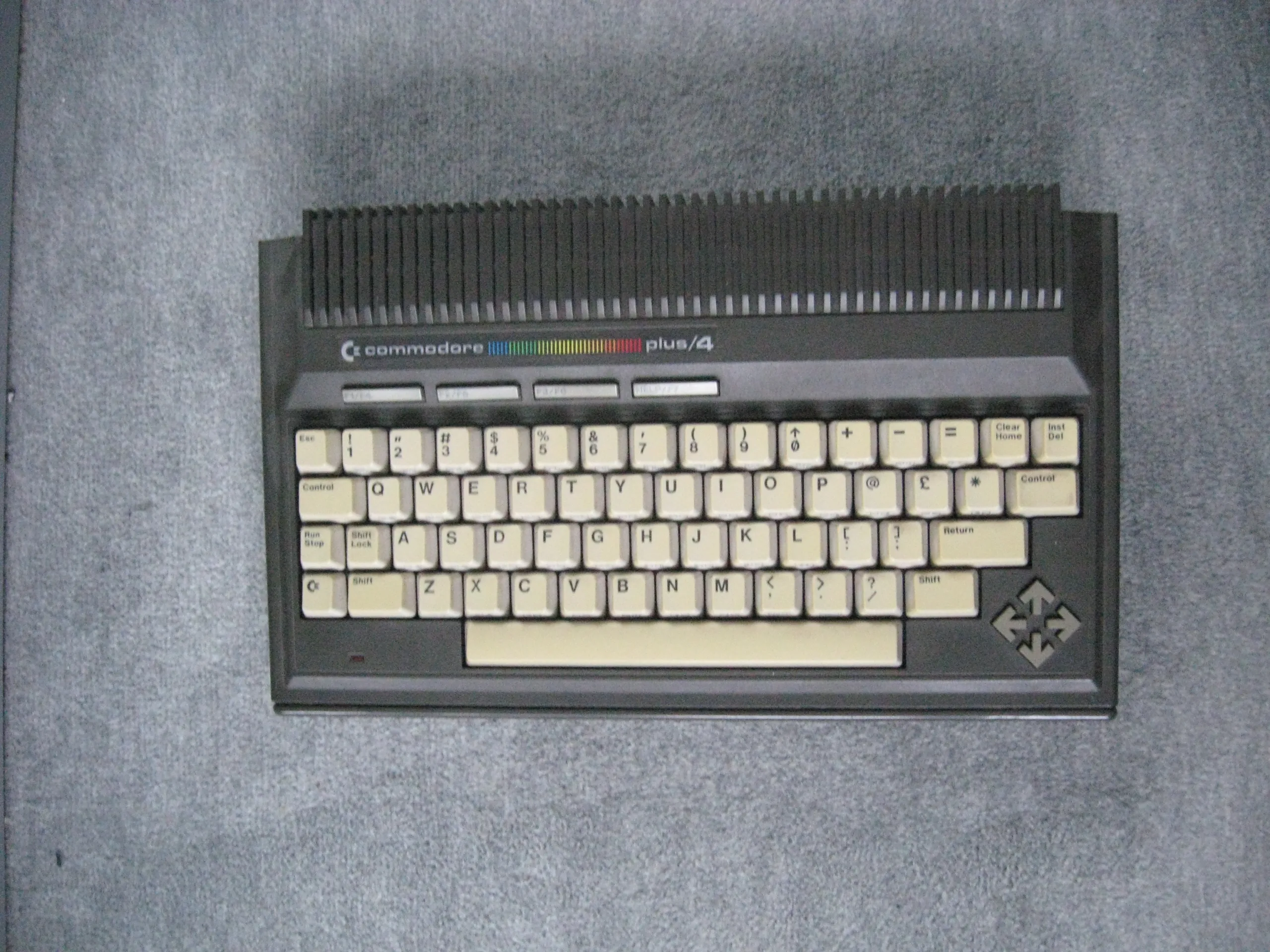
The Commodore Plus/4 arrived in June 1984 with a word processor, spreadsheet, database and graphing package built straight into its 64 KB of ROM, ready to run the moment it was switched on.
Why it matters
The Plus/4 shows good engineering undone by bad positioning. The TED chip packed a 121-colour palette and a built-in RS-232 UART capable of 19,200 bit/s into a single piece of silicon, at a time when most home micros needed several separate chips to do the same job less elegantly. The ‘3 Plus 1’ suite in ROM meant a buyer could write a letter or build a spreadsheet with nothing more than the machine itself, no tape or disk required. What killed it commercially was that Commodore launched it at $299, a few pounds either side of a Commodore 64, while advertising it as more capable. In practice it lacked the C64’s sprite hardware and its SID sound chip, and it could not run the C64’s existing software library. Commodore was competing against its own best-selling product with a machine that looked like a downgrade next to it, and buyers who already understood the C64’s position in the market noticed immediately.
What to check before you buy
- Ask for a power-on test, or at minimum a clear description of what happens when it's switched on. A dead TED chip or CPU usually means a black screen, and parts are hard to source.
- Check which PSU is included. The Plus/4's power brick looks similar to the C64's but uses a different connector, and an incorrect or failing original PSU is a common cause of board damage.
- Inspect the keyboard action if you can. The rubber-dome mechanism was never especially crisp even new, so don't mistake age-related stiffness for a fault you need to fix.
- Confirm PAL or NTSC before buying, particularly if importing. The two aren't interchangeable with a UK or European television setup.
- Ask whether the board has had its electrolytic capacitors replaced. An unrestored example will likely need this work doing regardless of how it currently performs.