MACHINE REFERENCE

Commodore 64

Commodore 64 — the machine Guinness World Records still credits as the best-selling desktop computer model of all time, even though nobody, including Commodore itself, ever fully settled on quite how many were actually sold.

Why it matters

Jack Tramiel’s insistence on undercutting every rival on price while still delivering genuinely capable colour graphics and a proper sound chip made the C64 the default home computer for an entire generation, particularly once repeated price cuts through 1983 turned a $595 launch machine into a $300 one within a year. The SID chip alone spawned a chiptune subculture that has outlived the hardware by decades, and the sheer volume sold created a games library deep enough that new C64 releases are still being written today, more than 40 years on.

What to check before you buy

  • Ask whether the board has been recapped or the original PLA chip replaced; the PLA is the single most failure-prone chip in a breadbin C64 and isn’t getting any more available
  • A black or garbled screen on power-up is more often the PLA or a RAM chip than anything catastrophic
  • Check pin voltages on the SID before condemning it as dead — the machine will actually boot with no SID fitted at all, so silence isn’t always a sound-chip problem
  • Confirm which variant you’re being offered (early “breadbin” vs later slimline 64C), since parts, repair difficulty and collector value all differ
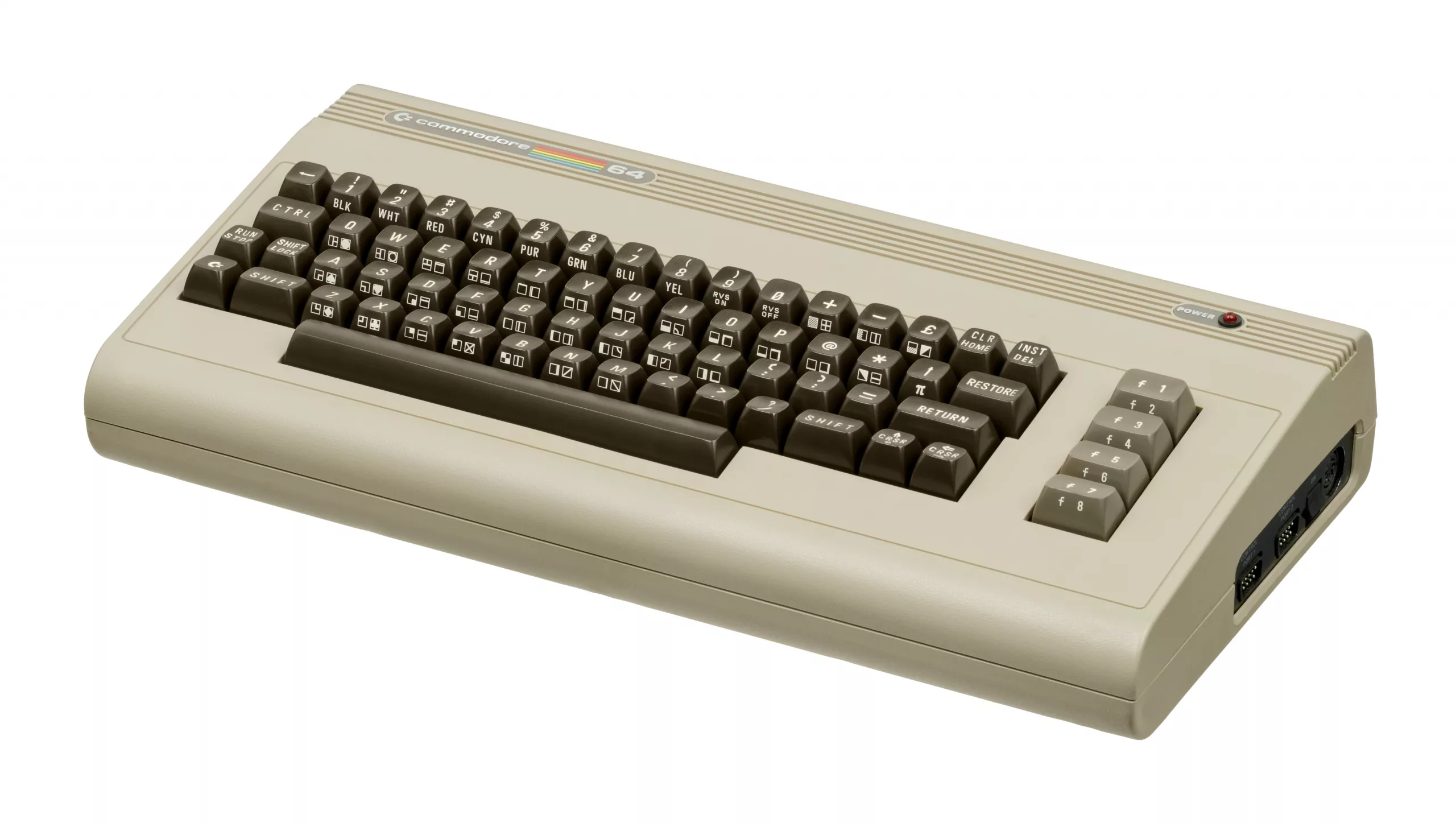
Commodore 64 home computer in a beige case with brown keys

Photo: Evan-Amos, Wikimedia Commons (Public domain)

Released

1982

RAM

64 KB

CPU

MOS Technology 6510 @ 1.023 MHz (NTSC) / 0.985 MHz (PAL)

Launch price

US$595 (August 1982); UK £399 (1983 launch)

Manufacturer

Commodore Business Machines (Commodore International)

Form factor

All-in-one keyboard unit connecting to a TV or monitor via RF/composite

CPU

MOS Technology 6510 @ 1.023 MHz (NTSC) / 0.985 MHz (PAL)

Chipset

MOS Technology VIC-II (video), MOS Technology SID 6581/8580 (audio), two MOS 6526 CIA chips (I/O)

RAM

64 KB

ROM

20 KB (BASIC 2.0, KERNAL, character set)

Graphics

VIC-II, 320×200 (40×25 text mode), 16-colour palette, 8 hardware sprites

Audio

SID 6581 (later 8580) — 3-voice synthesiser with ADSR envelopes, filter and ring modulation

Storage

Commodore Datasette (cassette); 5.25″ floppy via the 1541 drive over Commodore’s serial bus

Ports

ROM cartridge slot, 2× DE-9 joystick/mouse ports, serial bus (drives/printers), user port (RS-232/Centronics TTL-level), RF/composite/S-Video out

OS

Commodore KERNAL + BASIC 2.0, in ROM

PSU

External brick, +5V DC / 9V AC — runs hot, and a failing brick can send overvoltage into the board

Units sold

widely cited range of 12.5–17 million; Commodore’s own internal figures were never fully disclosed, and this range (including the figure behind Guinness World Records’ “best-selling computer model” recognition) is what’s most consistently repeated across sources

Successors

Commodore 128 (backward-compatible); Commodore 64C (redesigned case, 1986); the Amiga line as Commodore’s 16-bit successor

  • PLA (906114-01) chip failure
    The custom gate array handling address decoding runs hot and is the single most failure-prone chip in a breadbin C64, producing a black screen, garbled graphics, or intermittent startup faults.
  • Capacitor ageing across the board
    Recapping the common failure points restores stable power rails and resolves many "mystery" crashes, video glitches and SID noise on a board this age.
  • SID chip failure and misdiagnosis
    A dead or faulty SID (6581 or later 8580) can cause silence or a black screen; check pin voltages (12V/9V at pin 28, 5V at pin 25) before condemning the chip, since the C64 will actually boot with no SID fitted at all.
  • 1981 Development begins at Commodore's MOS Technology division under the "VIC-40"/Commodore 64 project
  • 1982 Unveiled at Winter CES in January; US retail launch in August at $595
  • 1983 Price war with Texas Instruments and Atari; UK launch at £399; US price cut to around $300 by year-end
  • 1986 Redesigned C64C released in a slimmer, Amiga-style case
  • 1994 Production ends following Commodore's bankruptcy, closing out nearly 12 years on sale