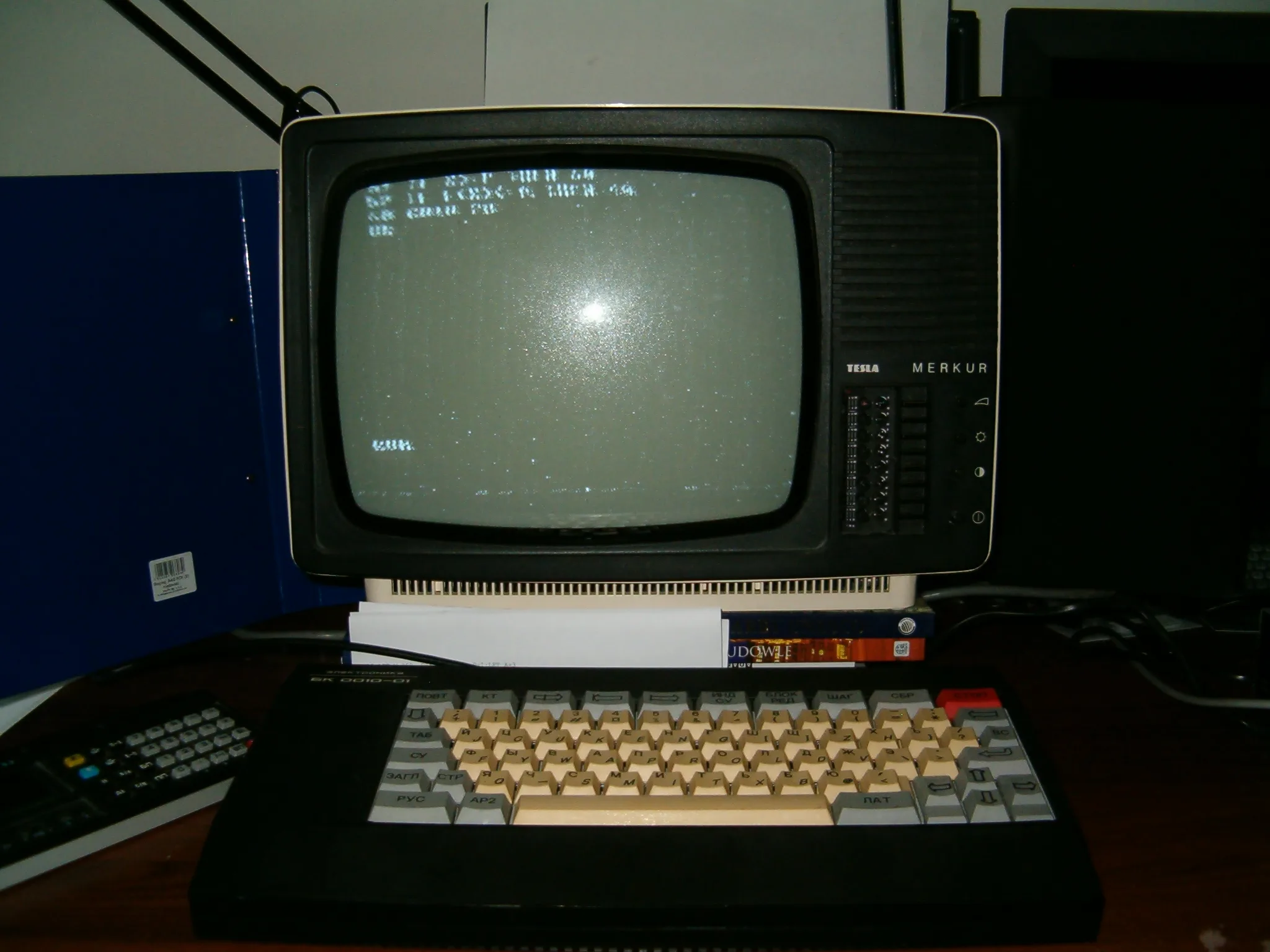
Elektronika BK-0010 ran on a processor copied from a minicomputer, not a microcomputer. Where the West built home computers around 8-bit chips designed for the job, the Soviet Union’s only officially sanctioned home computer used the K1801VM1, a 16-bit clone of the CPU inside DEC’s PDP-11, repurposed for a machine that cost four months of an average wage.
Why it matters
That PDP-11 heritage is the whole story. The K1801VM1 gave the BK-0010 real 16-bit instructions and addressing at a time when Z80 and 6502 machines were the Western norm, and it made the computer genuinely capable once you got past the 16 KiB of RAM left over after the video buffer took its half. It reached serial production in 1985 as the only Soviet home computer design accounted for in state economic planning, which is a very different kind of achievement to topping a sales chart, but a real one: everything else sold as a “home computer” in the USSR at the time was an unofficial clone of somebody else’s design. Three decades later, its straightforward, well-documented hardware gave it an unlikely second life in the post-Soviet demoscene, where programmers could still buy old stock and push it further than its 1983 designers ever planned.
What to check before you buy
- Confirm the power supply delivers a clean, regulated 5V, since the repair community’s own threads on the BK family link memory instability to drifting voltage regulators
- Expect the keyboard to feel different to anything Western-built from the same era — the pseudo-membrane design was a contemporary complaint, not just a modern one
- Check whether it’s a bare BK-0010 or the later 0010.01 revision with the improved keyboard and built-in Vilnius BASIC, since the two are often listed interchangeably
- Factor in that documentation and spares are overwhelmingly in Russian