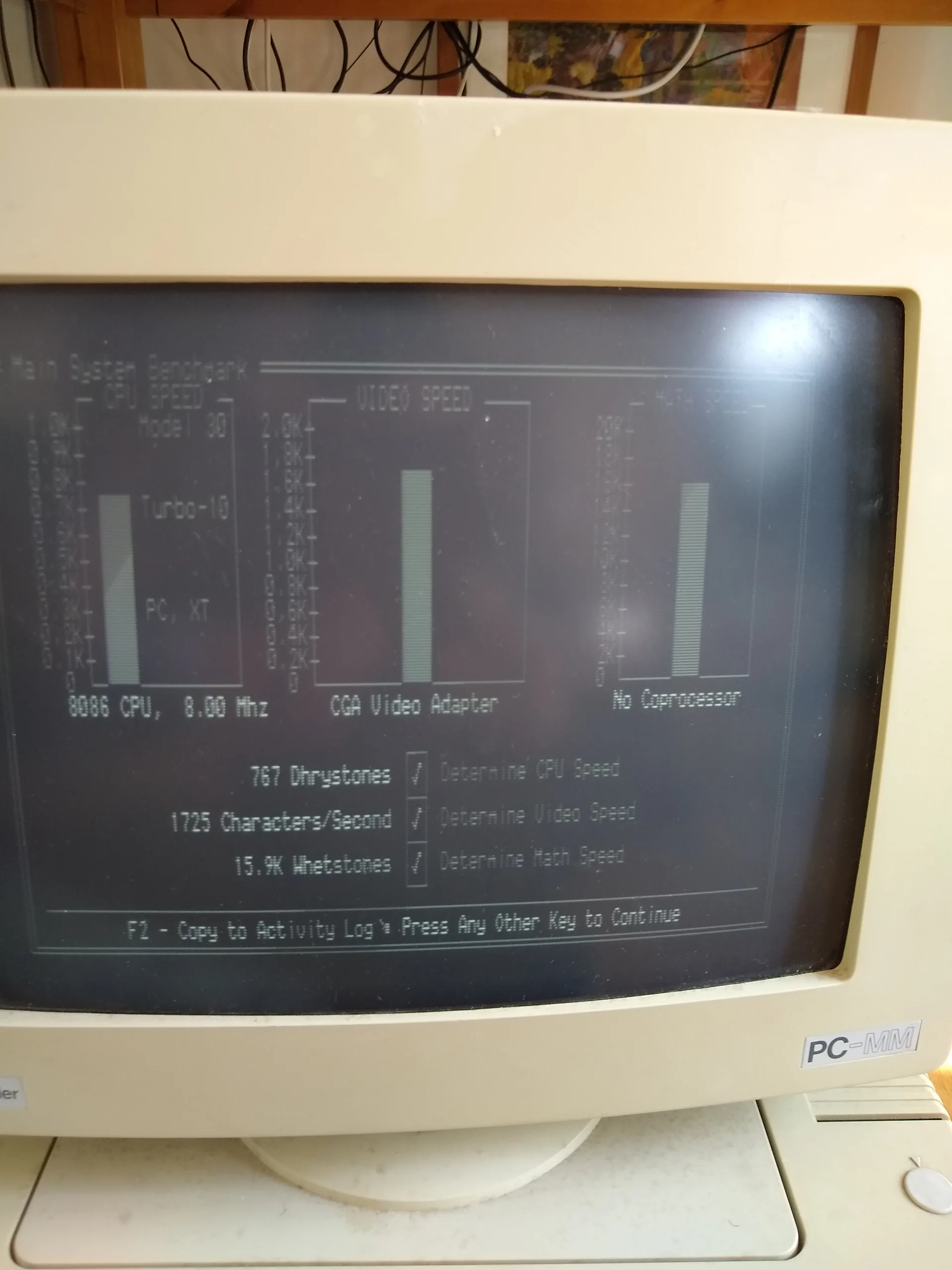
The Amstrad PC1512 went on sale at £399 plus VAT in September 1986, undercutting a genuine IBM PC by well over a thousand pounds and putting a real MS-DOS machine, monitor and keyboard included, within reach of an ordinary household for the first time in Britain. Lift the monitor off its stand and you'd find the whole power supply sitting under it, four AA batteries wedged in beside it to keep the clock running, an odd bit of engineering that meant the "computer" on the desk was, electrically speaking, only half the machine.
Why it matters
Amstrad's trick, learned from selling hi-fi separates and repeated with the CPC range, was to sell a complete working system at one fixed price rather than a box you then had to fit a graphics card, serial port and monitor to yourself. Applied to the IBM-compatible market that idea worked: at its peak Amstrad held around a quarter of the European PC market, and the newly launched PC Plus magazine aimed its early issues specifically at 1512 owners and compatible clones because so many readers owned one. The hardware was nothing special even in 1986: an 8086-2 at 8MHz and CGA-level graphics. What clone-builders and business buyers had to answer was the price of a complete, working PC.
What to check before you buy
- Confirm the original monitor is present and working. The PSU lives inside it, so without it the system unit won't power on at all.
- Check whether the four AA batteries under the monitor have been removed; leaked cells corrode the holder and the real-time clock chip.
- Test the keyboard for a stuck key before assuming a fault elsewhere. A jammed key drops the machine into an endless beep loop at boot.
- The keyboard and mouse use Amstrad's own connectors, not standard PC ones, so a complete system needs its original peripherals or period-correct replacements.
- Ask whether the CPU has been swapped for an NEC V30, a common and easily reversible upgrade from the period.
- The 5.25-inch floppy drives are pushing 40 years old; expect to clean or re-lubricate them before trusting any disk read or write.