MACHINE REFERENCE

Atari 800XL

Atari 800XL — the machine that finally gave Atari’s ageing 8-bit line a single, cost-reduced, all-in-one design after four years of the bulkier, more expensive 400 and 800.

Why it matters

Launched into a market Commodore had already reshaped around aggressive pricing, the 800XL undercut its own predecessors while keeping full software compatibility with the existing 8-bit Atari library, and went on to become the best-selling model of the entire XL/XE range. It also arrived just as Jack Tramiel — fresh from building the C64 into a phenomenon at Commodore — took over Atari itself in 1984, making the 800XL a genuine hinge point between two very different chapters of Atari’s history.

What to check before you buy

  • A dead keyboard with working sound (or working keyboard/sound but failed disk access) is a textbook POKEY chip symptom, not necessarily a dead board
  • The Star Raiders cartridge is a handy diagnostic, since it exercises ANTIC, GTIA and the CPU together
  • Keyboard reliability issues are very often just a loose or oxidised ribbon cable connection rather than a failed chip
  • Ask whether the original external PSU is included and whether it’s been tested — period Atari power adapters have a mixed reliability reputation
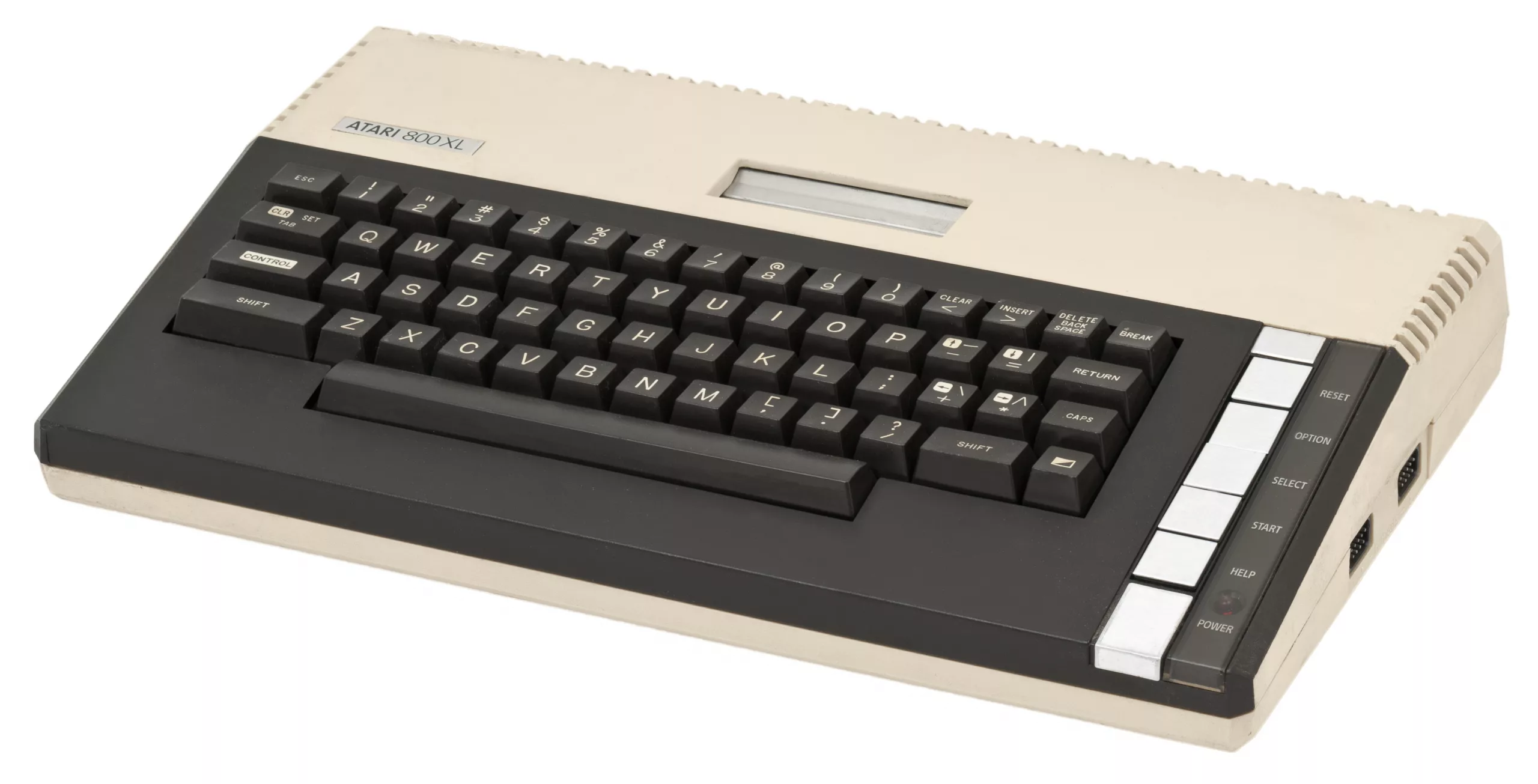
Atari 800XL home computer with a dark keyboard and cream case

Photo: Evan-Amos, Wikimedia Commons (CC BY-SA 3.0)

Released

1983

RAM

64 KB

CPU

MOS Technology 6502B “Sally” @ 1.79 MHz (NTSC) / 1.77 MHz (PAL)

Launch price

US$299; £249 (UK); approx. 800 DM (West Germany)

Manufacturer

Atari, Inc. (later Atari Corporation)

Form factor

All-in-one keyboard unit, a cost-reduced successor design to the Atari 400/800

CPU

MOS Technology 6502B “Sally” @ 1.79 MHz (NTSC) / 1.77 MHz (PAL)

Chipset

ANTIC (display list processor), GTIA (graphics/colour), POKEY (sound and I/O)

RAM

64 KB

ROM

24 KB (OS plus built-in Atari BASIC)

Graphics

Up to 320×192, 256-colour palette, up to 8 “player/missile” sprites

Audio

POKEY — 4 independent sound channels plus noise

Storage

ROM cartridge slot; 5.25″ floppy via an external SIO-connected drive (e.g. the Atari 1050)

Ports

SIO serial daisy-chain bus, 2× 9-pin joystick ports, cartridge slot, RF and composite video/audio out

OS

Atari OS with built-in Atari BASIC, in ROM

PSU

External AC adapter — widely reported as underpowered/unreliable on original units

Units sold

approx. 500,000 (800XL specifically, per contemporary industry estimates); part of a wider Atari 8-bit family that sold in the low millions overall across all models

Successors

Atari 65XE and 130XE (1985); the Atari ST as the platform’s 16-bit successor

  • POKEY chip fault pattern
    A dead keyboard with working sound (or working keyboard/sound but failed SIO/disk access) is a textbook POKEY symptom, since the chip handles keyboard scanning, sound and serial I/O together.
  • GTIA/CTIA graphics chip fault
    A failing GTIA chip can misread the console function keys and cause colour or display corruption; the Star Raiders cartridge is a commonly used diagnostic since it exercises ANTIC, GTIA and the CPU together.
  • Keyboard ribbon cable wear
    The flexible ribbon connecting the keyboard to the motherboard works loose or oxidises at its contacts over time, causing unreliable or dead keys that a simple reseat-and-clean often resolves.
  • 1979 Atari 400 and 800 launched, the 800XL's direct predecessors
  • 1982 GTIA graphics chip introduced on later 400/800 boards, ahead of the XL line
  • 1983 Atari 800XL launched in the US and UK in November, becoming the best-selling model of the XL range
  • 1984 Jack Tramiel's Atari Corporation takes over the company from Warner Communications
  • 1985 Atari 65XE and 130XE launched as cost-reduced successors alongside the new Atari ST