MACHINE REFERENCE

Pentagon 48K

The Pentagon 48K takes its name from its circuit board, which has a diagonal cut across one corner and so has five sides. It was a clone of the Sinclair ZX Spectrum from 1989, built by amateurs in the Soviet Union with no manufacturer behind it.

Why it matters

The Pentagon was never sold as a finished product. It was a board design, and people copied it: English Wikipedia records that the PCB was duplicated all over the former USSR between 1991 and 1996. The same article names Vladimir Drozdov as the designer of the 48K, though Russian Wikipedia says the early history is poorly documented. A 128K version followed in 1991, and the family ran on to the Pentagon 1024SL in 2005. The 48K ran Spectrum software on Soviet Z80 clones and discrete logic, with a frame of 71,680 T-states against the Spectrum’s 69,888.

What to check before you buy

  • Ask whether it is a period build or a modern reproduction kit.
  • Confirm which variant you are getting: 48K, 128K or a later board.
  • Ask whether a Beta 128 disk interface is fitted, and whether it works.
  • Test with timing-sensitive software, because the non-standard frame timings can break some titles.
  • Expect no documentation or provenance.
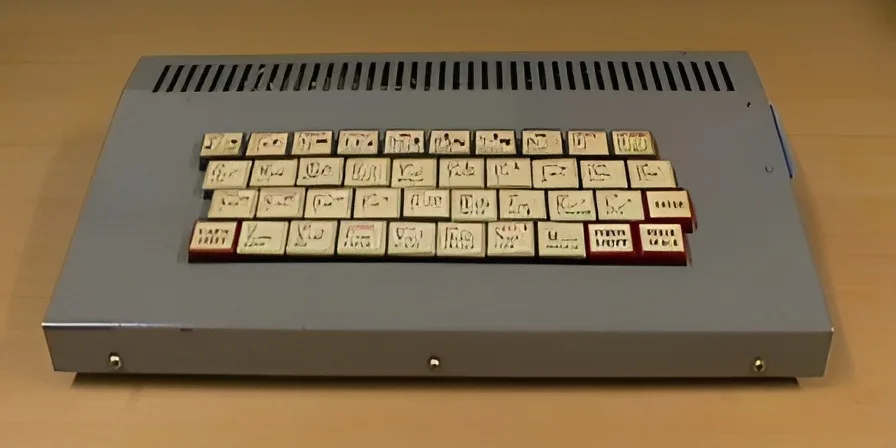
Pentagon 48K

Released

1989

RAM

48KB (48K); 128KB (128K); later variants up to 4MB

CPU

Z80A-compatible (Soviet KR1858VM1 or T34VM1 clones, or Z80A/B/H) at 3.5MHz. A 7MHz turbo mode is listed for the Pentagon family, probably later variants

Launch price

Unknown

Manufacturer

None. An unlicensed ZX Spectrum clone built by amateurs in the Soviet Union. English Wikipedia credits Vladimir Drozdov with the original Pentagon 48K design

Form factor

Bare-board home computer, normally built into a homemade case with a Spectrum-style keyboard. The name comes from the original 48K PCB, which has a diagonal cut in one corner giving it five sides

CPU

Z80A-compatible (Soviet KR1858VM1 or T34VM1 clones, or Z80A/B/H) at 3.5MHz. A 7MHz turbo mode is listed for the Pentagon family, probably later variants

Chipset

Discrete TTL logic on a Spectrum-style design (no custom ULA)

RAM

48KB (48K); 128KB (128K); later variants up to 4MB

ROM

Unknown

Graphics

Spectrum-compatible 256×192 with attribute colour; 320 lines per frame and 71,680 T-states per interrupt, against 312 and 69,888 on the real Spectrum

Audio

Beeper on the 48K; AY-3-8910/YM2149 on the 128K

Storage

Cassette; Beta 128 Disk Interface with TR-DOS as the usual disk option

Ports

Unknown

OS

Sinclair BASIC in ROM; TR-DOS with a Beta 128 interface

PSU

Unknown

Units sold

Unknown

Successors

Pentagon 128K (1991); 128K 2+ (1991, ATM/MicroART); 128K 3+ (1993, Solon); Pentagon-1024SL (2005-2006, Alexey Zhabin); ver.2.666 (2009)

  • Non-standard screen timings
    The Pentagon draws 320 lines per frame and runs 71,680 T-states per interrupt, against 312 and 69,888 on the real Spectrum. Software that relies on exact timing (loaders, multicolour and border effects) can misbehave.
  • 1988 Sergey Zonov's Leningrad clone appears, whose circuitry early Pentagons resemble
  • 1989 Pentagon 48K created (Vladimir Drozdov, per English Wikipedia)
  • 1991 Pentagon 128K and 128K 2+ appear
  • 1991-1996 Pentagon PCB copied widely across the former USSR
  • 1993 Pentagon 128K 3+ from Solon