
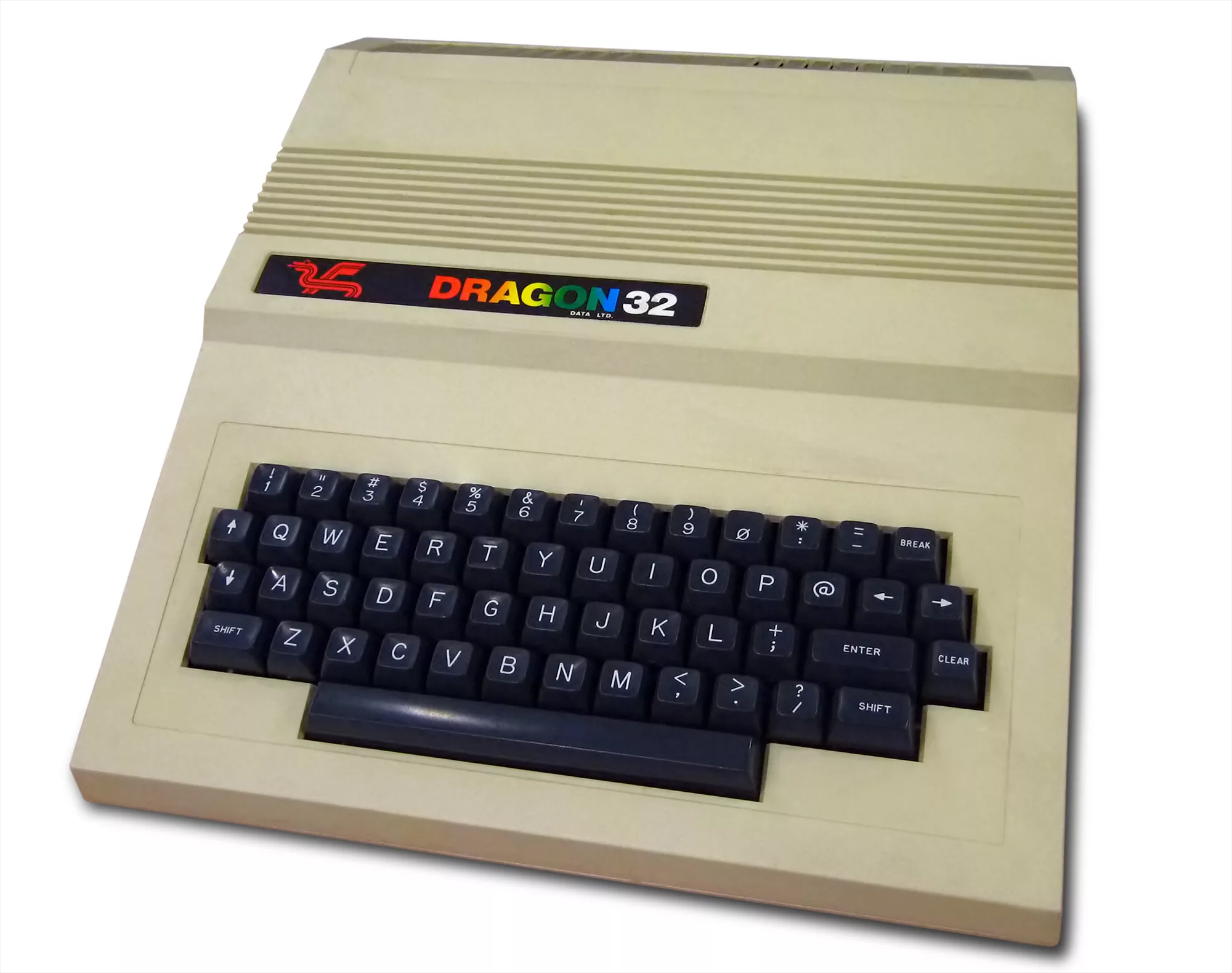
In the autumn of 1981, Tony Clarke had a problem that most toy executives never get to have. He worked for Mettoy, the Swansea firm behind Corgi’s die-cast cars, the little metal Minis and Jaguars that turned up under millions of Christmas trees. Lately, though, the kids weren’t asking for cars. They wanted computers: a Sinclair ZX81 here, an Acorn Atom there, a Commodore Vic-20 if their parents had money to spare. Clarke watched the shift happen. Then he made a decision that would turn a toy company into the most talked-about name in British computing, for about eighteen months.
A toy company builds a computer
Mettoy’s own history is worth a beat. Philip Ullman founded it in 1933, funding the venture with money Marks & Spencer owed him after he fled a tin-toy business in Nazi Germany. Fifty years on, the firm’s best-known product was still small metal cars. Not silicon. Clarke moved fast anyway. What he called Project Sam went from idea to a working 16KB prototype, nicknamed Pippin, by November 1981. Mettoy had no in-house computer design team, so it brought in PA Technology, a Cambridge design consultancy, and handed the job to a team led by Ian Thompson-Bell. The deadline was brutal. The result, Thompson-Bell said afterwards, amounted to “virtually a home computer in three chips.”
One chip needed help to run fast enough. Duncan Smeed, an assembly-language specialist lecturing at Strathclyde University, spent weeks hand-tuning the machine’s BIOS, squeezing out ten to fifteen per cent more performance than Motorola’s own reference code managed. Nobody outside the industry notices that kind of work. Everybody inside it depends on it. Dragon Data liked what they saw enough to hire him properly the following year.
The chip nobody else wanted
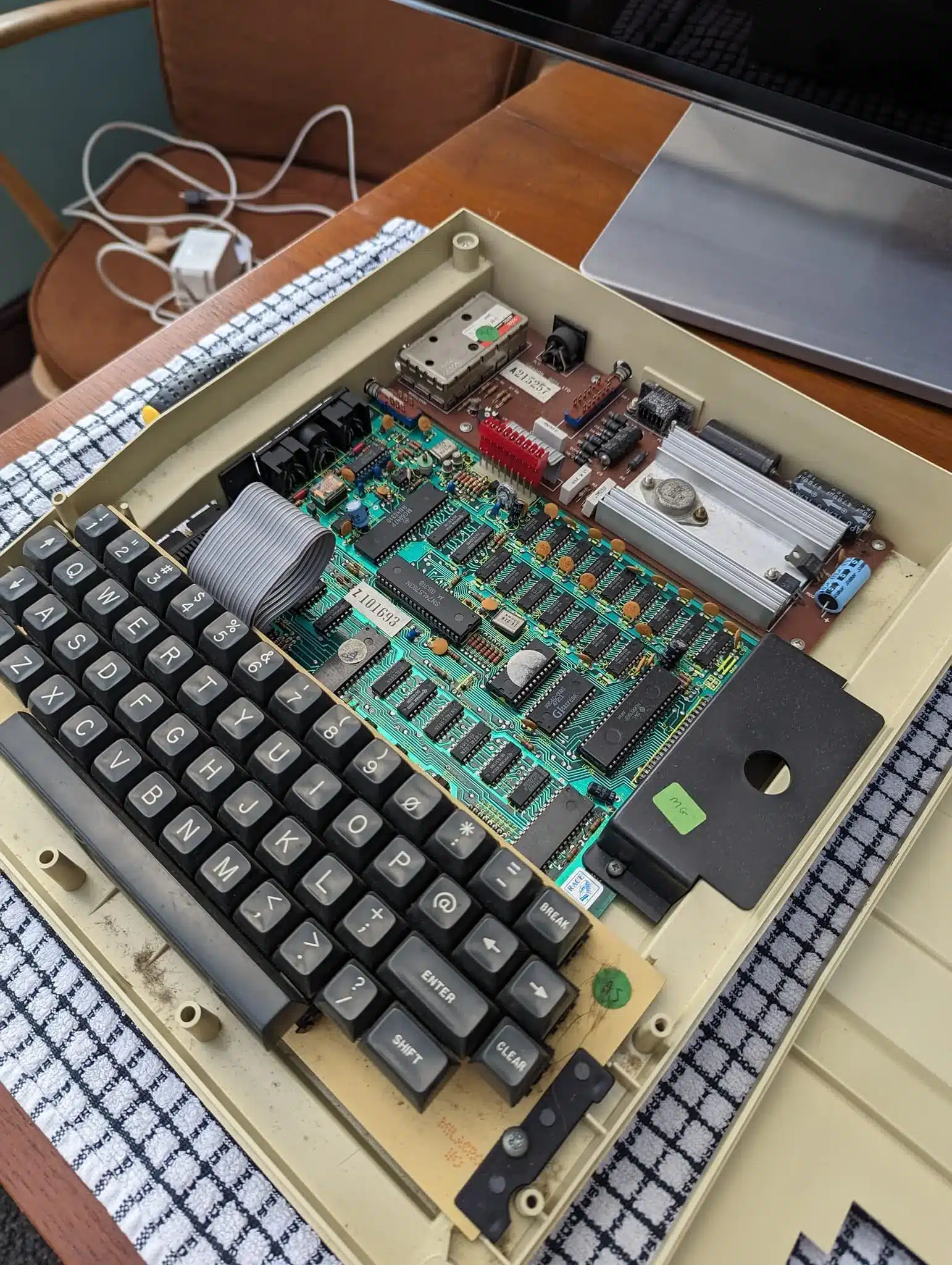
Here is where the Dragon stopped looking like every other British home computer. Sinclair built the ZX Spectrum around a Zilog Z80. Acorn, the BBC Micro, around a MOS 6502. Both chips were cheap, well understood and everywhere. Dragon Data, the subsidiary Mettoy spun up to house the project, went a different way and picked the Motorola 6809E.
It was, by most measures, the better chip. It could do hardware multiplication, something the 6502 couldn’t manage at all, and it handled some operations internally in 16-bit chunks rather than the usual eight. Engineers who worked with all three generally rated the 6809E above its rivals on raw capability. The catch: five times the cost. That kind of premium should have killed the idea stone dead in a company built on toy cars that retailed for a few pounds each.
It didn’t. The reason was geography: Motorola ran its UK semiconductor operation out of Strathclyde in Scotland, Mettoy’s engineers were already in contact with the sales team there, and the more of Motorola’s chips a customer bought, the steeper the discounts got — on the 6809E itself, and on the support silicon that made it worth having, the 6883 SAM memory controller and the 6847 video display generator. Buy the whole family, and the chip suddenly looked affordable.
One other company was working that exact same discount, on those exact same three chips, at more or less the same time. Not a British one. It was American. And it had already put a machine on shelves a year and a half earlier.
The computer it was never quite copying
That machine was the Tandy TRS-80 Color Computer, sold through Tandy’s Radio Shack stores in the US from 1980. Both computers were built around a reference design Motorola itself had put together, to show off what the 6809E and 6847 could do together. Not a joint venture. Two companies, building independently from the same blueprint, with the same chip supplier quietly encouraging both. The family resemblance was close enough that people still call the Dragon a CoCo clone. Not quite fair. Not quite wrong, either.
The two machines shared a keyboard layout, a cartridge connector, a memory map. Almost interchangeable, on paper. Near-identical dialects of Microsoft Extended Color BASIC ran on both, with just enough difference in the ROM’s token addresses to dodge a straightforward copyright claim. A surprising amount of compiled CoCo software would run on a Dragon after retokenising. Not everything, but enough to matter. Later, memory-expanded Dragons could even boot OS-9, the genuinely multitasking, Unix-flavoured operating system Tandy also offered for the CoCo, licensed from the same publisher, Microware.
Where the Dragon actually pulled ahead was in the parts Motorola’s reference design didn’t dictate. For one, 32KB of RAM as standard. A proper composite video output, for another. And a Centronics printer port instead of the CoCo’s serial connection. Partly that was a genuine improvement. Partly, engineers admitted later, it was a deliberate way of not looking too much like Tandy’s wiring diagram to a patent lawyer.
The same 6847 video chip that made the Dragon cheap to build also gave it an odd, stubborn weakness. It couldn’t natively display lower-case letters. Hold shift and press zero, and the screen would drop into a mode that showed lower case as inverted upper case instead, green on black, legible but strange and useless for anything that needed to look like a real document. Games didn’t care. Schools and offices did, and the machine that had out-engineered the Z80 crowd on raw processing power lost the education market anyway, to a BBC Micro that could simply put a lower-case letter on screen when asked.
Forty thousand dragons and a factory in Kenfig
The “why Wales” part of this story is simpler than the chip story. Mettoy already had deep roots there. When the new computer subsidiary needed to scale up fast, the Welsh Development Agency was waiting with an investment on the table. The deal moved Dragon Data into a bigger factory at Kenfig, near Port Talbot. Completed in March 1983. Built for ten thousand machines a week. The WDA took a 23% stake for its trouble. The dragon on the box wasn’t just branding. It was the only Welsh flag most British teenagers owned.
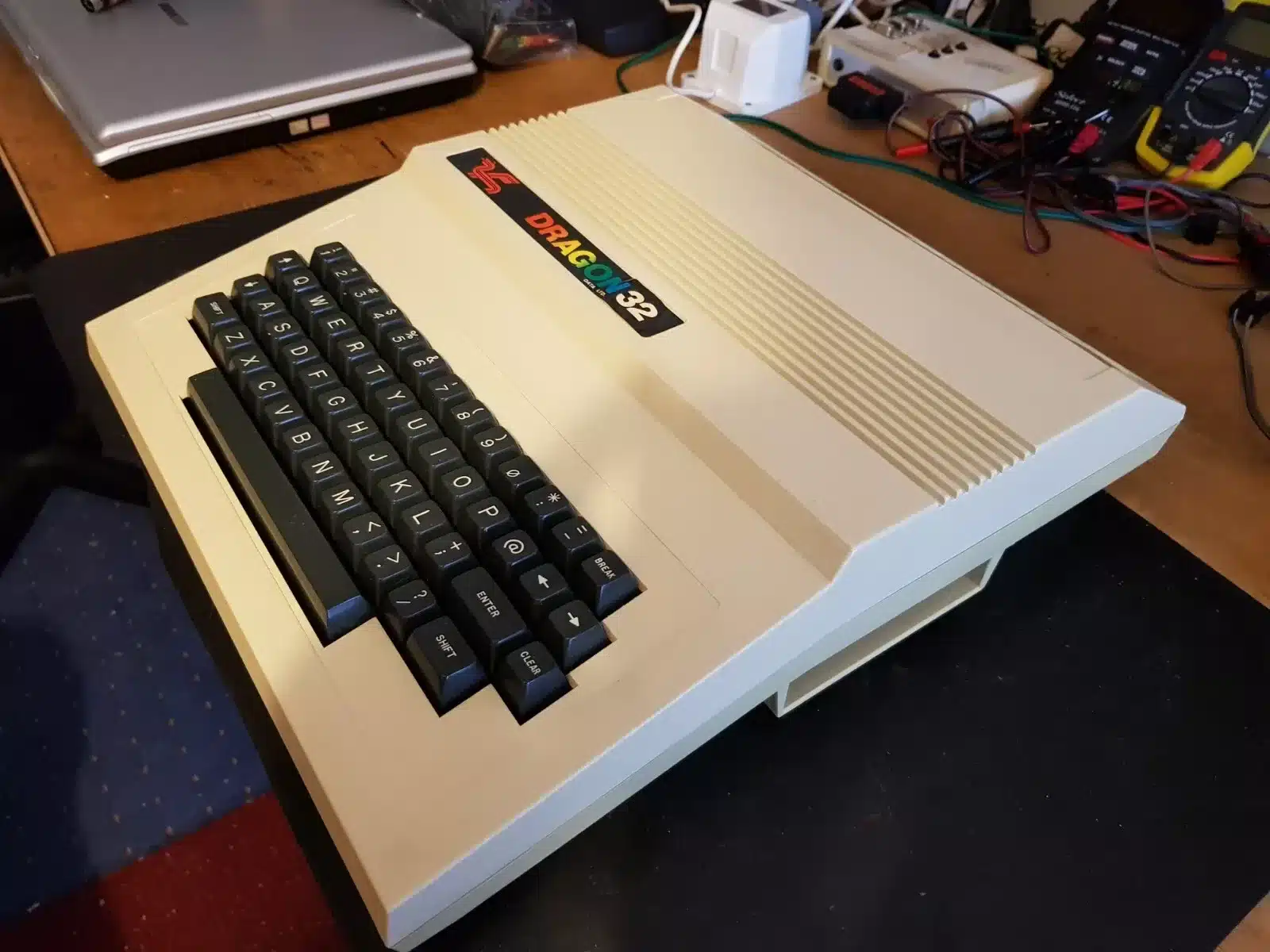
For a while, it worked spectacularly. The Dragon 32 launched in August 1982 with a real advantage worth paying for: a solid, full-travel 53-key keyboard that made the Spectrum’s flat rubber membrane feel like a toy, in a market that had, until recently, only sold toys. That mattered. By September, Personal Computer News had it charted as the third best-selling home computer in the country. By the spring of 1983, Dragon Data had sold 40,000 machines and become the largest privately owned company in Wales. Boots, Dixons, Comet: all queued up. A good problem to have. A cottage industry of programmers grew up around the machine fast enough to matter — Roy Coates’s Dragon port of Manic Miner squeezed twenty-two caverns into 32KB, two more than the original Spectrum version managed with fifty per cent more memory to play with. For eighteen months, a toy company from Swansea was genuinely, unambiguously winning.
The summer that never came
Then came the mistake that undid it. Dragon Data’s management assumed the sales curve that carried them through Christmas 1982 would simply continue through the following summer. It didn’t. Home computers sold at Christmas and not much in between, and a factory built for ten thousand units a week doesn’t stop cheaply just because the shops stopped ordering. Cash flow buckled. By October 1982 the company already needed a rescue package: Mettoy’s stake was diluted to 15.5%, the WDA held 23% and Prudential’s venture arm, Pru-tech, took the largest share at 42%, in exchange for £2.5 million.

It bought time, not a cure. By September 1983, shareholders had lost patience with Tony Clarke, the man whose instinct had started the whole project two years earlier, and eased him out. In came Brian Moore, on loan from the conglomerate GEC, as temporary chief executive. His brief: tighten everything. Dragon Data still pushed out a stronger machine, the 64KB Dragon 64. In February 1984 it licensed OS-9 from Microware too, at £40 a disc: a genuine step towards serious, business-grade computing on 6809 hardware. Nobody paid for it. Not properly. The licence fee to Microware, it later emerged, was never actually remitted.
None of it mattered against what Christmas 1983 did to the market. Sinclair cut the Spectrum’s price under £100. Acorn launched the budget Electron. Oric undercut everyone. Warehouses that should have emptied stayed full. By March 1984, GEC had taken over sales and marketing outright, rebranding the company GEC Dragon, an admission, in effect, that the original vision was over.
The receiver, and an odd afterlife in Spain
On 1 June 1984, GEC Dragon called in the receivers, Touche Ross. Their notice cited “continuing difficulties of establishing profitable trading in the UK and other parts of the world.” Plain words for a hard ending. Boots and British Home Stores had already quietly stopped ordering. The factory at Kenfig, built for ten thousand machines a week, went quiet too.
What happened next is the part most retellings skip. In August 1984, a Spanish company called Eurohard bought Dragon Data’s assets for just over £1 million, funded by Spanish regional development money and a private investor who happened to chair Spain’s Visa card operation. An unlikely rescuer. Production moved to Extremadura, in the southwest of the country. The Dragon, reborn, oddly, as a machine sold into Spanish schools, outlived its Welsh birthplace by three years. Eurohard itself folded in 1987.
Somewhere in the Dragon 32’s system ROM, buried in code Duncan Smeed hand-optimised against an impossible deadline back in 1981, three letters are still sitting there: DNS, his own initials, quietly signed into a machine nobody asked him to sign. Dragon Data itself left no such mark. The Kenfig factory built to produce ten thousand computers a week for Wales spent its last working years building them for Spain instead, under a different owner, for a company that didn’t outlast the decade either. The chip was right. The keyboard was right. The factory, the funding and the timing never quite were.
