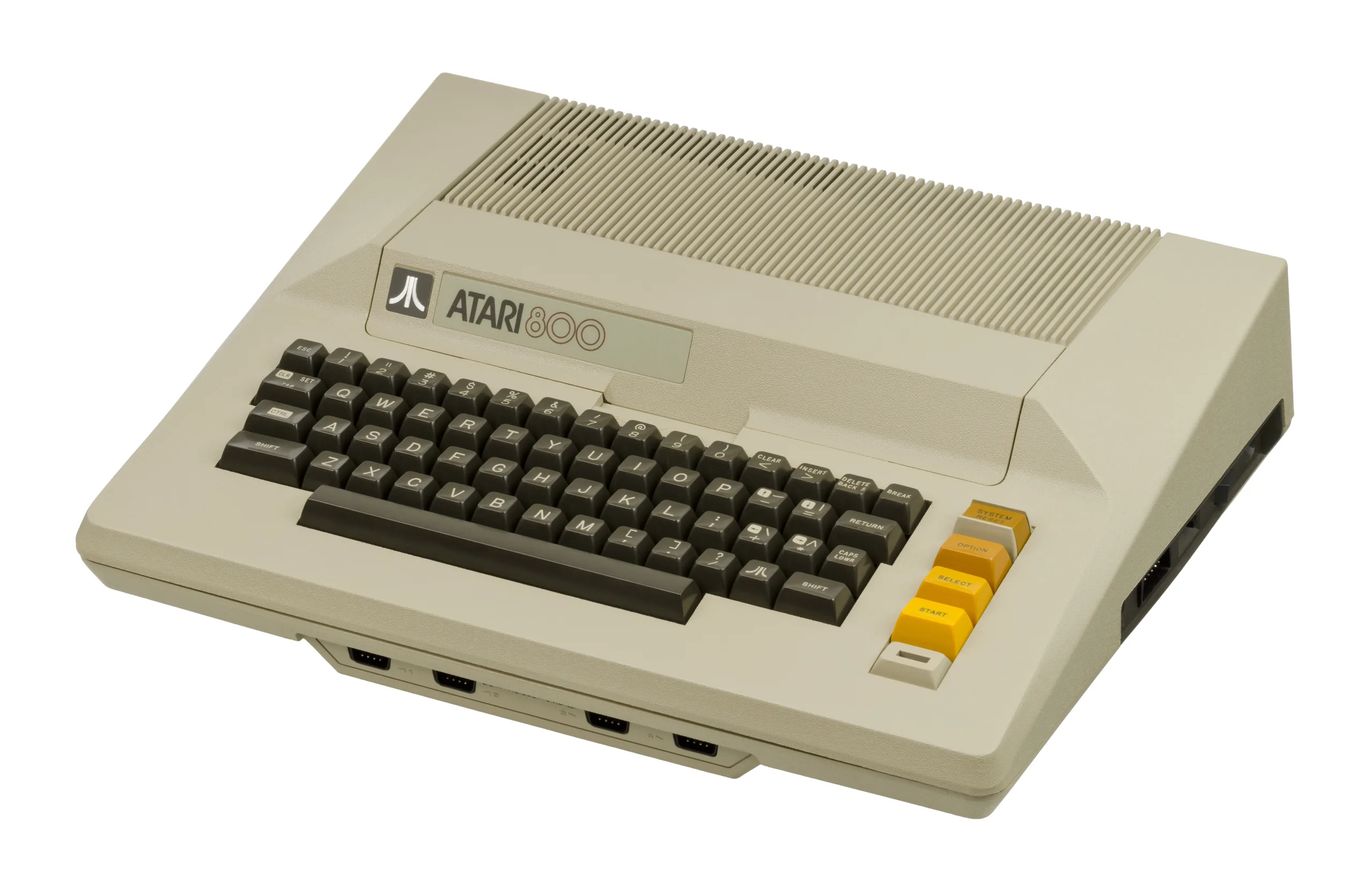
The Atari 800 shipped in November 1979 at US$1,000, with 8 KB of RAM on plug-in modules, four joystick ports and a cast aluminium chassis that doubled as an RF shield.
Why it matters
Three custom chips did the work: ANTIC ran the display lists, CTIA (later GTIA) handled colour and sprites, and POKEY covered four-voice sound, keyboard scanning and serial I/O. Between them they gave the machine 256 colours and eight sprites. The cheaper Atari 400 sold alongside it at US$550, and the Atari 8-bit line reached about two million machines between late 1979 and mid-1985. The 800XL, 65XE and 130XE all descend from this design.
What to check before you buy
- Open the top hatch and look at the RAM and OS boards. Early plastic-cased memory modules had overheating problems, so check for the later uncased type and for scorching.
- Reseat every card and look at the edge contacts. A blank or garbled screen is often just dirt or a tired socket.
- Test the keyboard with the sound running. If the keys are dead but you can hear a game, POKEY is the likely suspect.
- Check the power switch and DC connector on the console for oxidation or cracks, and ask whether the original PSU is included.
- Ask whether the seller has tried a known-good cartridge, not just a power-on.
- Look at the OS ROM board and check that its pins are straight; corroded or bent pins are a known cause of boot failure.