MACHINE REFERENCE

Microkey Primo

The Microkey Primo was the first Hungarian-built home computer you could buy in a shop, and it drew its own 256 x 192 screen with the Z80 clone that was also running your BASIC.

Why it matters

The Primo shows how far a country cut off from Western chips could get with very little. SZTAKI’s engineers designed it, the Elektromodul distributor bought the parts and a farm cooperative in Sárisáp assembled it. About 7,000 were sold by 1986. That is a small run, but for thousands of Hungarian teenagers it was the first computer they typed a program into. Its best version, the Pro/Primo, placed first in the secondary-school category of the second national school computer tender and still lost the orders to Commodore’s cheaper C16.

What to check before you buy

  • Find out which series it is. The A series has the capacitive touch keyboard; the rarer B series (about 1,000 made) has push buttons.
  • Test the keyboard for repeating or dead keys. On an A-series machine that is the most common complaint.
  • Check the external power supply, which runs hot, before connecting it to anything.
  • Ask for the RAM tier. The A-32 has 16 KB of RAM, the A-48 has 32 KB and the A-64 has 48 KB.
  • Look for a tape recorder lead and a few tapes; software is scarce, and Hungarian collector communities are the best source.
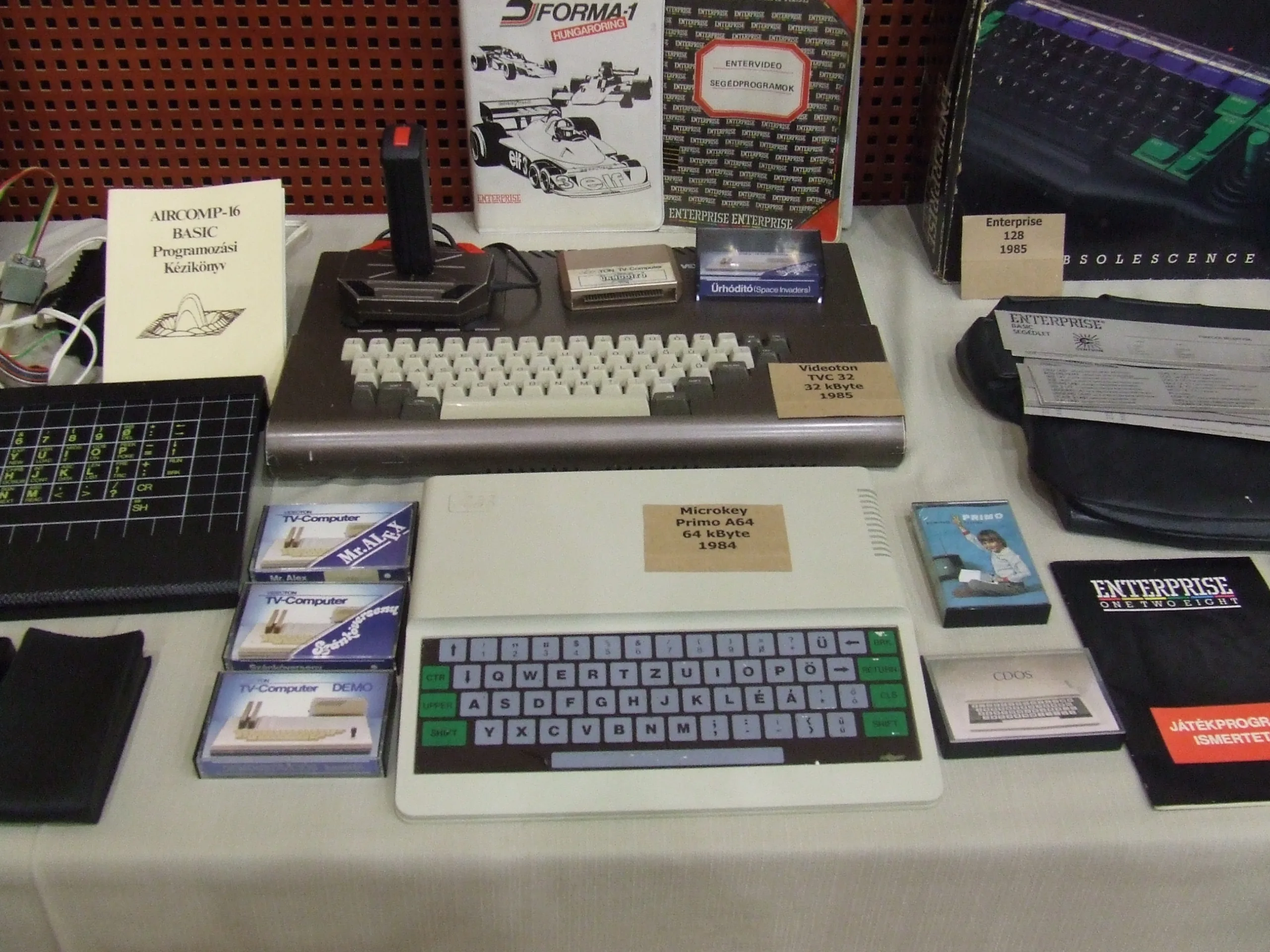
Microkey Primo A64 home computer

Photo: Christo, Wikimedia Commons (CC BY-SA 4.0)

Released

1984

RAM

16 KB (A-32), 32 KB (A-48) or 48 KB (A-64 and B-64); the model numbers include the 16 KB of ROM

CPU

U880 (East German Zilog Z80 clone), 2.5 MHz in some sources and 3.75 MHz in others

Launch price

About 10,000 forint (one source gives 11,500 forint for the A-32); average monthly pay was about 5,500 forint

Manufacturer

Microkey (MTA SZTAKI, Elektromodul and the Új Élet cooperative of Sárisáp); built by SZTAKI’s subsidiary Cosy

Form factor

Keyboard computer with external power supply

CPU

U880 (East German Zilog Z80 clone), 2.5 MHz in some sources and 3.75 MHz in others

Chipset

None; no dedicated video or sound chip, the CPU generates the picture

RAM

16 KB (A-32), 32 KB (A-48) or 48 KB (A-64 and B-64); the model numbers include the 16 KB of ROM

ROM

16 KB (4 x 4 KB EPROM), own BASIC

Graphics

256 x 192, black and white, CPU-generated

Audio

One channel, built-in ceramic buzzer

Storage

Cassette tape (external recorder)

Ports

Cassette interface, TV output, expansion connector on the board; the B series added a rear bus connector and two I/O ports

OS

Primo BASIC; Forth and an assembler were also written for it

PSU

External supply, nicknamed the ‘grill oven’ by owners for the heat it gave off

Units sold

About 7,000 by 1986, roughly 1,000 of them Primo-B models with push-button keyboards

Successors

Primo-B (push-button keyboard); the Pro/Primo prototype (about 50 built, none sold)

  • Capacitive touch keyboard
    The A series has no moving keys, only a copper-etched touch panel on the board. Sensitivity drifts, so keys repeat or fail to register. The B series replaced it with push buttons.
  • Hot external power supply
    The external PSU ran hot enough that owners called it the 'grill oven', and age has not improved it. Check it before you power the machine on.
  • Poor-quality parts in early production
    Of the first hundred units built on the Sárisáp farm, sixty came back for repair, and low-quality Soviet-made chips forced SZTAKI to design special test structures. Early units are the most likely to have problems.
  • 1983 SZTAKI, Elektromodul and the Új Élet cooperative form the Microkey association
  • 1984 The Primo launches as Hungary's first commercially sold home computer
  • 1986 The Pro/Primo places first in the secondary-school category of the school computer tender, but schools buy Commodore 16s instead
  • 1986 Primo production ends after about 7,000 machines