MACHINE REFERENCE

Sega Dreamcast

The Sega Dreamcast went on sale in Japan on 27 November 1998 with a 200 MHz SH-4 processor, a PowerVR2 graphics chip and a built-in modem, and it was Sega’s last console.

Why it matters

The Dreamcast launched ahead of the PlayStation 2 with a built-in modem for online play and a VMU memory card that had its own screen. It sold 9.13 million units, which was not enough, and Sega announced on 31 January 2001 that it would stop making it and leave the hardware business.

What to check before you buy

  • Check the GD-ROM drive reads discs first time; failing drives are the main fault.
  • Look inside for leaking clock capacitor residue, or ask whether it has been replaced.
  • Test the controller and VMU, whose batteries and screens often fail.
  • Ask whether the cooling fan is working.
  • Check the region and video output; Japanese, US and PAL consoles are not interchangeable.
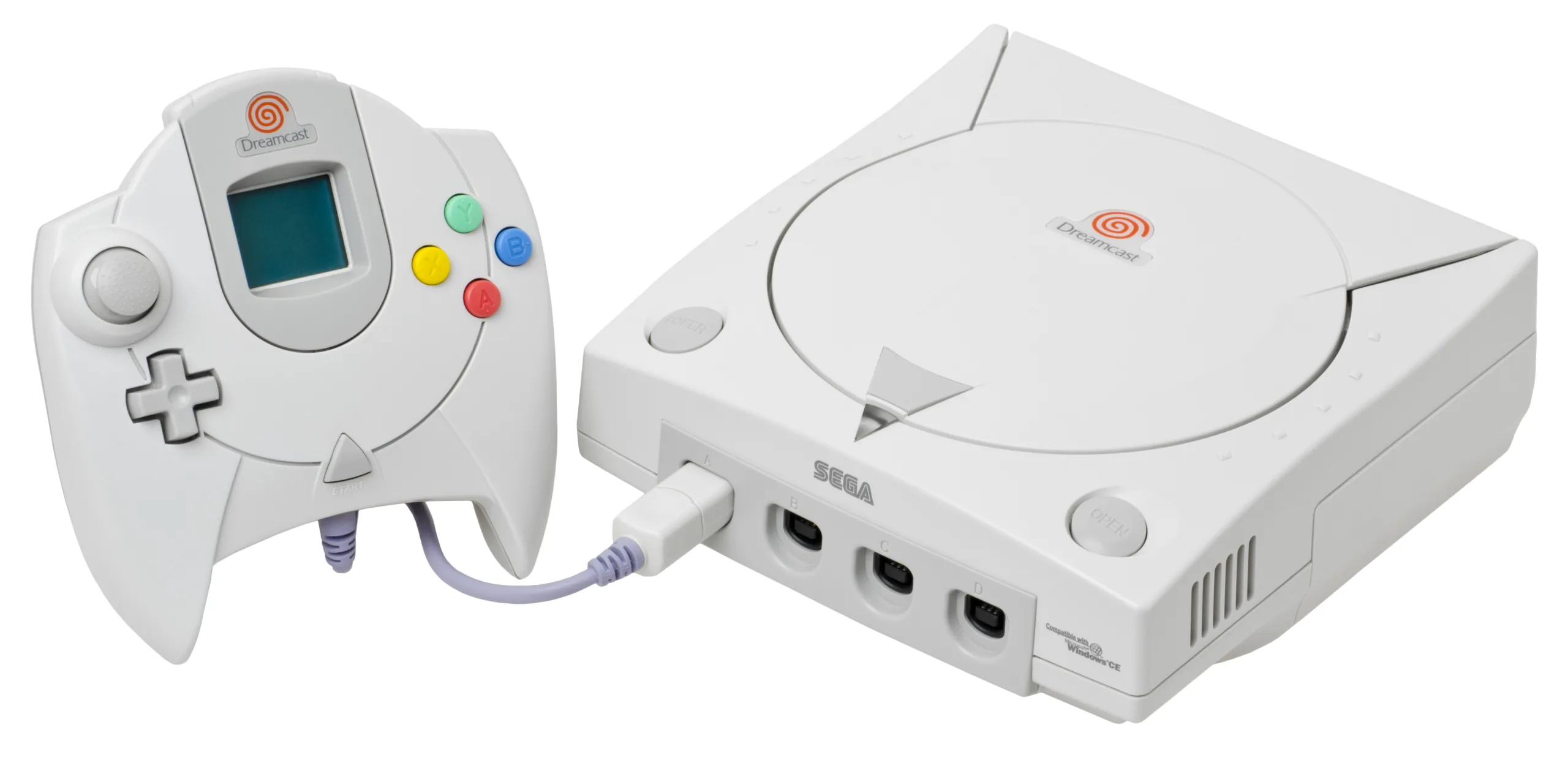
Sega Dreamcast console with controller

Photo: Evan-Amos, Wikimedia Commons (CC BY-SA 3.0)

Released

1998

RAM

16 MB main RAM, 8 MB video RAM, 2 MB audio RAM

CPU

Hitachi SH-4, 200 MHz

Launch price

¥29,000 (Japan); $199 (US); £200 (UK); A$499 (Australia)

Manufacturer

Sega

Form factor

Home console, GD-ROM based

CPU

Hitachi SH-4, 200 MHz

Chipset

NEC PowerVR2 graphics, 100 MHz; Yamaha AICA sound processor, 67 MHz

RAM

16 MB main RAM, 8 MB video RAM, 2 MB audio RAM

ROM

Unknown

Graphics

PowerVR2, over three million polygons per second, with deferred shading and bump mapping

Audio

Yamaha AICA with a 32-bit ARM7 core and 64 voices of PCM and ADPCM

Storage

GD-ROM discs; 128 KB VMU memory cards

Ports

Four controller ports with VMU slots, built-in modular modem (33.6 or 56 kbit/s depending on region)

OS

Sega system software; Windows CE was available to developers

PSU

Internal power supply

Units sold

9.13 million worldwide

Successors

None; Sega left the console market after the Dreamcast

  • Clock capacitor leakage
    An electrolytic capacitor on the mainboard keeps the clock running when the console is unplugged, and it leaks with age. The corrosive electrolyte has ruined boards on many unserviced units.
  • GD-ROM drive failure
    The laser drive is now over 25 years old and failing drives are a common reason for a Dreamcast that will not read discs. Repair reports say Samsung drives fail more often than Yamaha ones.
  • Defective launch discs
    A fault at one of Sega's manufacturing plants produced defective GD-ROMs at the North American launch in 1999.
  • 1997 Development begins under Hideki Sato
  • 1998 Launches in Japan on 27 November
  • 1999 Launches in North America on 9 September and Europe on 14 October
  • 2000 Sega's SegaNet online service launches on 7 September
  • 2001 Sega announces on 31 January that it will stop making the Dreamcast; production ends on 31 March