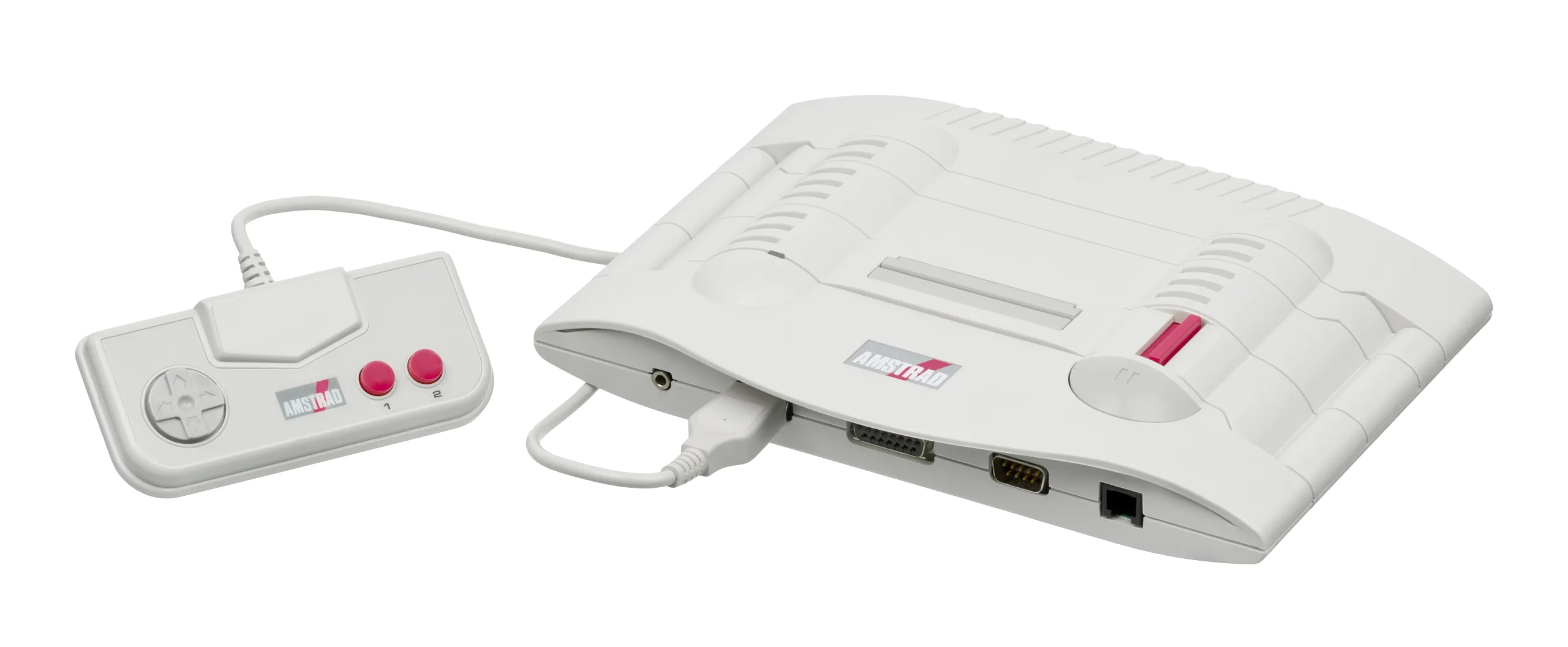
The Amstrad GX4000 was a games console built on CPC Plus computer hardware, launched in Britain, France, Spain and Italy in September 1990 at £99.99 with Burnin’ Rubber and two pads in the box.
Why it matters
The GX4000 shared its architecture with the CPC Plus computers, and Roland Perry has said Amstrad finished the case first and adapted the internals to fit, as it had with the CPC 464. The hardware was better than the sales suggest: a Z80A at 4 MHz with a custom ASIC gave it hardware sprites, smooth scrolling and a 4,096-colour palette, and designer Cliff Lawson later claimed it was at least as good as a SNES. The trouble was the business around it. Many games were CPC ports at £25 a cartridge when the cassette cost £3.99, and publishers complained that duplication took months instead of weeks, a delay put down to Amstrad’s control of cartridge manufacture. Wikipedia gives fewer than 15,000 sold and marks the figure as disputed, while two other sources say about 15,000. Amstrad spent £20 million on European marketing, yet by July 1991 some shops were selling the console at £29.99. Lawson’s own diagnosis was a lack of games and not enough money to persuade publishers to write them.
What to check before you buy
- Ask what power supply has been used. The console wants 11 V DC with a positive centre pin, and a wrong adaptor or reversed polarity is documented to damage the regulator, a diode and the RAM.
- Run it for a few minutes and feel the two RAM chips. Failing 41464-type chips get very hot and cause the classic black screen. Replacement chips and a socket are the usual cure, so ask whether that repair has been done.
- Try more than one cartridge. A dirty cartridge port is the first thing to rule out when a console shows nothing or a distorted picture, and contact cleaner often solves it.
- Ask whether the board has been recapped. A capacitor kit exists with 20 capacitors listed, and a recapped machine is a better bet than one with its original ones.
- Check the video lead, the two original pads and any cartridges. Some unofficial or bootleg titles exist, and genuine rarities such as Chase HQ II are priced far above common games.