
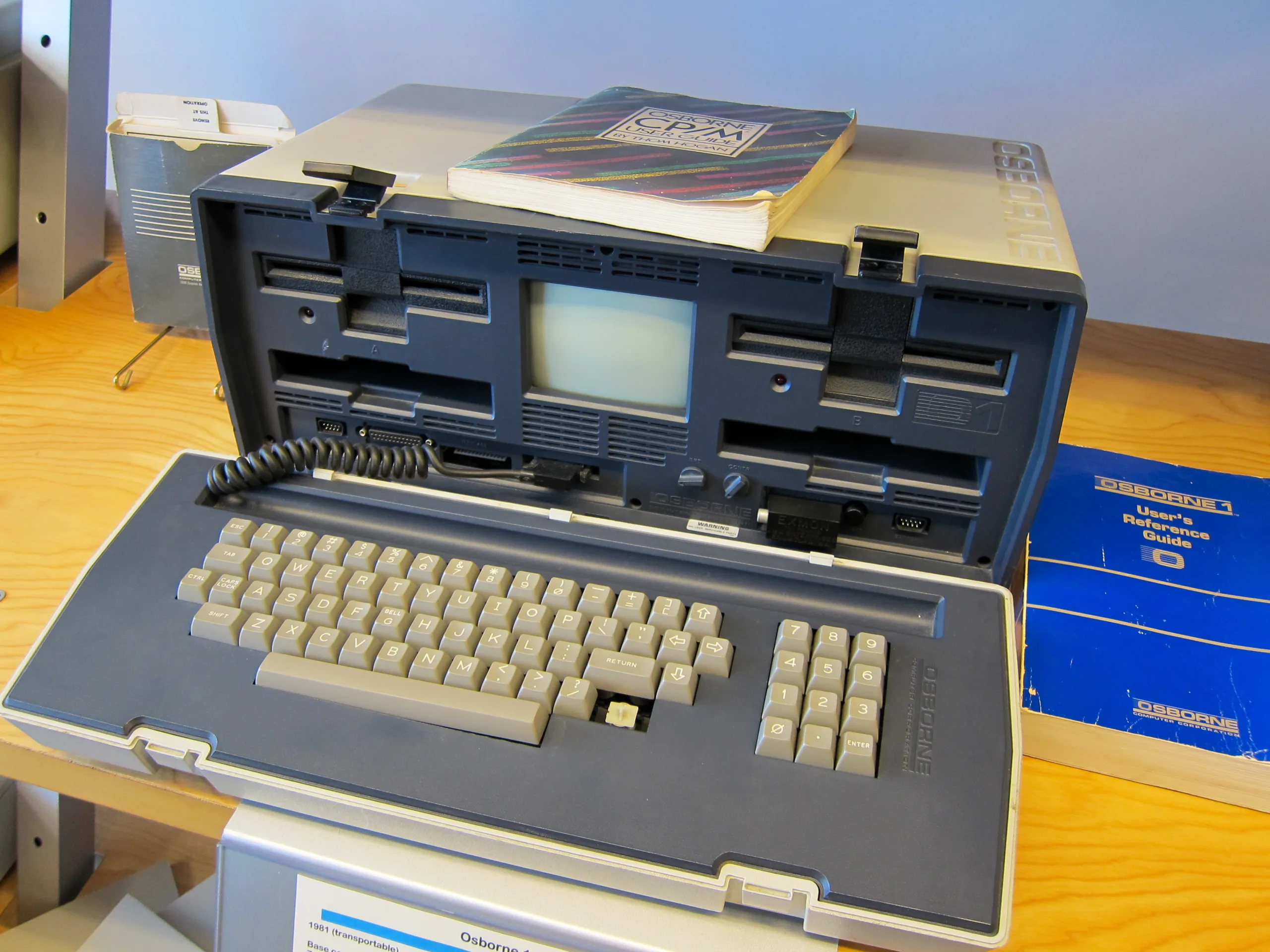
In April 1981 Lee Felsenstein carried two of his new computers into the West Coast Computer Faire, one in each hand, and says the weight nearly pulled his arms out of their sockets. The machine was the Osborne 1, and it had a screen, two disk drives and a keyboard, and every bit of it folded up into a single case that you could pick up by the handle.
Why would anyone carry a computer that heavy? Because it was meant to be carried. Adam Osborne, the man who ordered it, wanted something that would fit under an airline seat, and what he got weighed about 24 pounds, or 11 kilograms.
The company behind it went from nothing to bankrupt in under three years, and there are two versions of why. You will get both.
A sketch on grid paper
Adam Osborne was born in Bangkok in 1939, to British parents. He studied chemical engineering at Birmingham and took a PhD in the United States. Then came the books. He wrote computer books for a living, and by 1979 his publishing firm was big enough to sell to McGraw-Hill, with his introductory book on microcomputers at 300,000 copies sold.
In the spring of 1980 he found Lee Felsenstein at that year’s Computer Faire. Felsenstein was an original member of the Homebrew Computer Club and had already designed the Sol-20 computer and the Pennywhistle modem, so he knew what a small machine could and could not do. Osborne wanted to start a hardware company. He sketched what he had in mind on grid paper: a sealed case, a 5-inch screen, two floppy drives and CP/M, the standard operating system for 8-bit business machines.
One detail was Osborne’s own idea. He wanted pockets under the drives to hold the disks, so that the closed case carried the whole system, software included. Felsenstein says that and the bundled programs were the real innovation, because the basic layout had been floating around the industry since about 1978, with the Xerox NoteTaker as an early ancestor.
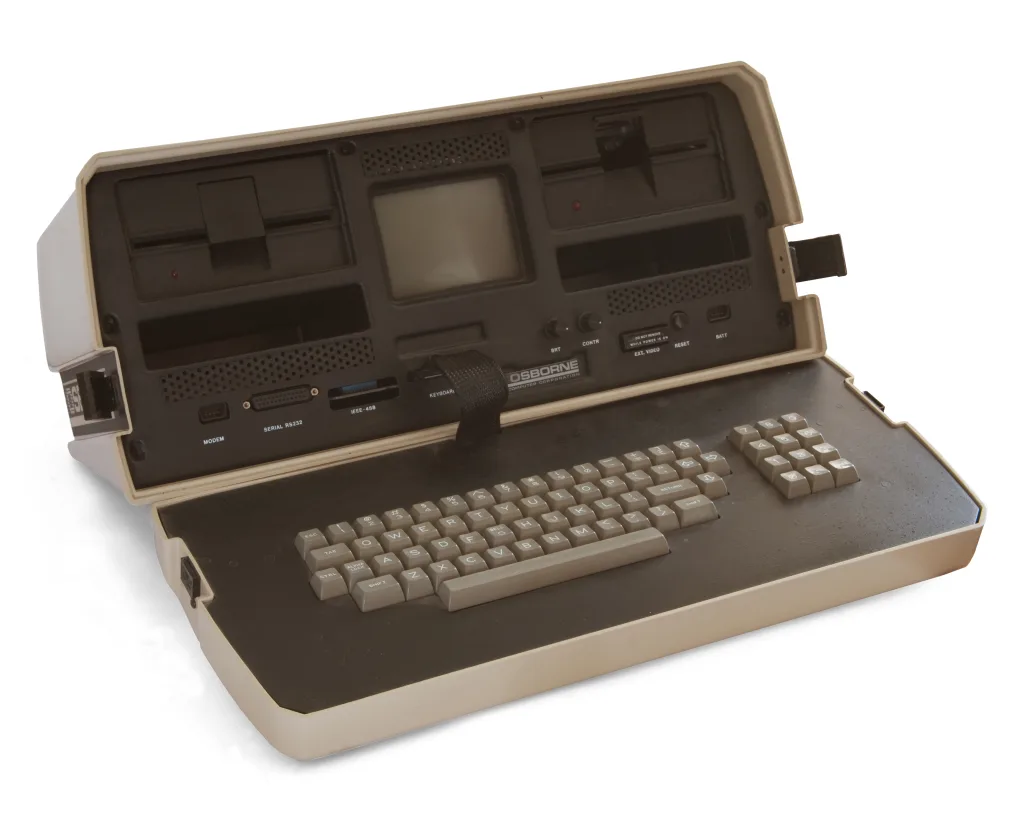
Felsenstein is happy to say who did what, and puts it this way: ‘Adam Osborne was the father of the Osborne I, I was the mother.’ He designed it in about seven months, and he was paid mostly in shares: about a quarter of the company, 24 per cent by his own count, plus a small amount of money to live on.
The part he counts as his own invention was the circuit that timed the screen against the processor, and it took about two small chips. Osborne also asked for the parallel port to be able to talk to the IEEE-488 bus used by lab instruments, which came from his chemical engineering days, and Felsenstein did that with software and a generalised port, so no extra hardware was needed.
What you got for $1,795
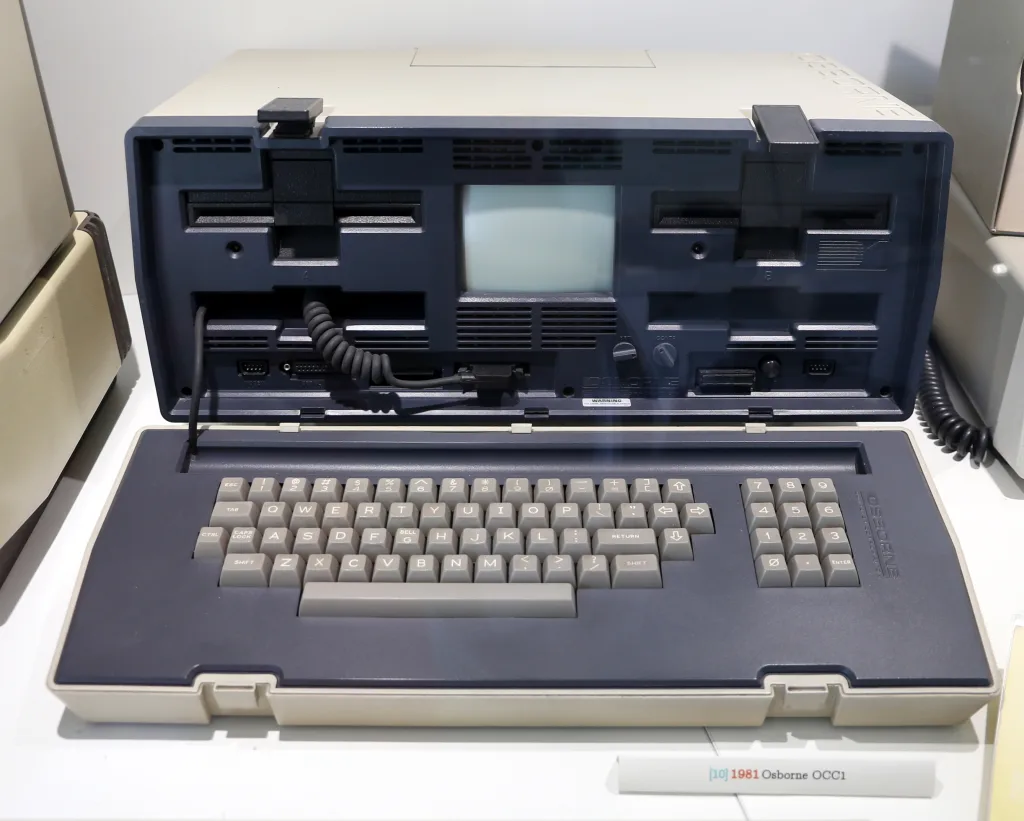
The launch price was $1,795, and Felsenstein had hoped for $1,395. For that you got a Zilog Z80A processor running at 4 MHz and 64 KB of RAM. That was a lot of machine for 1981. The 5-inch screen showed 52 characters across and 24 lines down, where Osborne had asked for 40, the width of an Apple II. Two 5.25-inch drives each held about 90 KB, and the keyboard clipped off the front and became the lid.
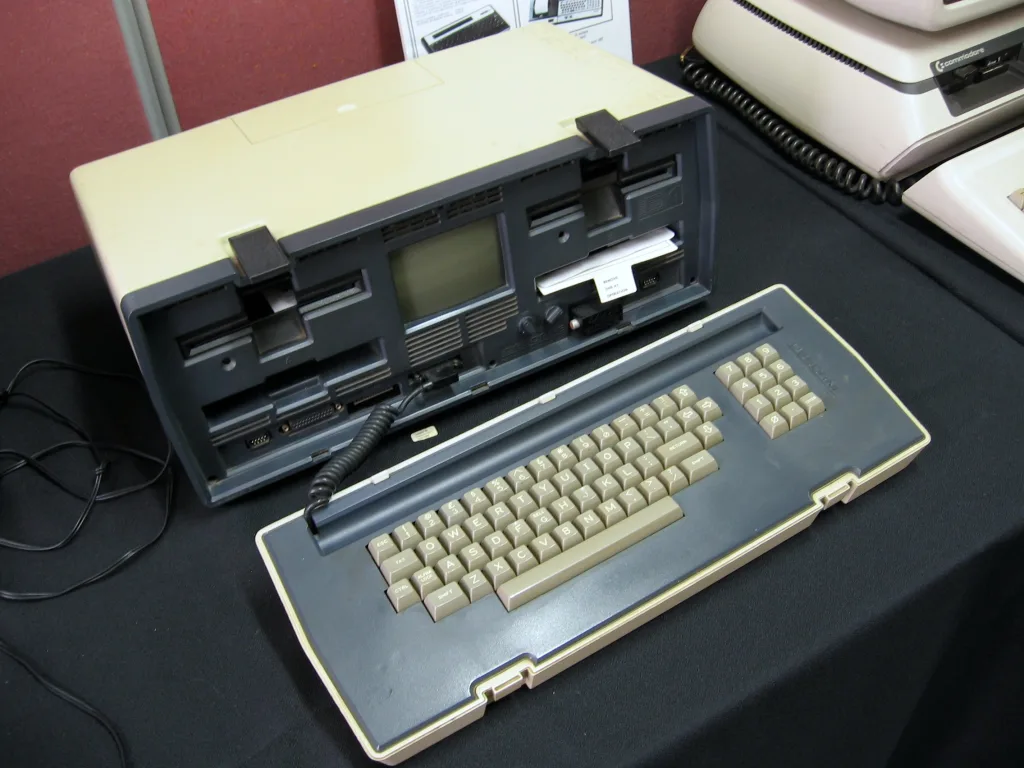
Think of a pre-stocked toolbox. Osborne’s bundle was CP/M 2.2, WordStar for writing, licensed from MicroPro, SuperCalc for spreadsheets, written for Osborne by Sorcim, and two versions of BASIC, MBASIC and CBASIC. Felsenstein says people struggled to work out how Osborne got that much good software at that price. The answer was deals paid partly in shares.
Reviewers noticed straight away. Jerry Pournelle reckoned you could not beat it for the price, since it came in under two thousand dollars with over a thousand dollars’ worth of software. James Fallows agreed. He called it the best bargain in computing power in the business, which was high praise. InfoWorld reported that the question it heard most often was what people thought of the new Osborne computer, and nobody asks that about a flop. Osborne himself was blunter. He called the performance merely adequate, and likened himself to Henry Ford, who gave people 90 per cent of what most of them needed.
That is a fair summary. The screen was tiny and the machine was heavy, and nobody would call the keyboard lid roomy. It was also a complete working computer, with software and a screen, in one case that closed up and carried like luggage.
Making them was the hard part
Designing the computer took seven months. Building thousands of them was a different job. The ten metal-cased prototypes had a transformer power supply, and the transformer’s magnetic field made the screen picture shimmy, so a lighter switching supply took its place. Those prototypes weighed about 30 pounds each, and they starred in the first adverts, where the veins in the hand holding one are plain to see.
Then came the disk drives. Osborne had assumed he could buy the drives and bolt on the company’s own electronics, but each drive needed its head positioning adjusted. The factory in Hayward, California, filled up with long benches of people doing exactly that, one drive at a time.
Software disks then started to fail. Panic followed, until Pat McGuire, who had designed the drive control board, asked whether anyone had cleaned the heads on the disk duplicator. Nobody had, and duplication moved to a specialist firm.
Felsenstein says the general manager had suppliers shipping parts without written purchase orders. Try keeping track of stock like that. He puts the company’s trouble down to exactly that sort of thing, and says it had never learned how to put a product into production.
Felsenstein did not stay in charge of the engineering for long. A more experienced vice president, who had worked at Texas Instruments, took over that job, and Felsenstein became what he calls an R&D fellow.
Two stories about the crash
In early 1983 Osborne showed the press its next models, the Executive and the Vixen. The Executive had a bigger 7-inch screen, more memory and double-density drives. It took about 18 months to design. The Osborne 1 took seven. The logic is easy to follow: if you knew a better model was coming in a few months, would you buy this year’s? The popular story says dealers heard about it and cancelled their orders for the Osborne 1, sales fell off a cliff, and the company filed for bankruptcy on 13 September 1983. It became known as the Osborne effect.
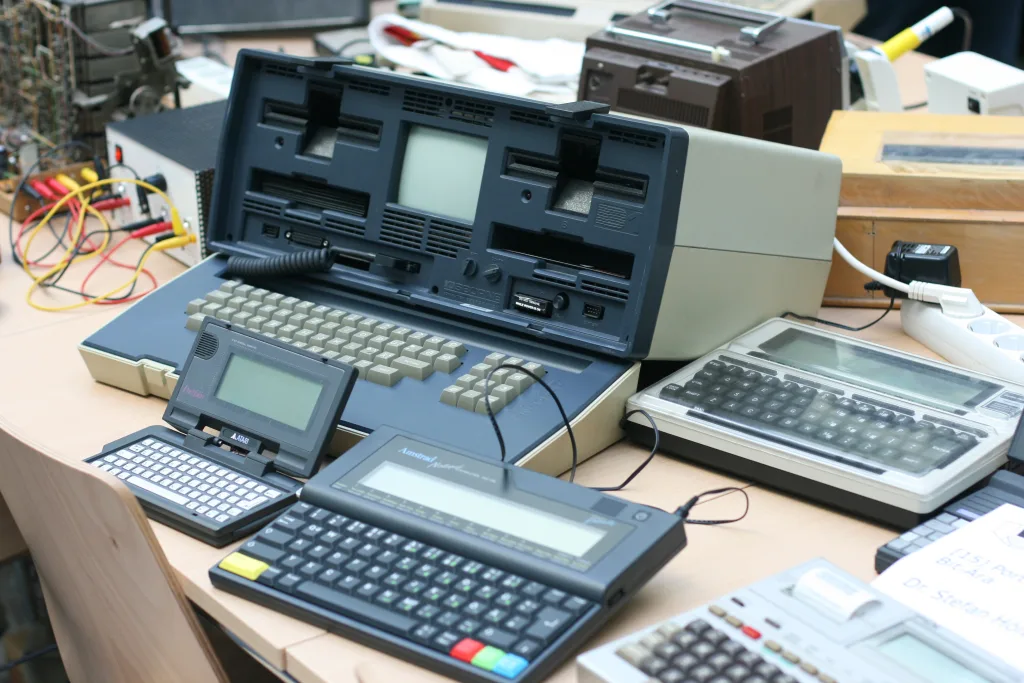
People who were there tell it differently. A 2005 article in The Register, by Charles Eicher with John Dvorak, says a vice president found about $150,000 worth of finished motherboards sitting in stock with no screens, drives or cases to go with them. Cases were the next problem. The company that moulded the cases had destroyed the moulds, and getting new ones made and production restarted cost about $2 million. Osborne’s own memoir, Hypergrowth, called it throwing good money after bad.
Felsenstein agrees. He thinks the pre-announcement was overrated, and that the company structure was rotten from the start. The real trouble was inventory. Cash was tied up in parts that could not be turned into computers. Dvorak adds that pre-announcements rarely killed anyone, and points to a 1978 case where a company’s own new disk controller stalled sales of its old one.
Competition did not help either. Kaypro sold a model with a 9-inch screen for less, and the IBM PC had arrived in August 1981. Worse followed. Compaq launched an IBM-compatible portable in 1983, and CP/M, the system the Osborne 1 depended on, faded from the market. Osborne cut the Osborne 1’s price to $1,295 in July 1983 and to $995 in August. It still did not help.
Both stories can be true at once. The announcement did happen, but the company was already in trouble with stock it could not finish, and that would have hurt it without any help from the press.
What happened next
The company came out of bankruptcy in 1984. It tried again with the Vixen. The Vixen was meant to be a smaller portable, but Felsenstein calls it the expectation gap, because it weighed 23.5 pounds, almost as much as the Osborne 1, and a consultant had also vanished with the prototype. Felsenstein had left a spare connector on the Executive for an 8088 coprocessor board, and Osborne thought that would be enough to make a machine compatible with the IBM PC. The IBM-compatible attempt made only three prototypes.
The Executive reached shops in April 1983 at $2,495, and it weighed 28 pounds, so it was no lighter than the machine it was meant to replace. It also needed a fan. The Osborne 1 had cooled itself by convection alone, which made it the quieter machine to work next to.
Osborne wrote Hypergrowth with Dvorak in the mid-1980s. He later started a software firm, Paperback Software, which lost a lawsuit brought by Lotus in 1990. He died on 18 March 2003 in Kodaikanal, India, aged 64.
The Osborne 1 is still around. Collectors repair them, and a few sit in museums with the lid propped open.
Was it a good computer?
As a package, yes. The design was clever, it came with real software, and the price was low enough for a small business to say yes. Its builders had seven months and a small budget, and sales ran well past a hundred thousand in 1982, depending on whether you count orders or machines, which is a lot for a computer that cost nearly two thousand dollars.
The company is another matter. By the account of those who worked there, it let stock pile up unfinished and never learned how to put a product into production. That is where it went wrong, more than in any press announcement.
If you ever meet one at a retro fair, lift it by the handle and see what Felsenstein meant about his arms.
