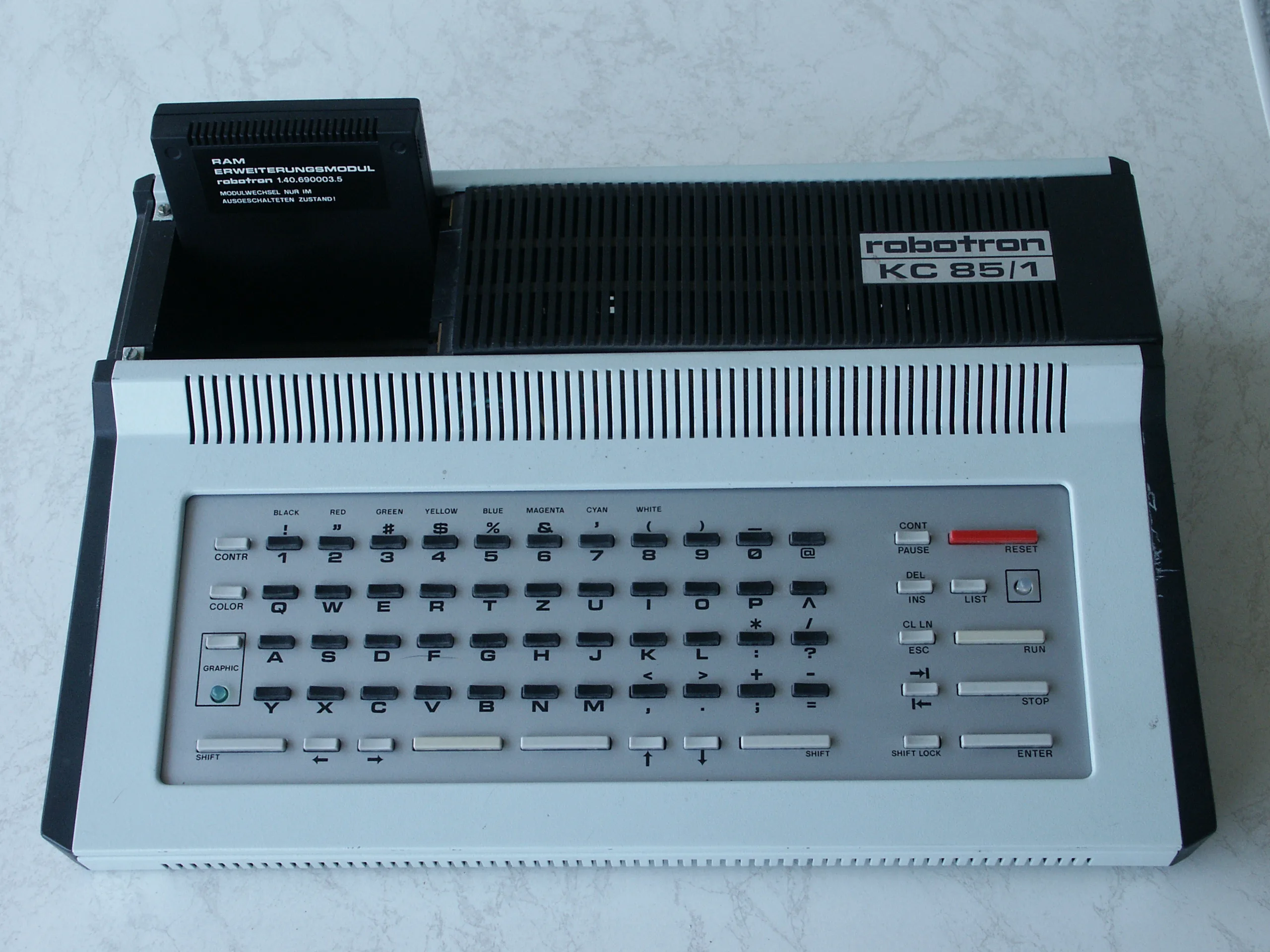
Dresden, December 1984. In a converted classroom at the Schülerrechenzentrum, the city’s student computing centre, a handful of pupils are looking at a squat grey box. It has a cassette port on the side. Its keyboard feels more like a pocket calculator’s than a typewriter’s. It has just arrived from VEB Robotron-Meßelektronik “Otto Schön,” a few kilometres across the city, still wearing its original name: Z 9001. Within three months the state will rename it. Within a year, almost nobody outside a school or a state enterprise will be allowed to own one.
In most of Western Europe or North America, a machine like this might have carried an inventor’s name attached to it, celebrated in magazine profiles for the rest of the decade. The KC 85/1 carried no such name. It carried a project code, a deadline tied to a Communist Party anniversary and a chip smuggled into existence by an East German semiconductor plant that officially was not supposed to be able to build it at all. Nobody signed their work.
Eleven months to hit a political deadline
The machine’s real name was Z 9001. It began life in January 1983, inside the Zentrum für Forschung und Technik, the research wing of VEB Robotron-Meßelektronik “Otto Schön” Dresden. The team assigned to build it was not an ordinary engineering department. It was a Jugendforscherkollektiv, a youth research collective. Staffed partly through the Free German Youth organisation, the team was formally declared an Initiativthema by the ruling SED party, a flagship project worth publicising. This was no marketing deadline. It was 7 October 1984, the thirty-fifth anniversary of the founding of the German Democratic Republic. Production began that September. Eleven months, start to finish. Nobody involved left behind a diary entry admitting the deadline was absurd. What they left instead was a working computer, on schedule, built to a state’s idea of an anniversary present.
A Z80 the West would not sell them
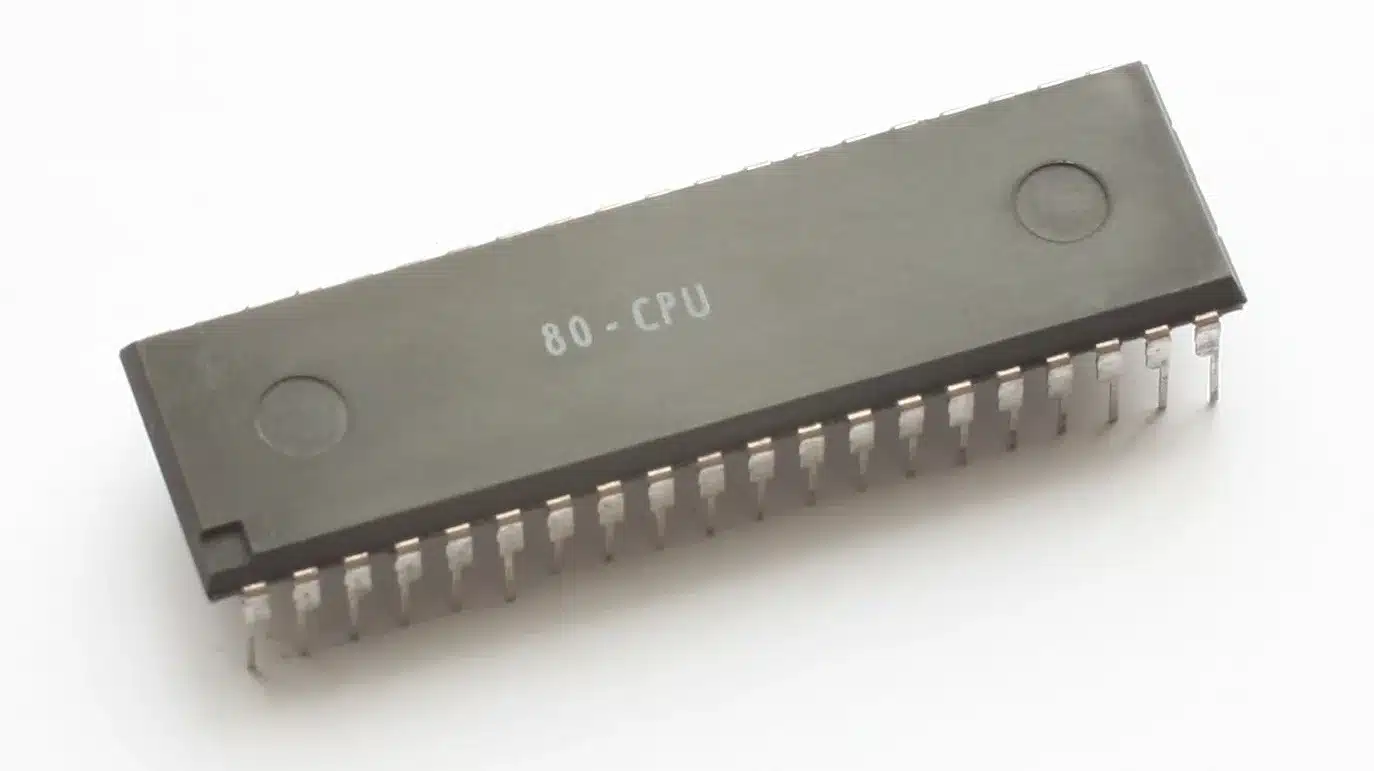
Every one of those machines ran on a chip called the U880, and this is where the story stops being a quirky bit of Cold War trivia. It becomes a genuinely impressive piece of engineering. The U880 ran the exact instruction set of Zilog’s Z80, the same processor doing the same job inside a ZX Spectrum in Britain or a Kaypro in America. East Germany had no licence to make it. None. Western export controls under COCOM blocked the legal transfer of that kind of semiconductor know-how to the Eastern Bloc outright, so VEB Mikroelektronik “Karl Marx” Erfurt, formerly VEB Funkwerk Erfurt, reverse-engineered the Z80 from the silicon up and put its own version into production in 1980. It even reproduced the Z80’s undocumented opcodes and its known bugs. Faithfully. That was the only way to guarantee that Z80 software written anywhere in the world would still run on it. And it worked. By the time the Z 9001 needed a processor, the U880 was already the most widely used chip in the GDR, clocked at 2.5 MHz in the version fitted here. Note which Erfurt, though: a different VEB Mikroelektronik plant, over in Mühlhausen, was about to become the Z 9001’s biggest headache.
The brief was strict from day one. Every component had to be sourced from within the RGW bloc, the Soviet-led economic alliance also known in the West as Comecon. Western parts were off the table, embargo or no embargo, simply because the state would not license hard currency to buy them. No exceptions. Engineers in Dresden were not merely permitted to build everything from Comecon components. They were required to. It concentrates the mind, working that way. It also explains a great deal about how a small East German plant ended up building one of the more capable clone processors to come out of the entire Eastern Bloc.
A rival computer nobody in Dresden had approved
That headache had a name: the HC900. It was developed independently at VEB Mikroelektronik “Wilhelm Pieck” Mühlhausen, a plant answering to an entirely different corner of the GDR’s industrial hierarchy than Robotron in Dresden. In a planned economy, nothing exists by accident. A second home computer, appearing from a second, unauthorised source, was not supposed to happen at all. It happened anyway. The Mühlhausen machine was, in one clear respect, simply better than Dresden’s: full pixel-addressable graphics, against the Z 9001’s blocky 8×8 pixel blocks. Robotron’s managers were not delighted by the competition. The planners in Berlin faced an awkward choice: kill a working product because the paperwork was wrong, or find a way to live with it. They chose to live with it. In 1985, both machines were folded into a single naming scheme carrying the prefix KC, for Kleincomputer. Dresden’s machine became the KC 85/1. Mühlhausen’s became the KC 85/2, then the KC 85/3, then the KC 85/4. Renaming two incompatible computers to sound like one tidy family did not make them compatible. Not remotely. It just made the awkwardness a little less visible from the shop floor.
Built for the living room, sent to the classroom
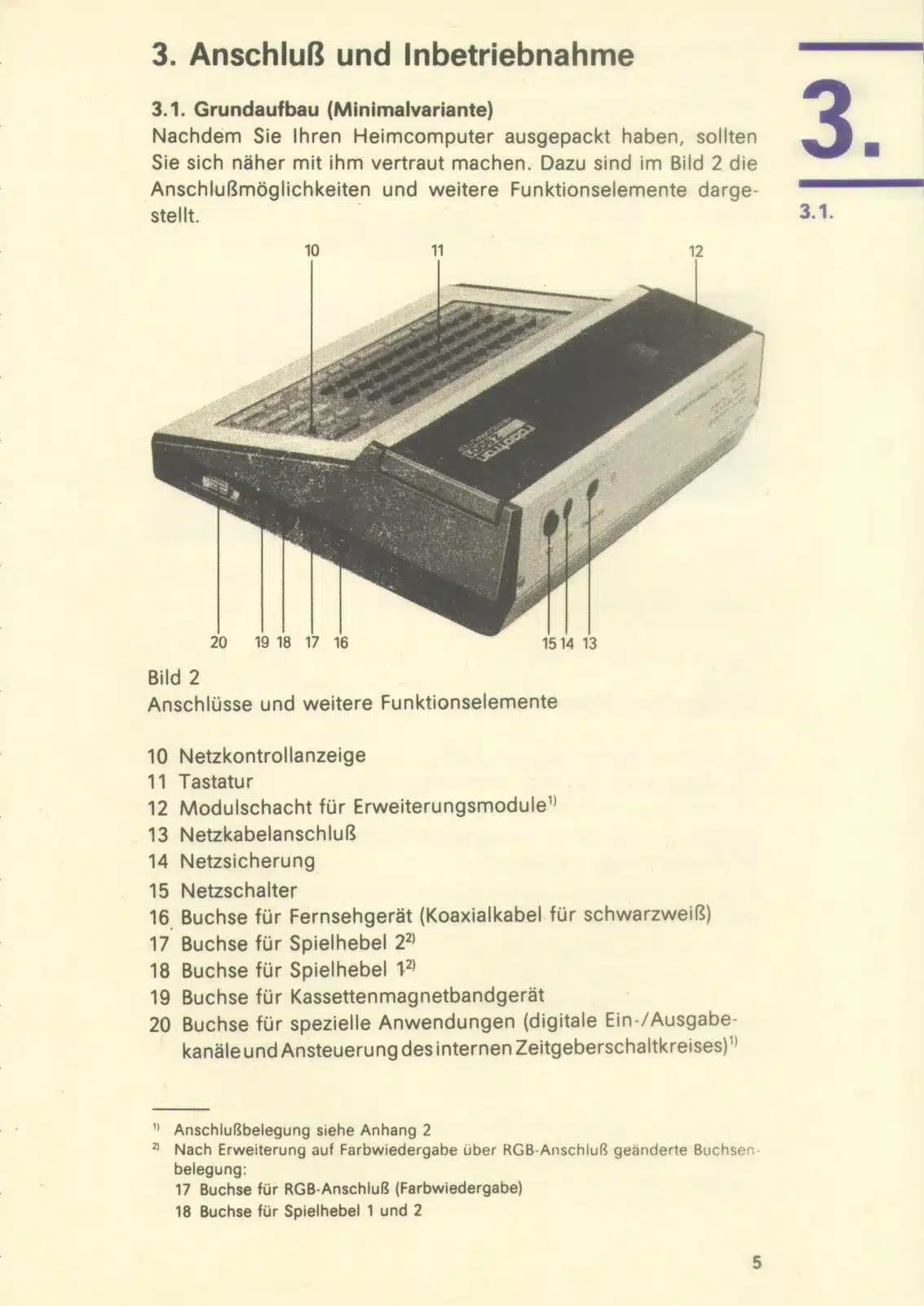
This was meant to be a living-room machine. Robotron unveiled it at the Leipzig Spring Fair in 1984 as a home computer, price tag included: 1,550 East German marks for the black-and-white version, 1,940 for the colour model, at a time when a skilled worker’s monthly wage sat well below that figure. Only around a hundred units existed by December 1984. Roughly half went to ordinary shops. The rest, along with most of what followed, went straight to the Dresden Schülerrechenzentrum and to the Heinrich-Hertz-Spezialschule in Berlin. Not the living room. The classroom, instead. By March 1985, when the state renamed the machine KC 85/1, the redirection was made explicit: away from private households, toward education and the economy. From 1988 onward, a limited number finally reached ordinary shops. RFT specialists. Centrum department stores. They were sold from a waiting list, the Kundenbedarfsliste, a customer demand list working in practice as an informal queue. The machine got a new name too: KC 87, with BASIC finally built into its ROM. The price had very nearly doubled. 3,005 marks for the plain version, 3,390 for the colour one. A computer conceived for a family’s front room spent most of its production run behind a school’s front desk instead.
The keyboard did not help matters. Sixty-five elastomer keys, moulded rather than sprung, cramped enough that typing for a full lesson left fingers aching by the end of it. There was real capability tucked behind that keyboard, though. On paper, at least. Because the U880 spoke fluent Z80, a KC 85/1 could in principle run CP/M software written for entirely different machines, provided somebody had a disk system to feed it. Most schools never bothered. Cassette tape was slower and a great deal cheaper, and it was already sitting on the shelf.
Thermostats, robots and a very slow oscilloscope
Inside the schools, the machine did what an Informatik curriculum needed. It taught BASIC. Full stop. It gave a generation of GDR pupils their first hands-on hour with a real keyboard and screen, instead of a textbook diagram of one. Inside the Kombinate, life was different. Less glamorous. In its own way, more interesting. Fitted with an analogue-to-digital converter module through one of its four K1520-bus expansion slots, a KC 85/1 could read a voltage and report on it. That was enough to turn a home computer into a rough diagnostic oscilloscope on a factory bench. It could also run a thermostat. Regulating temperature and pressure inside a state-run greenhouse, of all things. Robotron never designed the machine for agricultural climate control. Nobody asked them to. Somebody in a Kombinat simply worked out that it could be done, wired it in and moved on to the next problem. That is the most East German thing about the whole machine. Not the chip. Not the politics. A school computer, quietly running a greenhouse, because nobody had budgeted for anything better.
The combine that outlived none of it
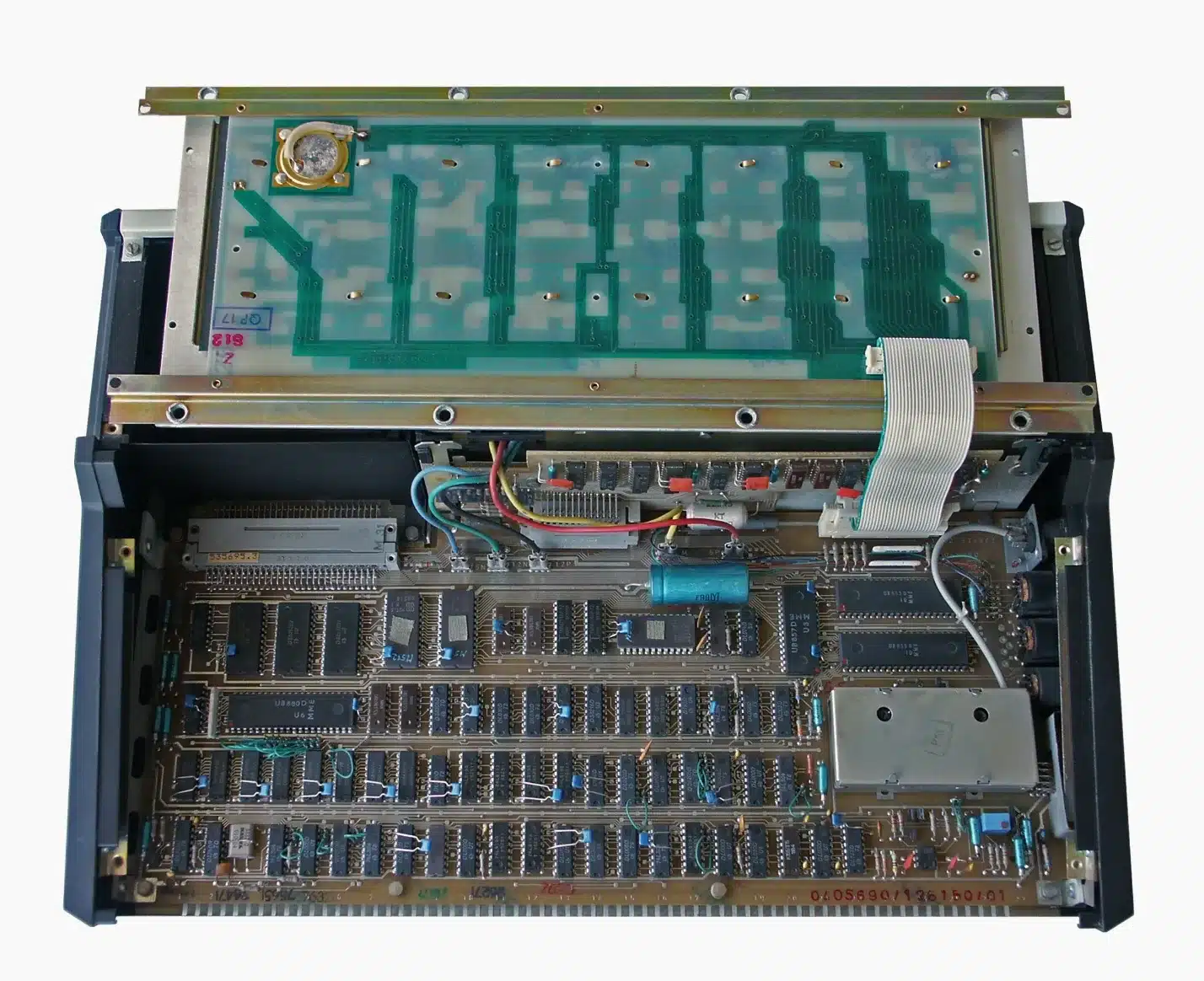
Robotron itself was never a small operation. Founded in Dresden on 1 April 1969, VEB Kombinat Robotron eventually grew into eleven separate works spread across the GDR. Typewriters. Pocket calculators. Minicomputers cloned from DEC and VAX designs. Mainframes, too: the ESER series, the GDR’s slice of Comecon’s attempt at one unified computing standard across the whole Eastern Bloc. By 1989 the combine employed roughly 68,000 people. The largest electronics workforce in the country. Set against that scale, the KC 85/1 was a minor product from one of eleven works, built by a youth collective against an anniversary deadline. Most remember something else entirely. They remember it as the machine that first put a keyboard under their fingers. Not as a line item in an industrial planning document. The combine itself did not survive reunification. Robotron was liquidated on 1 July 1990, its plants sold off, closed or restructured piece by piece into a market economy with no use for a state combine’s org chart. The KC 85/1 outlasted it. In one narrow, literal sense. Switch one on today, in a museum in Dresden or a collector’s workbench anywhere else, and the same grey box that a Kombinat once wired into a greenhouse still loads a cassette exactly the way it did in 1985. Patiently. A little too slowly. Waiting for someone to press play.