MACHINE REFERENCE

Atari 800

The Atari 800 shipped in November 1979 at US$1,000, with 8 KB of RAM on plug-in modules, four joystick ports and a cast aluminium chassis that doubled as an RF shield.

Why it matters

Three custom chips did the work: ANTIC ran the display lists, CTIA (later GTIA) handled colour and sprites, and POKEY covered four-voice sound, keyboard scanning and serial I/O. Between them they gave the machine 256 colours and eight sprites. The cheaper Atari 400 sold alongside it at US$550, and the Atari 8-bit line reached about two million machines between late 1979 and mid-1985. The 800XL, 65XE and 130XE all descend from this design.

What to check before you buy

  • Open the top hatch and look at the RAM and OS boards. Early plastic-cased memory modules had overheating problems, so check for the later uncased type and for scorching.
  • Reseat every card and look at the edge contacts. A blank or garbled screen is often just dirt or a tired socket.
  • Test the keyboard with the sound running. If the keys are dead but you can hear a game, POKEY is the likely suspect.
  • Check the power switch and DC connector on the console for oxidation or cracks, and ask whether the original PSU is included.
  • Ask whether the seller has tried a known-good cartridge, not just a power-on.
  • Look at the OS ROM board and check that its pins are straight; corroded or bent pins are a known cause of boot failure.
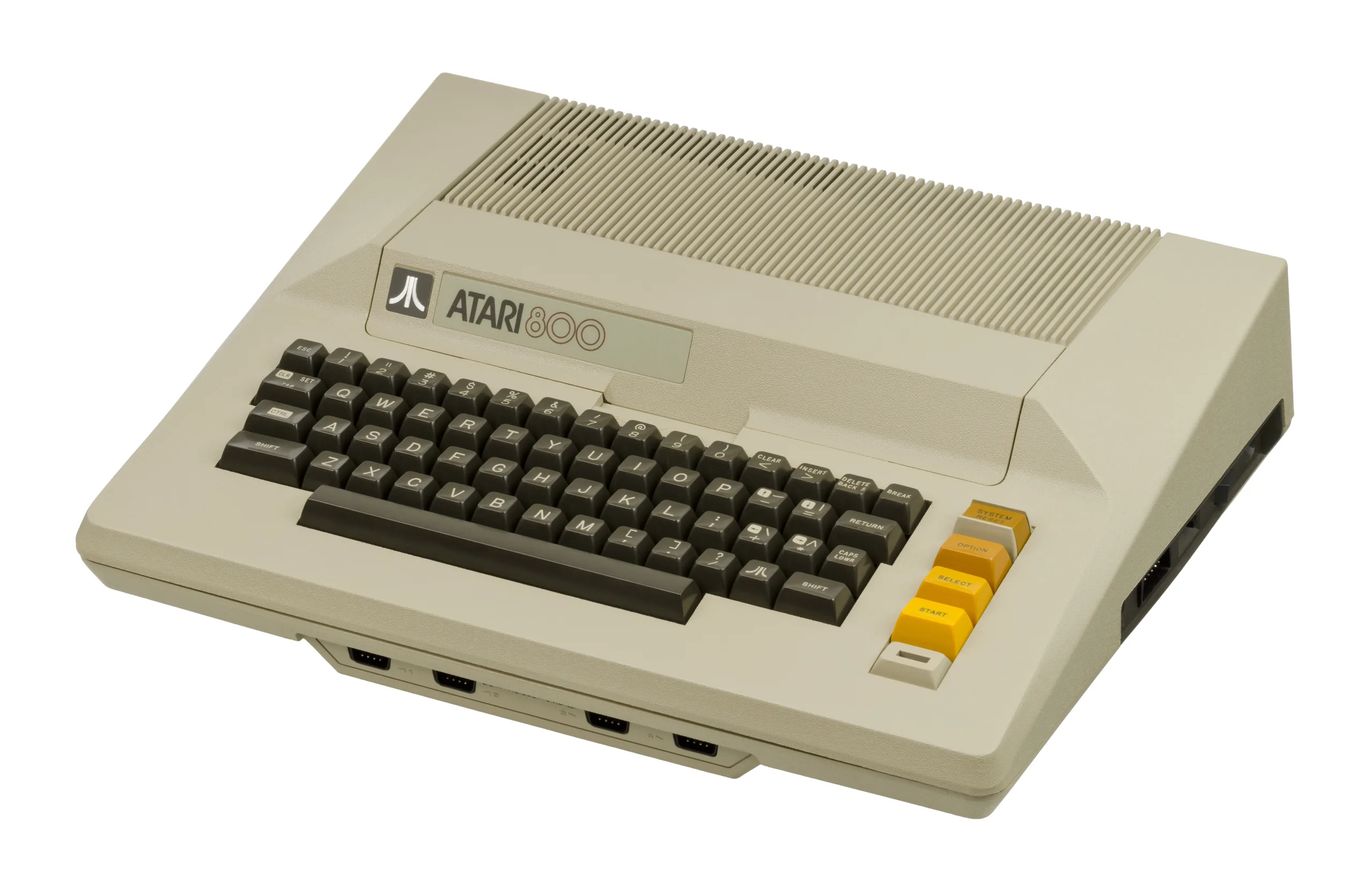
Atari 800

Photo: Evan-Amos, Wikimedia Commons (Public domain)

Released

1979

RAM

8 KB at launch, on user-installable plug-in modules, expandable to 48 KB. Later machines shipped with 16 KB and then 48 KB using 16K x 1 DRAMs

CPU

MOS Technology 6502B at 1.79 MHz (NTSC) or 1.77 MHz (PAL). Wikipedia gives the 6502B; the Centre for Computing History lists a 6502C (“SALLY” variant, which appeared in later revisions). The 6502B is best supported for the launch machine

Launch price

US$1,000 (the Centre for Computing History lists US$999.85). The Atari 400 was US$550. UK launch price: Unknown

Manufacturer

Atari, Inc. (US)

Form factor

Desktop home computer with an integral full-travel keyboard and a cast aluminium RF-shielded chassis (partial Faraday cage), with a lift-off top hatch and two cartridge slots

CPU

MOS Technology 6502B at 1.79 MHz (NTSC) or 1.77 MHz (PAL). Wikipedia gives the 6502B; the Centre for Computing History lists a 6502C (“SALLY” variant, which appeared in later revisions). The 6502B is best supported for the launch machine

Chipset

ANTIC (display list processor), CTIA (later GTIA) for colour, sprites and priority, and POKEY (sound, keyboard scanning, serial I/O, paddles)

RAM

8 KB at launch, on user-installable plug-in modules, expandable to 48 KB. Later machines shipped with 16 KB and then 48 KB using 16K x 1 DRAMs

ROM

10 KB OS ROM (Rev. A or Rev. B) held on a plug-in OS board in three chips

Graphics

384 pixels per TV line, 256 colours (16 hues x 8 luminances), 8 sprites (player/missile graphics) and raster interrupts; 15 character and bitmap modes driven by display lists

Audio

Four POKEY oscillators (voices) with noise mixing

Storage

No built-in storage. Atari 410 cassette recorder and 810 floppy drive (later the 1050) via the SIO bus; cartridges

Ports

Four joystick/controller ports, two cartridge slots (the right-hand slot saw very little use), SIO serial bus connector, and RF and composite monitor outputs

OS

Built-in Atari OS in ROM (a “Memo Pad” screen with no file storage when nothing is loaded). Optional Atari DOS from disk; BASIC on cartridge

PSU

External power supply unit feeding the console. Exact ratings not confirmed from a source: Unknown

Units sold

Unknown for the 800 alone. Wikipedia says two million Atari 8-bit computers were sold in the major production run (late 1979 to mid-1985), while its infobox gives about 4 million for the whole 8-bit family. Both are family-wide figures

Successors

Atari 1200XL (1983, discontinued June 1983), then the 600XL and 800XL (1983), the 65XE and 130XE (1985) and the XE Game System (1987)

  • RAM modules that cooked themselves
    The 800's user-installable RAM modules originally had plastic casings, which caused overheating problems, so Atari removed the casings in later versions. Early modules are worth checking.
  • Poorly seated RAM and OS cards
    A poorly seated card is a common cause of a blank or garbage screen, and dirty edge contacts stop the machine booting. Cleaning with isopropyl alcohol and reseating each card often fixes it. Cheap single-wipe sockets were also a known weak point.
  • Dead keyboard with working sound (POKEY)
    POKEY scans the keyboard and also produces sound and the SIO serial signals. A dead keyboard while sound still works is a classic POKEY failure. One repair guide lists RAM, then OS ROM, then POKEY as the most common failures.
  • 1979 Atari 400 and 800 shown at the Winter CES in January
  • 1979 Machines ship in November at US$550 (400) and US$1,000 (800)
  • 1983 The 1200XL is discontinued in June; the 600XL and 800XL follow
  • 1985 The major production run of the 8-bit line ends in mid-1985 after about two million machines
  • 1992 Atari Corporation officially drops all remaining support for the 8-bit computers