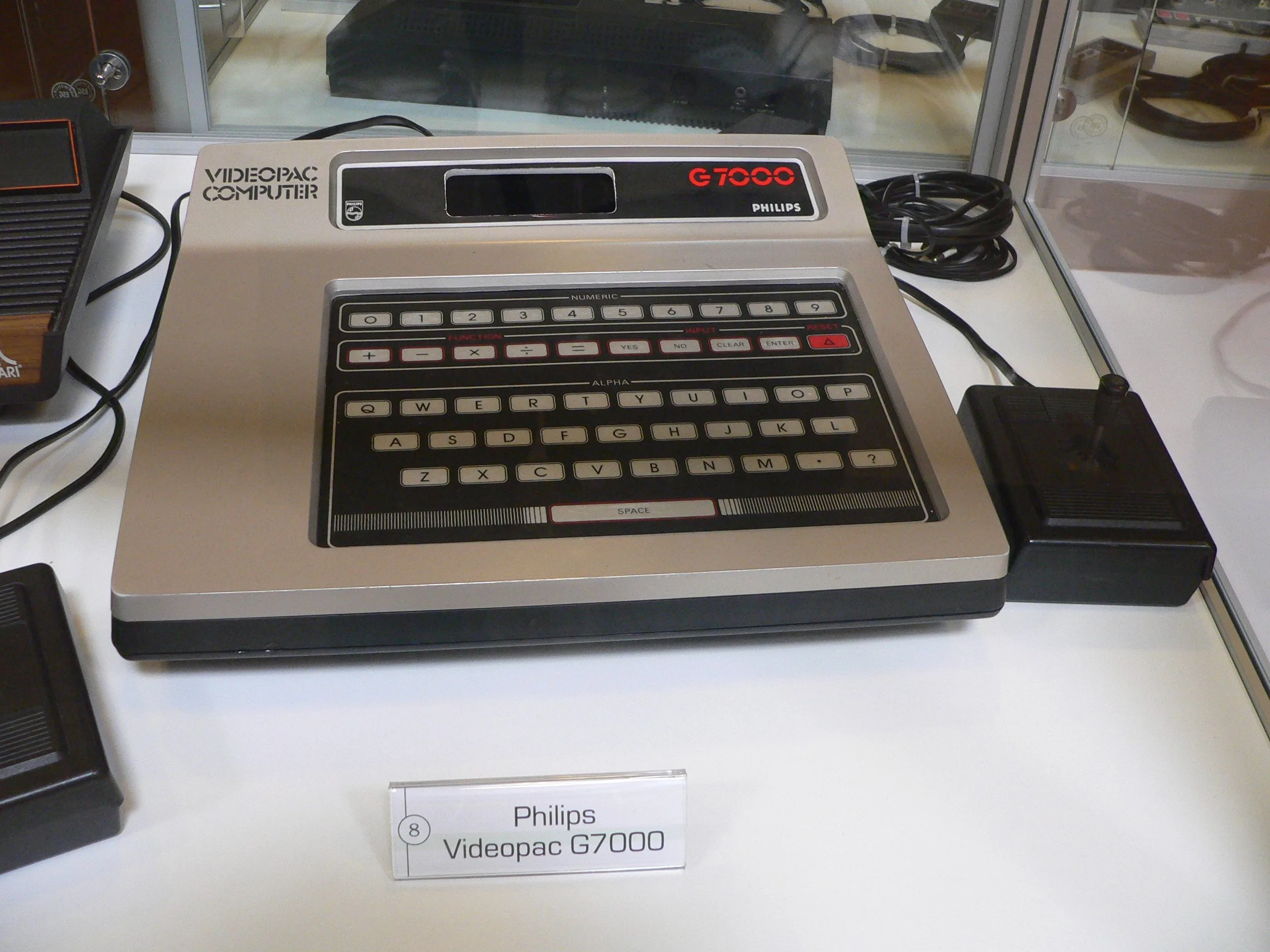
The Philips Videopac G7000, Europe’s version of the Odyssey 2, went on sale in December 1978 with 192 bytes of RAM, a flat QWERTY membrane keyboard and two joysticks wired permanently to the case. After about 7,500 units Philips recalled it over a faulty power plug, and it came back in the summer of 1979 at £150.
Why it matters
The G7000 was Philips’ European version of the Magnavox Odyssey 2, and Wikipedia records that it did considerably better in Europe than its twin managed in North America. Inside were an Intel 8048 with 1 KB of ROM and an Intel 8245 video chip that drew four sprites at 160×200, in eight colours with two brightness levels each. Around 2 million Odyssey 2 and Videopac machines were sold worldwide. The line’s last act was the 1983 Videopac+ G7400, which added Thomson video chips and still ran G7000 cartridges.
What to check before you buy
- Video output: the console only puts out RF, so check what you are getting, whether an RF lead, a modulator or a composite modification already done to the board.
- The cartridge slot: push a cartridge in with the power off and look at the pins for oxidation. In one documented repair they had corroded badly enough to snap.
- The joysticks: they are wired to the console, so worn fire buttons, cracked membranes or rust on the lever mean a repair, not a swap.
- The keyboard: press every membrane key; the flat surface hides wear that a normal keyboard would show.
- What is in the box: ask for the power adapter and at least one tested game. A console with a game has been seen selling around £48, and untested bare units go for much less.
- The mains lead and plug: the early European recall was over a power plug, so inspect the plug and cable for damage before you switch on.